
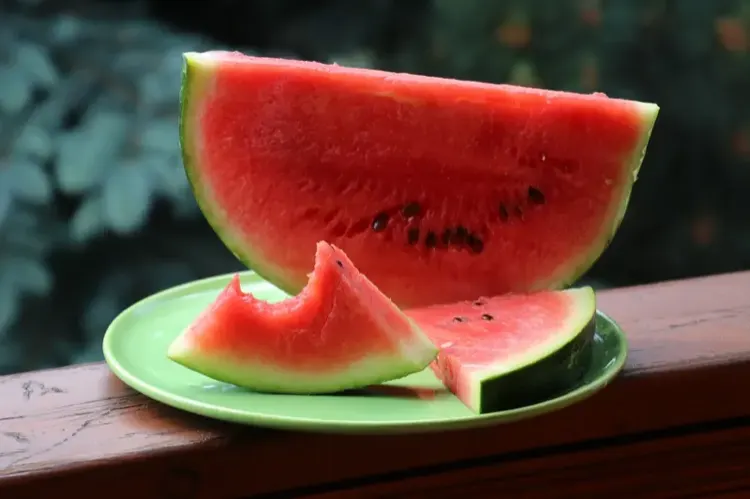
On a hot summer day, you’re slicing watermelon and your piggy is squeaking for a piece. Guinea pigs can eat watermelon, but only in small amounts.
Two to three bite-size cubes once or twice a week is the safe limit. The rind is actually better for them than the flesh since it has less sugar and more nutrients.
Here’s the full guide to feeding watermelon safely.
Is Watermelon Good for Guinea Pigs?
Watermelon is low in calories and packs vitamin A, vitamin C, and vitamin B6. Guinea pigs can eat a fair amount, but overdoing it will cause problems.
Too many watery fruits and vegetables like watermelon and cucumbers lead to loose stool and digestive issues.
And no, watermelon can’t replace fresh clean water in your guinea pig’s bowl. It’s mostly water and sugars, but that’s not the same thing.
Stick to small portions: tiny bite-sized cubes, not more than two to three cubes every three to four days, or one tiny cube every day.
What Is the Nutritional Value of a Watermelon?
Watermelon Nutrition Facts
The following nutrients can be found in raw, 1 cup, diced watermelon:
- Protein (g) 0.93
- Total lipid (fat) (g) 0.23
- Carbohydrate, by difference (g) 11.48
- Energy (kcal) 45.6
- Sugars, total (g) 9.42
- Fiber, total dietary (g) 0.61
- Calcium, Ca (mg) 10.64
- Iron, Fe (mg) 0.36
- Magnesium, Mg (mg) 15.2
- Phosphorus, P (mg) 16.72
- Potassium, K (mg) 170.24
- Sodium, Na (mg) 1.52
- Zinc, Zn (mg) 0.15
- Copper, Cu (mg) 0.06
- Manganese, Mn (mg) 0.06
- Selenium, Se (mcg) 0.61
- Vitamin A, IU (IU) 864.88
- Carotene, beta (mcg) 460.56
- Vitamin E (alpha-tocopherol) (mg) 0.08
- Cryptoxanthin, beta (mcg) 118.56
- Lycopene (mcg) 6888.64
- Lutein + zeaxanthin (mcg) 12.16
- Vitamin C, total ascorbic acid (mg) 12.31
- Thiamin (mg) 0.05
- Riboflavin (mg) 0.03
- Niacin (mg) 0.27
- Pantothenic acid (mg) 0.34
- Vitamin B-6 (mg) 0.07
- Folate, total (mcg) 4.56
- Vitamin K (phylloquinone) (mcg) 0.15
- Folate, DFE (mcg_DFE) 4.56
- Fatty acids, total saturated (g) 0.02
- Fatty acids, total monounsaturated (g) 0.06
- Fatty acids, total polyunsaturated (g) 0.08
Vitamin C
A healthy guinea pig’s diet consists of unlimited timothy hay for fiber, plus fresh fruits and vegetables for minerals and vitamins. Vitamin C matters more than most nutrients because guinea pigs can’t produce it on their own.
Without enough vitamin C, scurvy can develop within 60-90 days. It’s a potentially fatal illness in guinea pigs.
According to experts, humans need 75-90 mg of vitamin C per day to prevent scurvy. To prevent scurvy in guinea pigs, you should include at least 30-50 mg/kg of vitamin C in your guinea pig’s daily diet.
Considering the amount of vitamin C in this fruit, watermelon alone can’t satisfy their daily requirements for this vitamin. That’s why it’s important to pair watermelon with vitamin C rich foods like bell peppers.
Sugar
Watermelon is a decent source of nutrients, but it’s also packed with sugar. That’s the main reason to treat it as an occasional snack, not a regular menu item.
Here’s a trick: carve the rind so only a thin layer of flesh remains. Or better yet, peel off the outer green layer and serve just the yellow part.
You’ll control the sugar intake much better that way. Too much sugar leads to diabetes and obesity, which spiral into other serious health problems.
The best guinea pig diet includes less sugar and fats but more vitamin C and fiber.
Fiber
Fiber runs the show in a healthy guinea pig’s diet. Wild guinea pigs survive on grasses, plants, herbs, twigs, and occasionally roots and barks.
Watermelon has traces of fiber, which is fine for a treat. But that tiny cube won’t come close to covering daily fiber needs on its own.
Still, the fiber content is one more reason watermelon earns a spot in the occasional treat rotation.
Will My Guinea Pig Like Watermelon?
Most guinea pigs like watermelon. If this is the first time you’re introducing it, just watch your piggy’s reaction.
If your guinea pig eats that cube, you can offer another one.
But if they ignore it or push it away? Don’t force it.
Not every piggy is a watermelon fan.
Remember that guinea pigs should only eat small amounts of fruits and vegetables combined. Never feed your guinea pig more than 1/4 to 1/2 cup of mixed fresh fruits and vegetables per day.
Cubes of watermelon already count towards that amount, so be careful.
How Much Watermelon Can Guinea Pigs Eat?
Even if your guinea pig begs for more, don’t overdo it. One tiny cube per day is the max because of the sugar content.
The recommended serving size is one or two small cubes once or twice a week during summer. Watermelon has vitamins and minerals, but too much wrecks their delicate stomach.
A small daily slice is technically fine, but gorging leads to upset stomachs and diarrhea fast.
A general rule is that per day, your guinea pigs should only consume 1/4 or 1/2 of a cup of mixed veggies and fruits cut into small bite-size chunks. Never give your guinea pig a whole slice of watermelon.
Can Young Guinea Pigs Eat Watermelon?
Don’t give very young guinea pigs watermelon. Because of the high sugar content, it’s best if you first introduce watermelon when they’re already a few months old.
While baby guinea pigs feed only on their mother’s milk, by three weeks old they can start consuming water, alfalfa hay, and guinea pig pellets.
Alfalfa hay is the best for young guinea pigs since it contains protein and calcium important for growth and development. Gradually add other types of hay and eliminate alfalfa.
The calcium in alfalfa is beneficial for babies but can be harmful to adult guinea pigs. By the time they can eat alfalfa, they can start eating small amounts of fresh vegetables and fruits.
Can Guinea Pigs Eat Watermelon Rind?
Both watermelon rind and flesh have nutritional value for guinea pigs. The hard watermelon skin is a much better option because the fleshy part contains a lot of sugar and water.
The rind contains potassium, zinc, vitamin A, and iodine, as well as digestion-aiding enzymes. Many pet owners confirm that their guinea pigs eat watermelon rind and are crazy about it.
Wash the watermelon thoroughly before cutting the rind into small pieces. Eliminate the green part and serve only the yellow part, also cut into small cubes.
Some guinea pigs love it much more than the red part. You can also try feeding your pet other fresh fruits such as strawberries, which are a great source of fiber, minerals, and vitamins.
Is Watermelon Juice Healthy for Guinea Pigs?
Don’t give your guinea pig watermelon juice. Period.
Clean, fresh water is the only drink guinea pigs should ever have. Watermelon juice is loaded with sugar, and that opens the door to obesity, hypertension, and diarrhea.
Can Guinea Pigs Eat Watermelon Seeds?
Watermelon seeds aren’t toxic, but they’re still dangerous. Any seed is a choking hazard for guinea pigs.
Your piggy should only eat the fleshy parts of fruits and vegetables, plus the occasional rind or skin. Pop out every seed before serving watermelon.
Make sure that none of the seeds are left in the watermelon cube you’re giving them. You can also buy seedless watermelon.
Can Guinea Pigs Eat Watermelon Leaves?
Never offer watermelon leaves to your guinea pigs because they’re toxic. All parts of watermelon (leaves, vines, roots, and seeds) except for the flesh and the rind pose a danger to your guinea pig’s health.
Can Guinea Pigs Eat Yellow Watermelon?
Yep. Guinea pigs can eat watermelon of any color, including yellow varieties.
Yellow watermelon just lacks lycopene, the pigment that makes regular watermelon red.
There are also yellow seedless watermelons. This watermelon is much sweeter than red watermelon, so many guinea pigs find it tastier.
Give your guinea pigs even smaller quantities of yellow watermelon than you would normally feed them the red fruit.
How To Serve Watermelon To Your Guinea Pig
Serving watermelon to your guinea pig is an easy task. All you need is a cutting board and kitchen knife.
Take the fresh watermelon, place it on the cutting board, cut it open, and remove the seeds since they present a choking hazard. Ideally, you’ll offer them a seedless watermelon.
Guinea pigs eat watermelon in small amounts, so cut it into small cubes. You can include the watermelon rind and leave only a tiny layer of red flesh, which is high in sugar.
Store the cut watermelon in a tightly closed bag.
Can Guinea Pigs Eat All Fruits and Vegetables?
Guinea pigs can’t eat all fruits and vegetables. To prevent diseases, take care of your guinea pig’s healthy diet.
Some produce is toxic to your piggy (potato or avocado), while others don’t have any nutritional value (iceberg lettuce). And then again, some are very healthy for piggies like kiwi, apples, and oranges.
Vegetables high in calcium are responsible for the creation of kidney and bladder stones, which is very dangerous. Often, the removal of kidney stones requires surgery, and every surgery carries its own risks.
Foods high in potassium can be dangerous for piggies with kidney issues. Too much potassium prevents them from filtering the excess from their body, which can be fatal.
Avoid feeding your pets with a combination of fruits and vegetables with very similar nutrients. The key to a healthy guinea pig diet is moderation and balance.
Final Thoughts
Base your pet’s diet on fiber from hay and pellets designed to provide the best proportion of daily nutrients. The recommended amount of mixed vegetables and fruits is between 1/4 and 1/2 cup per day.
Never feed your pet the same foods every day. Instead, mix different types of fresh fruits as sweet treats and rotate vegetables daily.
Watermelon should be on the menu only once or twice a week.
All parts of watermelon except the flesh and rind (leaves, seeds, vines, and roots) are toxic to guinea pigs. Never give your guinea pig watermelon juice to stay hydrated.
Piggies need only clean and fresh water at all times.
Frequently Asked Questions
Two to three small cubes once or twice a week is the safe range. Daily servings aren't a good idea because the sugar leads to digestive issues, obesity, and diabetes. Think of watermelon as a summer snack, not a diet staple.
Watermelon rind is actually the better choice for guinea pigs. It contains less sugar than the pink flesh while providing potassium, zinc, and vitamin A. Remove the outer green skin and serve only the pale yellow-white inner rind cut into small cubes.
Watermelon can cause diarrhea if your guinea pig eats too much at once. The high water and sugar content overwhelms their delicate digestive system. Stick to one or two tiny cubes per serving and watch for loose stool after introducing watermelon for the first time.
Bell peppers, strawberries, and blueberries are all lower in sugar than watermelon while offering more vitamin C. These options can be served slightly more often without the same risk of digestive upset. Always rotate different fruits and vegetables throughout the week for balanced nutrition.