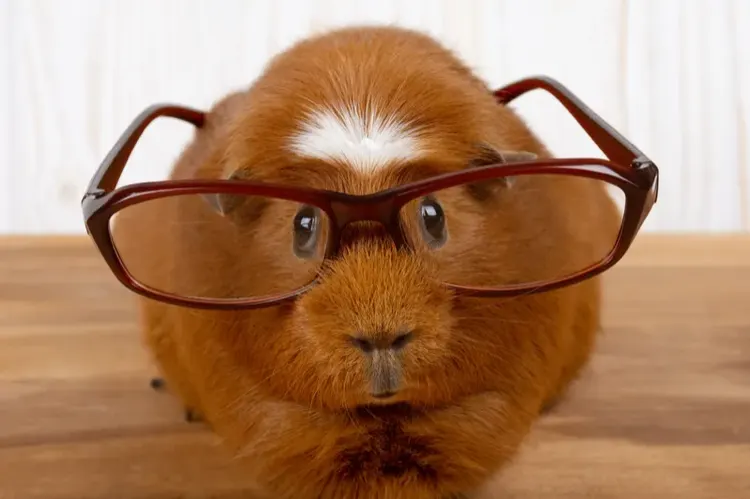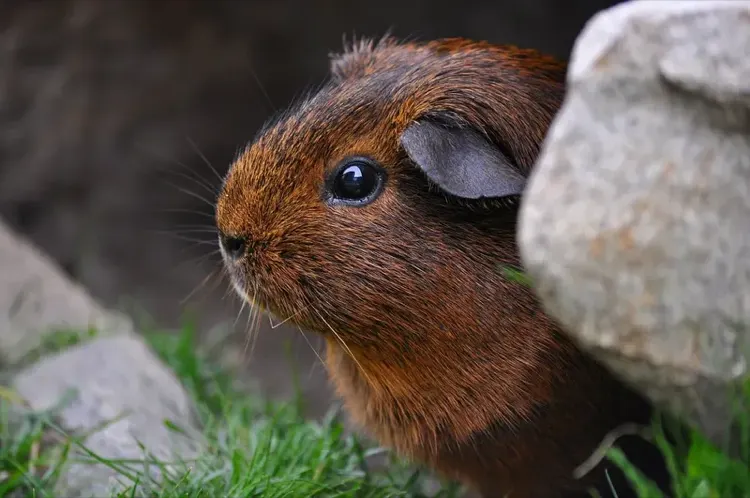

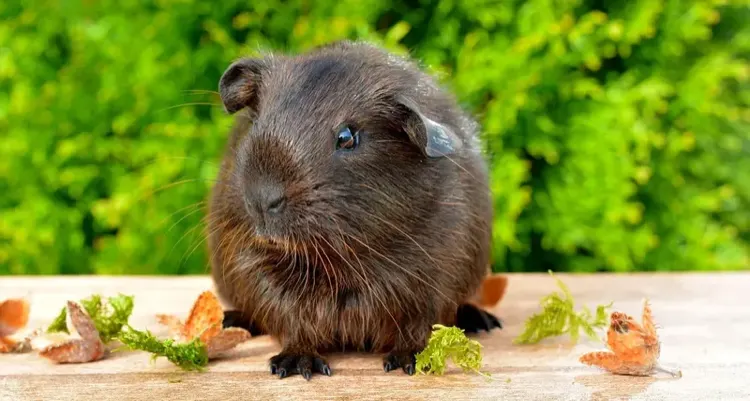
Can you actually train a guinea pig? Yes, and it’s easier than you’d think.
The secret is treats, patience, and short daily sessions. Stick to healthy rewards like bell peppers, carrots, and cucumber since human food like biscuits or cookies can make them sick.
10 Ways to Train Guinea Pigs
Let’s get started with the 10 best ways to train your pet guinea pig.
1. Train Your Guinea Pig to Respond to Its Name
Giving your guinea pig a name helps create a bond between the pet owner and the pet. It’s also important to teach your guinea pig to come when called by its name.
The steps are quite easy:
- First, place your guinea pig on the floor, not too far from you
- Put a couple of your pet’s favorite treats in your hands
- Then call your guinea pig’s name and make sure the treat is visible
- Do this daily until your guinea pig responds to every call
2. Train Your Guinea Pig to Approach You When Called
Dogs aren’t the only pets that like to come when you call them. You can also teach your guinea pig to run after you each time you call while holding a treat.
Be patient, as this may take some time. Don’t forget to offer treats that your little buddy likes.
To carry out this training, your pet must already recognize its name:
- Use your pet’s name often, even when playing or talking to it
- Give your guinea pig a treat whenever you call its name
- Take your guinea pig out of the cage and place it across the room from you
- Make sure your pet is aware that the treats are in your hands
- Call your pet’s name and make sure it comes towards you to take the treat
- Do this continually until your pet gets fond of its name and running towards you
3. Litter Train Your Guinea Pig
Litter box training takes time and patience from every pet owner. Expect a few troubles.
If your pet mistakenly poops in the wrong spot, don’t tell your pet off.
The steps are easy to grasp:
- Use a litter box that matches its size and hold a tasty treat near it
- Pinpoint the area in your guinea pig’s cage where it likes to poop
- Add some hay in the toilet area of your pet’s cage
- When your guinea pig uses the new hay litter box, give a treat to show appreciation
- Praise your guinea pig for doing well
- Continuous appreciation each time your pet uses the toilet will make the training process easier
4. Train Your Guinea Pig Not to Bite
Guinea pigs learn fairly quickly and they’re cute and friendly. However, just like other animals, they tend to bite when they feel threatened.
Mouthing and biting are two distinct behaviors. The curious nature of guinea pigs makes them mouth you, which shows they want to know more about you and are interested in you.
They bite when they’re scared.
The ways to train your pet not to bite are:
- Show your pet lots of love and offer a healthy, tasty treat
- Ensure you don’t scare your guinea pig with odors of other pets it doesn’t like (dogs, cats)
- Hold your guinea pig gently and softly, since they tend to bite when uncomfortable
- Make sure your pet understands it doesn’t need to be scared of you
- A sick guinea pig may bite often, so check with the vet
- Wash or sanitize your hands before handling your pet
When you start training, make sure you dedicate the time to give your best. Start by using your hand and get your pet used to it.
Guinea pigs can sense when they’re being trained.
They’re intelligent animals that sometimes can be stubborn.
5. Training Your Pet to Stand Up
This training is fun and one you should teach your guinea pig. You’ll need your guinea pig’s favorite treat to make this work.
The steps are:
- Hold the treats above your pet’s head
- Make sure your pet sees the treat then say “stand up”
- Try to make them stand on their back legs, and when they do, give the treat
- Do this continually until your pet can stand when you say so
- If successful, your guinea pig will stand up without needing the treat
6. Train Your Guinea Pig to Go Home
Make sure your pet has a comfortable home with nutritious food and drinks. The importance of treats in this particular training can’t be overstated.
In this exercise:
- Toss your guinea pig’s favorite treat into its home
- Make sure your pet sees you toss the treat into the cage
- Then say “go home”
- Keep doing this until your pet begins to go into the cage on command
7. Train Your Guinea Pigs to Go Round in Circles
You can try this exercise in or out of your pet’s cage, but it’s best executed outside the cage.
To be successful, do the following:
- Hold the treat and make sure your pet can see it
- When your pet approaches, move your treat in circles and say “circle” clearly
- Once the circle is completed, give your pet the treat as a reward
- With daily practice, your guinea pig will go round in circles without needing a treat
8. Train Your Pet to Follow You
Once your guinea pig recognizes its name when called, you can take the training further by teaching them to follow you. Before letting your guinea pig out of the cage, ensure the room is safe by blocking holes and eliminating any danger.
- Make a line of treats on the floor from you to where your pet starts (try to make the line lead to your lap)
- Place the guinea pig at the starting point, then call its name
- Make sure your guinea pig traces the treats until it gets to you
- Appreciate your pet by giving a special treat
- Do this daily and use fewer treats each time, but always give a special reward when your pet reaches you
- After about 7 days, don’t leave a trail and see if your pet comes to you on its own
9. Train Your Pet to Jump Through a Hoop
You’ll need a hoop that’s 6 to 10 inches in diameter. Show some patience as this may take some time.
Make sure the hoop is smooth with no sharp edges.
- Hold the hoop so it touches the floor or the bottom of your pet’s cage
- Hold the treat on one side of the hoop
- Call your pet’s name and ensure it can see the treat on the other end, then say “through the hoop”
- Give a special treat as a reward, and do this daily until your pet goes through the hoop without needing a treat
10. Train Your Guinea Pig to Play Ball
Your guinea pig can learn to push a ball if you train it successfully. A tennis ball or pet ball is most appropriate because it’s small and light.
A hungry guinea pig is always willing to learn. You’ll need some of your pet’s favorite treats.
Guinea pigs have a thing for red peppers, so you can use those too.
- Place the treat beneath the ball
- Make sure your guinea pig is aware there’s a treat right under the ball
- Then say “push the ball” clearly as your pet reaches for the treat
- Practice continually and your guinea pig will push the ball on command without the help of a treat
When you train your guinea pigs, take the time to build a real connection with them first and wait for the perfect moment to start. The timing is crucial.
By putting effort and time into training, you’ll get rewards in the years to follow.
How Do I Make My Guinea Pigs More Friendly?
Before jumping into training, build confidence with your pet first. Stock up on a variety of treats because they’re the engine behind every exercise.
Stay calm and patient. Your guinea pig probably won’t nail it on the first try.
Give it encouragement and time, and the tricks will click. Training also deepens the bond between you and your pet.
Check out more ways to keep guinea pigs entertained beyond training sessions.
Just make sure you give them your time and they’ll come around when they’re ready.
Should Guinea Pigs Exercise?
Absolutely. Guinea pigs need exercise, but not in the same form as other rodents such as mice or hamsters.
Guinea pigs don’t need exercise wheels as those can be dangerous for them.
These small animals are adventurous, so set up an obstacle course to stimulate them and strengthen their agility.
Final Thoughts
Training your guinea pig is one of the best ways to build a strong bond. Name recognition, litter training, and simple tricks all start with treats, patience, and short daily sessions.
You can have much fun teaching your guinea pigs to respond to their names and come when you call them. Any activity where they have your undivided attention is time when you show them love and affection, and they can feel it.
Frequently Asked Questions
Most guinea pigs start responding to basic commands like their name within one to two weeks of daily practice. More complex tricks like jumping through hoops can take three to six weeks of consistent sessions. Every pig learns at its own pace, so don't get discouraged if progress feels slow.
Small pieces of bell pepper, carrot, and cucumber work well because guinea pigs love them and they're healthy. Avoid sugary fruits during training since the sugar can cause digestive problems if given too often. Keep treat pieces tiny so your guinea pig doesn't fill up before the session ends.
Older guinea pigs can still learn new tricks, though they may take longer than younger ones. The key is patience, shorter sessions, and highly motivating treats your senior pig can't resist. If your older pig shows signs of discomfort during training, scale back and focus on gentle bonding.
Short daily sessions of 5 to 10 minutes work better than longer, less frequent ones. Guinea pigs have short attention spans and get tired or frustrated with extended training. Consistency matters more than session length, so even a quick five-minute practice each day builds habits faster than occasional longer sessions.