
Finding stillborn babies in your guinea pig’s cage is heartbreaking. Guinea pigs have one of the highest birth mortality rates among small pets, and knowing what to watch for during pregnancy can help you act quickly.
Here’s what causes stillbirths and how to support your sow through it.
Guinea Pig Breeds and Background
According to ADW, there are thirteen commonly recognized breeds of guinea pigs. Males are called boars, females are sows.
In the western world, they’re pets. Other cultures raise them for meat, and medical research has relied on them for decades.
Vitamin C was actually discovered while studying guinea pigs.
Can Guinea Pigs Live Alone?
Nope. Guinea pigs are social animals and shouldn’t live alone.
Isolation can seriously harm their health and wellbeing.
What Do Guinea Pigs Eat?
Guinea pigs are herbivores that graze constantly on green leaves. That nonstop eating habit fuels rapid development.
They reach sexual maturity shockingly fast.
The boar can become sexually mature as early as three to five weeks. The sow reaches maturity even earlier, around four weeks.
A guinea pig family is patriarchal, though in a mating chase, the alpha male isn’t always dominant.
The Process of Pregnancy and Birth
Though babies become sexually mature as early as three weeks, they shouldn’t be bred until six months old, according to Mercer and Hughes Independent Veterinary Surgeons. The female’s pelvic bones become tightly fused after twelve months, making delivery dangerous if she hasn’t had her first litter before then.
The mating ritual is straightforward. The boar stands upright, rumbles, and approaches with his head low.
If the sow is in heat, she quacks loudly in acceptance.
If she’s not interested, she’ll let him know. Biting, snapping, and even urinating on him are all fair game.
After mating, keep a close watch on the sow. The gestation period is usually sixty-three to sixty-five days, but can range from fifty-nine to seventy-two days.
Handle her gently to avoid a miscarriage, always supporting her hindquarter with one hand and upper body with the other.
What Should a Pregnant Guinea Pig Eat?
A pregnant sow needs to switch from normal timothy hay to alfalfa hay to meet her higher calcium requirements. She also needs extra vitamin C, spoon-fed if necessary.
Weigh her weekly to track weight gain. Avoid overfeeding since extra fat makes late pregnancy and delivery more difficult.
Allow her regular exercise to keep her weight down and strength up.
By about seven weeks into pregnancy, the babies will make up about half her body weight.
During Pregnancy
At this stage, you’ll be able to see the babies moving in her belly. Provide a stress-free environment and remove other companions from her space if needed.
She still needs a companion though. Leave her with one female friend since guinea pigs are happier in same-sex company.
Reducing stress makes pregnancy and delivery easier.
Don’t move her to a new cage. She needs a familiar environment to feel at home and stay calm.
Toxemia is the biggest pregnancy risk. High blood pressure triggers it, and overfeeding makes it worse by flooding the blood with excess protein and fat.
Watch for lack of energy, inactivity, and loss of appetite.
If she shows any of these signs, get her to a vet immediately since this can be fatal for both mother and fetus.
Delivery
Guinea pigs normally deliver during the day since they’re diurnal animals. The sow typically starts labor by quacking loudly.
It takes about five minutes to deliver each pup, and each one arrives in its own amniotic sac. Normally, the mother removes the sac and eats it.
After all pups are born, she eats the placenta too.
But what if the babies are born dead? After all the cage setup, cleaning, and caring, it’s a devastating shock.
Studies have shown that guinea pigs have birth mortality as high as twenty-four percent.
One common reason for seemingly dead pups is that the babies are actually born alive but can’t open the amniotic sac on their own, and the mother doesn’t know how to help. This smothers and suffocates them.
That’s why it’s so important to be present during delivery, which rarely lasts more than thirty minutes. If you see any sign of suffocation from the sac, pick the pup up and help free it.
Even if a pup seems lifeless or barely breathing, you can resuscitate it by breathing gently into its mouth. This quick action can save its life.
What Happens to the Mother After Stillbirth?
The mother will be listless and withdrawn. In extreme distress, she may eat part of her dead baby, usually the head or ears.
That’s her pain talking. According to Guinea Pig Forum, UK, guinea pigs grieve just as deeply as you’d expect.
Respect her grief and don’t leave her alone. Putting another companion with her or bringing her inside where you are can soothe her.
Whatever you do, make sure it’s welcome and not forced.
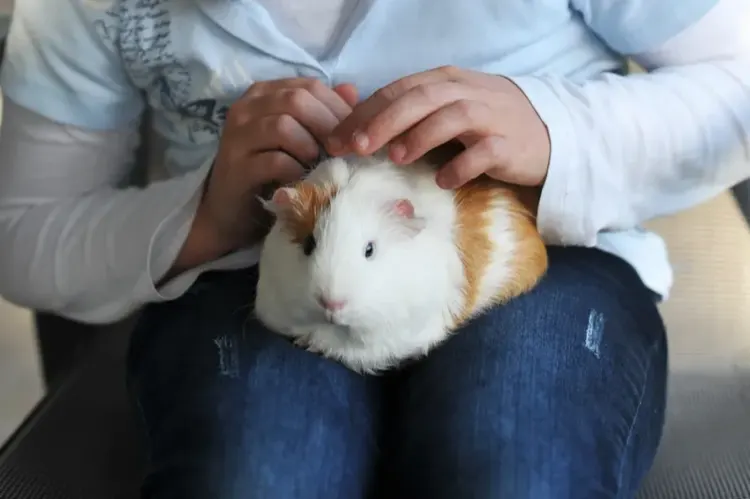
According to Pocket Pet Central, guinea pigs love getting petted and cuddled. Let her keep some familiar items from the delivery area for comfort.
Give the bereaved mother a stress-free environment. Consider removing some cagemates to avoid crowding.
Remove the stillborn babies from her sight after she’s had a chance to confirm they’re gone, but never leave dead pups with the mother overnight.
Watch her closely for health complications after the delivery. She’ll likely be withdrawn and lose her appetite.
If she’s losing weight from not eating, syringe-feeding can help stimulate her appetite. Be gentle and never force-feed.
Acute Pining
In rare cases, she may show acute pining. She stops eating, drinking, or taking notice of the world around her.
If this happens, syringe-feed her and get her to a vet as an emergency. Some guinea pigs can die of grief-induced loneliness.
If the mother shows sudden signs of acute pining after days of lethargy, she could be in serious danger.
After the Grief
Even though guinea pigs grieve deeply, they come out of it more quickly than humans do. After a few weeks of companionship with her fellow females, she should start showing normal behaviors like running around, quacking happily, and eating well.
When she’s recovered, she can be introduced to a male again to start a new family. She’s earned it.
Guinea pigs make the best of their five-to-seven-year lifespan.
They aren’t hard on themselves. They try to live as easy and carefree a life as possible.
We could learn a lot from their resilience.
The Impact on Your Family
Kids get wildly excited about new pets. The family plans, talks, and anticipates together.
Then gestation begins. You’ve probably described how the pups would look and enforced gentle handling rules.
All that care and anticipation, gone because of a stillborn litter.
Children can take pet loss more seriously than adults. For many, it’s their first encounter with death.
Comfort them and reassure them that things can be different next time.
If you’re living alone, the loss can be especially hard. Spend as much time as possible with the mother guinea pig so you can share the grief.
Grief is easier to bear when shared.
The Burial
Burying the stillborn babies in the backyard with a small ceremony can give emotional closure, especially for children. If you live alone, cremating them and keeping the ashes near the mother’s cage is another option.
Either way, the ritual is for your peace of mind.
Final Thoughts
Guinea pig stillbirths are sadly common, with birth mortality reaching as high as twenty-four percent. The causes range from late breeding and toxemia to simple complications like pups unable to break free of their amniotic sacs.
Being present during delivery can make the difference between life and death for newborn pups. If the worst does happen, focus on supporting your sow through her grief with companionship, gentle care, and patience.
She’ll recover with time.
Frequently Asked Questions
Severe stress during pregnancy can absolutely contribute to stillbirths in guinea pigs. Loud noises, rough handling, cage changes, and overcrowding all raise the risk significantly. Keeping your pregnant sow in a calm, familiar environment with one quiet female companion gives her the best chance.
Vets recommend waiting at least two to three months before breeding a sow again after stillbirth. Her body needs time to recover physically and emotionally from the ordeal. Rushing another pregnancy increases the risk of complications and a difficult outcome for both mother and babies.
Female guinea pigs should have their first litter between four and seven months of age. Breeding after twelve months is dangerous because the pelvic bones fuse, making natural delivery extremely difficult or impossible. Males should also be at least six months old before breeding.
A vet visit after a stillbirth is strongly recommended even if the mother seems physically fine. The vet can check for retained placenta, infection, and other complications that aren't visible externally. Early detection of post-delivery problems can save your sow's life down the road.