
Is your guinea pig refusing food, barely moving, or not responding when you call its name? These changes are frightening, and it’s natural to wonder what’s happening.
Knowing the signs helps you respond with the right care. Sometimes a vet visit reveals a treatable illness, but other times it’s simply old age running its course.
Here’s what to watch for and how to help.
Signs of a Dying Guinea Pig
A caring owner who spends time with their pet can usually spot changes in behavior early. A healthy pig never turns down treats or new foods, but a dying guinea pig often shows complete loss of appetite.
Activity levels drop noticeably. A healthy guinea pig is always curious and eager to explore, so a sudden shift to lethargy is a red flag.
Labored breathing is another key symptom. You may also notice uncontrolled bowel movements, slow reflexes, and lack of response to sounds or touch.
Old age can’t be reversed, but if your guinea pig isn’t elderly, these signs could point to a serious medical condition that a vet might be able to treat. Learn more about typical guinea pig lifespans to judge whether age is likely the factor.
How to Help a Dying Guinea Pig
You can’t cure old age, but you can make your piggy’s final days comfortable:
- Feed soft foods like cereals, juicy fruits, and purees
- Make sure your weak guinea pig can reach the water and food, or use a syringe without a needle to help them eat and drink
- Remove ramps, stairs, and houses from the cage, and hang a soft hammock as low as possible
- Wash their face and genitals twice a day with a warm, damp cloth
- Place a favorite soft toy in the cage for comfort
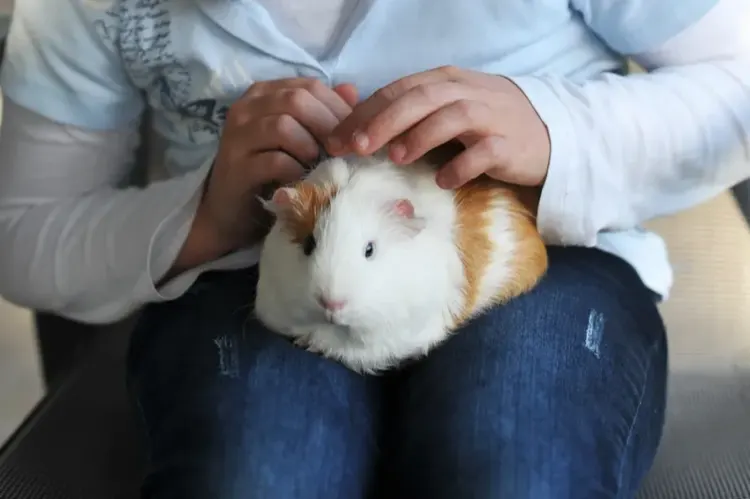
- Hold your guinea pig often, speak softly, and stroke them gently, because they need your love and warmth now more than ever
If a young guinea pig is dying, call a vet immediately. First aid before the specialist arrives could save their life.
Alone or With the Group?
Most guinea pigs find comfort dying in familiar surroundings among their cage mates. The group and familiar smells provide a sense of security during a vulnerable time.
Guinea pigs are prey animals, and that instinct stays strong until the very end. A protected, quiet space to pass is especially important for them.
In a group setting, the other piggies often grow calmer around the dying animal. One or more partners may lie nearby or cuddle up close, keeping company and offering comfort.
Only separate a dying guinea pig if the others are biting or harassing them. Otherwise, let them stay with their group.
Do Guinea Pigs Mourn Their Partner?
That’s hard to say for certain, but they clearly register the loss. Some guinea pigs show changes in eating habits, appear anxious, move less, or lose interest in their surroundings.
The larger the group, the less noticeable the behavior change. But when a guinea pig’s only companion dies, serious problems can develop.
A new buddy usually helps. Most guinea pigs don’t show grief as dramatically as you might expect, but they do feel it internally.
Many older guinea pigs even get sick or die from grief-related stress.
No guinea pig should grow old alone. There’s always a way to keep them with a companion, even if you’re planning to stop keeping guinea pigs eventually.
Can You Leave a Surviving Guinea Pig Alone?
Some owners decide not to get a new companion after one guinea pig passes, leaving the survivor alone until it dies too. For a social animal, that decision can mean months or years of invisible suffering.
Ideally, add a new guinea pig right away. If that’s not possible, find a partner within the first two weeks.
Longer waits are hard on some animals, especially beyond a month.
During the waiting period, make sure the surviving guinea pig eats well and stays active. Watch them closely for signs of depression or weight loss.
Tips for Euthanasia at the Vet
Bring something familiar, soft, and absorbent with you. It’s nicer for your guinea pig to be on their own cuddly towel rather than a cold examination table.
If you have the strength, stay with your piggy during the anesthetic injection. Hold and calm them while the vet administers it.
Shortly after, the animal becomes limp and relaxes completely. They may empty their bladder, which is why a towel underneath helps.
Sitting down with the animal in your lap is easier on both of you.
Euthanasia at Home
If a vet confirms the illness is terminal and the animal is suffering, euthanasia at home is an option. It’s difficult to perform without professional help, so a veterinarian should handle it.
After the procedure, the vet may recommend an autopsy to examine the cause of death in more detail.
What to Do When a Guinea Pig Dies
If your guinea pig lies on its back or side with open eyes and doesn’t respond to touch or sound, it has passed. This is a heartbreaking moment, especially for children in the family.
If other animals or guinea pigs are in the home, let them sniff the body. This helps them accept the death and prevents them from searching or yearning for their companion.
How to Handle Burial
Burying pets within city limits, parks, or public squares is prohibited in many areas to protect soil and groundwater. You can bury your guinea pig outside city limits by placing them in a small box.
Many veterinary clinics offer cremation services. Cremation works at any time of year and avoids the complications of ground burial in frozen or waterlogged soil.
Coping With the Loss
During its short life, a guinea pig becomes a beloved family member. Surviving the loss is hard for adults and children alike.
Don’t blame yourself or the doctors. Focus instead on the happy life your piggy had.
Families can make a photo album, hang a favorite picture, or plant a tree or flowers in their guinea pig’s memory.
Wait until the pain of loss eases before bringing a new animal home. When you’re ready, remember to love and pamper your next piggy just as much.
Common Causes of Guinea Pig Death
Improper Care
A cage placed in a draft will eventually affect your guinea pig’s health. These animals catch colds easily, and treating respiratory illness isn’t simple.
Guinea pigs are gentle, vulnerable creatures. Few people realize they should be kept in same-sex pairs, because loneliness causes real suffering.
Breeding is complicated and shouldn’t be attempted without proper knowledge.
If your guinea pig dies unexpectedly, review the care you provided. Look for patterns and adjust for the future.
Infections
Despite what many believe, guinea pigs get sick fairly often. Other household pets can bring infections home on their paws, and the guinea pig catches it while the dog stays perfectly fine.
Infections are dangerous because they can run completely symptomless for a while. If you notice anything off, get your piggy to a veterinary clinic right away.
Treatment costs money, but it can save your pet’s life.
Trauma and Old Age
Improper handling or a fall from a surface can break bones. Internal injuries are especially dangerous because they’re not always visible from the outside.
Fights between cage mates cause health problems too. Any injury is reason enough to evaluate your pet’s wellbeing.
Most guinea pigs live seven to eight years on average. Common health problems and diseases can shorten that to five or six years, which is still within the normal range.
Behavioral Changes and Hair Loss
A sick guinea pig tries to hide. If yours suddenly stops responding to your voice or lies in one spot constantly, something is likely wrong.
Hair loss is always a sign of trouble. It doesn’t automatically mean the end is near, but it does mean your guinea pig needs attention.
It could be a vitamin deficiency or something more serious.
Fatal Diseases in Guinea Pigs
Despite strong immunity, guinea pigs can fall victim to serious illness. Poor care, vitamin deficiency, or sudden diet changes open the door.
The most dangerous killers are viral and bacterial infections.
Enteritis
A lack of essential nutrients like hay and grass causes this infectious disease driven by E. coli bacteria. The bacillus spreads rapidly through the intestines and digestive organs.
First symptoms include bloating, refusal to eat or drink, elevated temperature, and diarrhea with blood. Without fast veterinary treatment, the animal dies from fluid loss.
Pseudotuberculosis
This extremely dangerous disease spreads through contaminated food or water. It moves fast and can affect every guinea pig in the cage.
Symptoms include appetite loss, lethargy, high temperature, severe diarrhea, and convulsions that lead to leg paralysis. Pseudotuberculosis can’t be cured, and the animal dies from dehydration and paralysis.
Pneumonia
Guinea pigs with weakened immune systems and vitamin deficiencies are most at risk. Poor cage conditions and contaminated food are the usual triggers, though a sick owner can also pass it along.
Signs include refusal to eat, weakness, frequent drinking, and pus discharge from the nose. Your guinea pig may try to wipe its nose on the mat or clear it with a paw.
Shallow, rapid breathing is another indicator. Learn more about the symptoms in our guinea pig pneumonia guide.
When these symptoms appear, isolate the guinea pig from people and other animals. A fast vet visit and prompt treatment can save your pet.
Final Thoughts
Losing a guinea pig is genuinely painful, whether it happens from old age or unexpected illness. Knowing the signs and stages helps you provide comfort when your piggy needs it most.
The best thing you can do is give your guinea pig a good life every single day: proper food, clean housing, companionship, and plenty of love. When the end comes, be there for them and know that you did everything you could.
Frequently Asked Questions
A sick guinea pig still responds to touch, accepts some food, and improves gradually with treatment. A dying guinea pig stops eating entirely, doesn't react to stimulation, and shows labored, irregular breathing. When you're unsure, a vet visit can clarify whether the condition is treatable.
It depends on the cause. Death from old age can unfold over several days to a week, with gradual decline in eating and responsiveness. Acute illness or organ failure can progress much faster, sometimes within hours. Tracking changes daily helps you gauge where things stand.
Talk to your vet about quality of life. If your piggy is in constant pain, can't eat, and doesn't respond to treatment, euthanasia prevents unnecessary suffering. A natural passing works when the animal seems peaceful. Your vet can help you make the best choice.
Be honest and age-appropriate. Let children know their guinea pig lived a happy life thanks to their love and care. Avoid phrases like "put to sleep" since young kids may develop fear around bedtime. Encourage them to share memories or plant something special.