
Nervous about holding your guinea pig the wrong way? Their bones are fragile, and even a short fall can cause a fracture.
Getting the technique right from the start builds trust and prevents injuries.
Here’s the right way and wrong way to hold your guinea pig, plus how to pick them up safely from day one.
Holding Your Guinea Pig Correctly
Guinea pigs are fragile animals that require careful handling. When picking them up, make sure their feet face the ground so they stay upright.
This avoids damaging their spine.
The right way to hold them is to place one hand under their body and support the hind legs with your other hand. Keep them close to your chest for safety.
The wrong way is holding them high off the ground. A fall from that height can break bones or cause serious injury.
Picking Up Your Guinea Pig For The First Time
Picking up a guinea pig for the first time is one of the most important steps in building your bond. Without the right technique, you can make them nervous and fearful of human contact for weeks.
Guinea pigs are small, round animals that can’t bounce back from a fall. They only get hurt.
That’s why careful handling matters so much from the very beginning.
Here are the steps to follow.
Give Them Space
After bringing a guinea pig home, everything is new to them. Like any animal in an unfamiliar environment, they need time to adjust.
Place them inside their cage and cover it with a light cloth, leaving space for light to get in. This gives them the security they need to start feeling comfortable.
Give them one to three days to settle in before you start introducing yourself.
Let Them Get Used To You
Once your guinea pig feels safe in their cage, it’s time to introduce yourself. Don’t start by reaching in and grabbing them.
First, offer your hand so they can sniff you and get to know your scent. When you try to touch them, don’t approach from above.
That startles them because their eyes sit on the sides of their head.
Although guinea pigs can spot predators from a distance, they aren’t good with things close up. Approach from the front and get down to their level.
They’ll start by sniffing you cautiously.
Stroke them gently along the back to build trust. If they aren’t comfortable yet, stay calm.
It’s their nature to run and hide at first.
During this process, make sure they’re eating well and seem comfortable in their cage. Talk to them in a soft voice so they get used to your presence.
Stay Calm
Guinea pigs startle easily because they’re naturally nervous about their surroundings. When you’re picking them up, stay calm yourself.
They can pick up on your emotions.
Loud noises make them uncomfortable. It’s best to switch off the television, radio, and phone before handling them.
Pick Them Up
When your guinea pig trusts you, it’s time to learn the right way to carry them. Make sure your hands are clean for their safety.
If they’re still running away, give them a few more days to build trust. Always get down to their level when picking them up, and never approach from behind.
Place your hands in the cage and give them a minute or two to investigate. They’re very curious creatures, so let them sniff and explore.
When you’re ready, slide one hand under their belly and lift gently. Use your other hand to support their back legs.
Then bring your second hand around to cradle their back.
Lift with both hands so they feel secure.
Avoid Squeezing Them
Hold them firmly enough that they can’t jump, but don’t squeeze. It’s also smart to hold them while sitting down.
This removes the risk of a dangerous fall.
Holding Techniques That Work
Once your guinea pig is in your hands, here’s how to keep them comfortable.
Place A Cloth Underneath
Always place a towel or cloth on your chest when you’re holding them. Guinea pigs usually won’t pee or poop on you, but accidents happen.
Give Them Food
Guinea pigs love carrots, and offering a snack during lap time is a great habit. They’ll start associating cuddling with good things.
You can also offer strawberries or lettuce. If you’re unsure what’s safe, check out the best guinea pig foods for ideas.
When They Wiggle, Don’t Put Them Down
A wiggling guinea pig is showing discomfort and wants to get down. But placing them down right away teaches them that wiggling equals freedom.
That creates a bad habit. Instead, hold them a moment longer, then return them calmly.
Teaching Your Child To Handle A Guinea Pig
Children shouldn’t try to hold guinea pigs unsupervised. When you’re not around, keep the cage locked so your child can’t pick them up alone.
Here are some ways to teach your child safe handling:
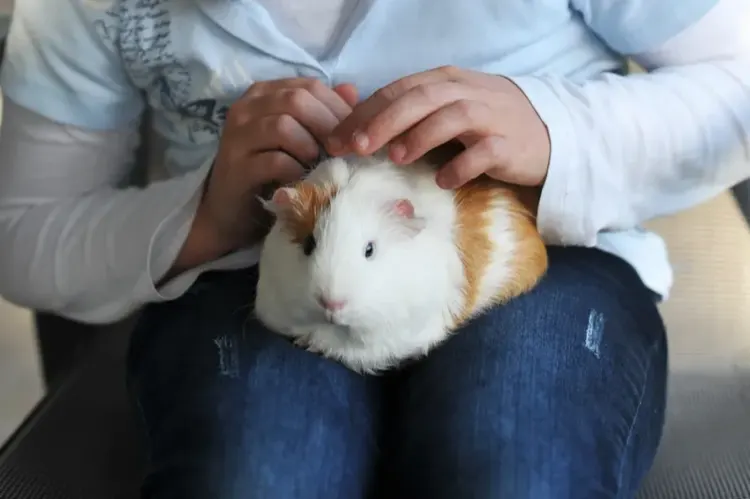
- Let them pet the guinea pig while you’re holding it
- Have the child sit down before you hand the piggy over
- Supervise every interaction until your child has the technique down
Handling Pregnant Guinea Pigs
Carrying a pregnant guinea pig should be avoided whenever possible. The only exception is when you need to clean their cage.
When cleaning is necessary, use a small pet carrier to move them. If you pick them up and they get startled, both the mother and babies are at risk of injury.
Pregnant guinea pigs are under a lot of stress already. They’re more fragile and easily nervous, so they tend to hide and avoid being touched.
Important Things To Know About Handling
To handle a guinea pig well, you’ve got to understand their nature. They also need to trust you, which takes time and patience.
Here are some key things to keep in mind.
How Long Should You Handle Them?
Guinea pigs enjoy cuddling, but they can only handle about ten to fifteen minutes at a time. After that, they get restless or may need a bathroom break.
Always keep a towel underneath in case of accidents. If they pee or poop, stay calm and clean up without making them nervous.
When they want to go back to the cage, they’ll start nibbling your clothes and making a whining sound.
When Should You Not Hold Them?
There are times when you shouldn’t handle your guinea pig at all. When they’re pregnant, sick, or injured, it’s best to leave them alone.
If they’re unwell, take them to the vet for a check-up. The vet will let you know when they’re ready for cuddling again.
Newborn guinea pigs should stay in their cages until the vet gives the all-clear. Their tiny bodies and weak bones make them extremely fragile.
Safe and Sensitive Spots
Guinea pigs don’t like having their bottom touched or rubbed. Stick to stroking their back and the area between their ears.
Those are the spots they enjoy most.
Hold Them With Care
Cuddling makes guinea pigs feel loved and helps them look forward to bonding time. When you hold them and offer treats, they’ll trust you more and enjoy the routine.
Carrying While Walking
Walking around with a guinea pig in your arms isn’t recommended. It’s dangerous because a sudden movement could cause them to jump.
If you need to carry them from one spot to another, hold them against your body with one hand supporting their bottom and the other holding their legs. Move slowly and avoid any sudden motions.
Some guinea pigs will snuggle into your hands when they feel safe.
Wash Your Hands First
Clean hands prevent germs from reaching your guinea pig. They also have a strong sense of smell, and if you’ve just eaten something delicious, they might mistake your fingers for food and bite.
Skip The Deodorant
Guinea pigs recognize you by your natural scent. If you’re wearing deodorant or perfume, they might not respond to you because the scent is unfamiliar.
Handle them without any added fragrances so they can identify you easily.
Clear The Area
Before picking up your guinea pig, make sure the area around you is free of obstacles. Tripping while holding a guinea pig can be dangerous for both of you.
Keep Things Quiet
New guinea pigs or those being handled for the first time get skittish in noisy environments. A barking dog or a loud TV can startle them quickly.
Keep the room quiet and calm during handling sessions.
Seal Off Escape Routes
If your guinea pig jumps from your hands, they’ll bolt and hide. They run fast, so close off any holes or gaps in the room beforehand.
That way, if they do escape, you can catch them without a long chase.
Bring Treats
Guinea pigs respond well to food. Having a treat ready each time you pick them up builds confidence.
They’ll learn that being held means something tasty is coming.
Wear Old Clothes
Guinea pigs may have a bathroom accident during your ten to fifteen minutes together. Their fur also sticks to clothing.
Wear something you don’t mind getting dirty.
Bond Through Regular Handling
Regular handling keeps your guinea pig from becoming nervous and squeamish around you. It creates a bond that benefits both of you.
Daily grooming and cuddling can relieve their stress and prevent loneliness. If you want more bonding ideas, check out how to play with your guinea pig.
Do They Pee When Being Held?
Keep handling sessions under fifteen minutes to avoid bathroom issues. During that time, watch for signs they want to get down.
Many guinea pigs get restless and start giving gentle nips. Others will lick you while squirming.
If you don’t return them to their cage, the nips get harder. It’s rare for a guinea pig to pee on you, but they might poop.
If they do pee, you missed the warning signs.
What To Do If They Escape
If your guinea pig escapes during handling, don’t panic. If you’re in a closed room, you’ll catch them eventually.
Don’t chase them around, as that only makes things worse.
First, block all escape routes from the room. Use books or pillows to cover gaps under furniture.
Make sure there’s nothing dangerous they could chew on.
Corner them gently and lure them out with food. Since they may have gotten bumped during the escape, be careful when picking them back up.
Use the normal two-hand technique.
Final Thoughts
Guinea pigs are small, friendly pets that thrive on gentle handling and daily interaction. When they trust you, they become affectionate companions who look forward to cuddle time.
They’re also delicate animals that need careful supervision. Never let children play with them unsupervised, and keep up with regular vet check-ups to make sure they stay healthy.
Frequently Asked Questions
Aim for daily handling sessions of ten to fifteen minutes each. Consistent daily contact builds trust faster than occasional long sessions. Your guinea pig will grow more comfortable with you over time and may even start looking forward to lap time.
Guinea pigs learn to recognize their owners by scent and voice over time. They'll often wheek excitedly when they hear you approaching their cage. Building this recognition takes regular, gentle interaction over several weeks of consistent daily handling and feeding routines.
Vibrating or purring usually means your guinea pig feels content and relaxed. It's similar to a cat purring. However, a high-pitched vibration combined with stiffness can signal fear or annoyance, so pay attention to their overall body language during handling.
You should never hold a guinea pig on its back. This position, called "trancing," causes a fear response where they freeze completely. It's stressful and can injure their delicate spine. Always keep all four feet pointing downward when holding them.