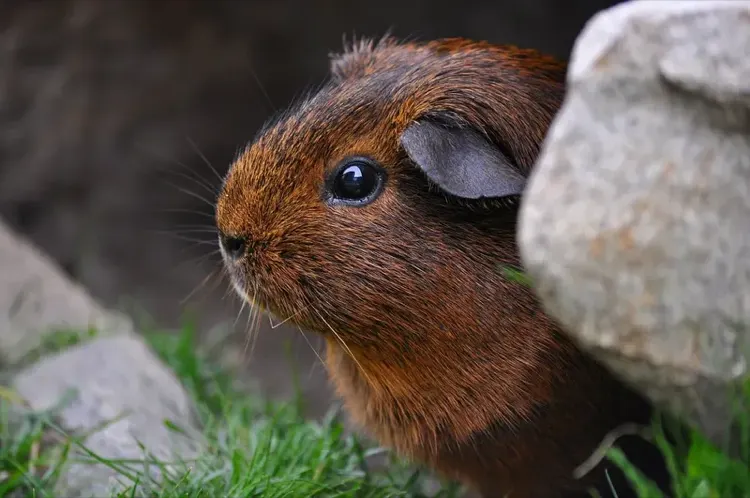


You love both cats and guinea pigs, and you want them under the same roof. But cats are hardwired predators, and guinea pigs are prey animals.
Even a playful swipe from your cat can cause a serious injury to a guinea pig. A cat and a guinea pig can live in the same house, but they can’t share the same space unsupervised, ever.
Here’s how to keep both pets safe.
Cats Vs. Guinea Pigs
Guinea Pigs
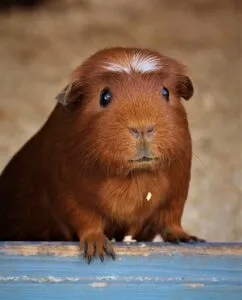 Guinea pigs are social animals that do best when kept in pairs or small groups. They need plenty of space to run and play, and toys to keep them stimulated.
Guinea pigs are also very sensitive. Any sudden movement or noise can scare them.
This can lead to health problems, so it’s important to make sure their home is safe and secure with a consistent routine.
If you’re thinking about getting a guinea pig or adding a new one to your family, here are some important things to know:
- Guinea pigs need space. The minimum for a pair is 7 square feet (2 square meters), but bigger is always better.
- They need a variety of toys and enrichment activities. This can include tunnels, a hideout, chew toys, and balls.
- Guinea pigs are sensitive to changes in their environment and get stressed easily. Keep their home as stable as possible with a routine for feeding, cleaning, and exercise.
- They’re social animals and do best in pairs or small groups. If you have more than one, make sure they have enough space and can see and interact with each other.
- Guinea pigs need a diet high in fiber consisting mostly of hay, fresh vegetables, and a small amount of pellets.
- They’re susceptible to various health problems, so regular vet check-ups are essential. Common problems include respiratory infections, parasites, dental issues, and obesity.
- Guinea pigs can live for 5-7 years with proper care and a healthy diet.
Cats
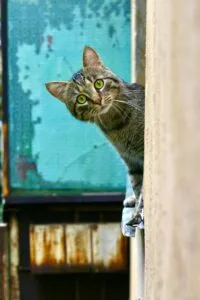
If you’re thinking about getting a cat and bringing it home to your guinea pigs, here are some important things to know:
-
They’re independent creatures. Cats don’t need constant companionship like dogs. They’re perfectly content doing their own thing, though they do enjoy spending time with their humans on their terms.
-
They can be finicky eaters. Some cats only want wet food, while others prefer dry food. And some insist on having both available at all times.
-
They’re natural hunters. Cats have a strong instinct to chase after small prey, even if that prey is just a toy. If you have other pets like rabbits or rodents, keep them away from your cat.
-
They’re excellent climbers. Cats often end up in places they shouldn’t be, like on top of cabinets or shelves. Kitten-proof your home to prevent accidents.
-
They shed their fur. If you’re allergic to cats, think twice before getting one. There are some hypoallergenic breeds that might be a better option.
Do Cats and Guinea Pigs Get Along?
Small moving objects attract cats, these skilled hunters. A cat can’t beat its instincts and impulses, no matter how well you train it.
When a cat and a guinea pig meet for the first time, the cat will most likely attack the guinea pig and kill it. As much as it horrifies you, cats kill guinea pigs.
Even if the cat doesn’t attack on sight, it may become interested and try to swat at the piggy. While it might not cause physical harm, it causes a lot of stress.
Such play may also result in unwanted injuries like scratches and bites.
If kept together from an early age, guinea pigs and well-trained cats can coexist in a home, but always with precautionary measures. A cat and a guinea pig can coexist, but they must be introduced and supervised properly.
Can Cats Get Along With Guinea Pigs?
It’s preferable not to keep a guinea pig with a cat, even when a cat has been properly trained.
Just because your piggies and kitties didn’t appear hostile when you first introduced them doesn’t rule out something going wrong later. Putting them together in the same play area can always be hazardous, as a cat may suffocate your guinea pig or even eat it.
Why Do Cats Attack Guinea Pigs?
Even when domesticated, cats are apex predators. No other animal preys on them.
Cats are perfect hunters. They can lengthen their spines for short bursts of speed up to 20-30 mph.
They can narrow their shoulders and chests to squeeze into small spaces.
Cats can also jump up to nine times their height from a standing position and land on their feet.
Every year, cats kill between 1.3 and 4 billion birds in the United States. Researchers studying the effects of cats in parks found that a park with 25 cats had 50% fewer birds compared to one without cats.
Historically, with the spread of agriculture, cats served as nature’s best rodent control, which led to their domestication.
Today, science tells us that cats consume prey to obtain taurine, an essential amino acid. Unlike humans and dogs, cats can’t produce this amino acid and must obtain it through their diet.
Taurine is found only in meat in sufficient quantities. Without it, a cat can suffer from cardiomyopathy, vision problems, UTIs, and other health issues.
Even if your cat wouldn’t want to eat your guinea pig, it must consume taurine, which can only come from animal sources. Other essential nutrients for cats include vitamin D, vitamin A, and arachidonic acid.
This is why cats are obligate carnivores.
But Cats Eat Commercial Food, Don’t They?
Taurine is added to all commercial cat food. But don’t be surprised if you find your cat eating mice, birds, small reptiles, and insects.
The answer lies in your cat’s biology, ancestry, and hardwiring.
Domestic cats that spend most of their time indoors hunt less than outdoor cats because they don’t have access to mice. While feral mothers teach their kittens to kill prey, domestic cats usually don’t learn this skill.
That’s why you may see them playing with their catch, or they may bring the mouse to you. While you may believe your cat is bringing an offering, it’s actually bringing the mouse for you to kill.
Even if your cat doesn’t know how to kill its prey, that doesn’t mean it isn’t a skilled predator. Hunting is innate in cats, even affectionate pets.
Kittens at 6 weeks of age already show pouncing behavior on their food. Cats hunt by sneaking up on their target, crawling on their bellies until they pounce.
Even your well-fed cat will attack prey, not for food but for fun, to fulfill its hunting instinct.
Will My Cat Attack a Guinea Pig? How Can I Prevent That?
You might believe your cat is well-fed and doesn’t hunt. Maybe your cat has never had the chance to show its instincts because there’s never been prey around.
When cats see prey animals, their hunting instinct takes control. Even well-fed cats can kill.
Maybe your cat doesn’t bring anything home because it doesn’t need to show off. These stats from the University of Georgia may surprise you:
- Cats return home with only 23% of prey items
- They leave their prey at the capture site in 49% of cases
- Cats consume 28% of their prey
Even if you socialize your cat with guinea pigs from a young age, your cat still might kill your guinea pig at some point.
There’s nothing you can do to eliminate your cat’s hunting instincts, so there’s no way to make cats and guinea pigs get along without potential fatalities.
How To Introduce a Cat And a Guinea Pig
If you’re thinking about introducing your cat to a guinea pig, make sure your piggy is safe in a sturdy cage. Such cages can withstand a cat’s attack.
In a flimsy cage, your guinea pig doesn’t have a chance.
Just remember, the introduction is almost always very stressful for your guinea pig. Even with you supervising and the pet seeming safe in the cage, the introduction can result in needless injuries.
Cats are very fast, and guinea pigs are small. In an instant, your cat can cause much stress and injuries.
If you’re thinking about letting them spend time together, there’s always a chance of disaster. There’s no way to guarantee a cat won’t grip your guinea pig tightly and kill it, even if you introduced them when they were only a few weeks old.
Usually, cats and guinea pigs get along only when they’re both very small. As they grow, that friendliness can quickly turn dangerous.
In other words, your cat and your guinea pig can never be friends.
That doesn’t mean you can’t keep them in the same home. You just have to keep your guinea pig away from your cat, safe in another room your cat can’t access.
This isn’t always possible, so at least make sure the guinea pig cage is sturdy and the doors are locked. Cats are persistent and they can learn how to open cage doors.
You can keep cats and guinea pigs in the same household, but don’t keep them in the same room. Take extra precautions to make sure guinea pigs stay inaccessible to your cat.
Final Thoughts
Cats and guinea pigs can’t get along. Cats are predators and guinea pigs are prey, and no amount of training changes that.
You can keep both pets in the same household. The key is keeping your guinea pig in a separate, locked room that your cat can’t enter.
Even with a sturdy cage, make sure the doors are locked and your cat can’t open them. Your guinea pig’s safety depends on it.
Frequently Asked Questions
In rare cases, a cat raised with guinea pigs from kittenhood may tolerate them. But tolerance isn't friendship, and instincts can surface anytime. Even gentle cats have killed guinea pigs after years of coexistence. It's never worth risking your piggy's life based on past behavior.
Choose a cage with a solid, locking top a cat can't pry open. Wire cages with secure latches work well. Avoid open-top enclosures since cats jump in easily. Place it in a room your cat can't access, and add cable ties to latches for security.
Watch for focused staring, crouching low, tail twitching, and slow movements toward the cage. Dilated pupils and flattened ears are warning signs too. If you notice these behaviors, separate your pets immediately. Don't wait to see what happens next, as cats strike within seconds.
Chronic stress from a nearby predator can seriously harm your guinea pig's health. It weakens their immune system and causes appetite loss, weight drop, and heart problems. Keep guinea pigs in a room where they can't see, hear, or smell your cat to minimize anxiety.