
Does your guinea pig dart away every time you reach for them? As prey animals, they’re wired to run from anything approaching from above.
That’s completely normal behavior.
The trick is a two-hand technique: one hand under the belly, the other supporting the back legs. With patience and the right approach, picking up your piggy gets easier every time.
Here are four methods ranked by difficulty.
Four Methods For Picking Up Guinea Pigs
We’ll start with the easiest way and work up to a pro-level method.
The Tunnel Method
To make this work, you need a short, sturdy tunnel. A regular fleece tunnel works perfectly because guinea pigs can’t resist tunnels.
If your guinea pig won’t go in on their own, place a small piece of cucumber or another favorite treat inside. Usually, though, you won’t need the bribe.
Place the tunnel in the cage and walk away for a minute. When your guinea pig crawls in, close the front and back with your hands.
Pay attention to hand position. Make sure you’re supporting their belly underneath the tunnel.
Hold the tunnel close to your body so they can’t jump out.
Set your guinea pig down gently, offer a healthy treat, and you can start cuddling. This is a bulletproof method for getting your piggy out without chasing them around.
The Chat Method
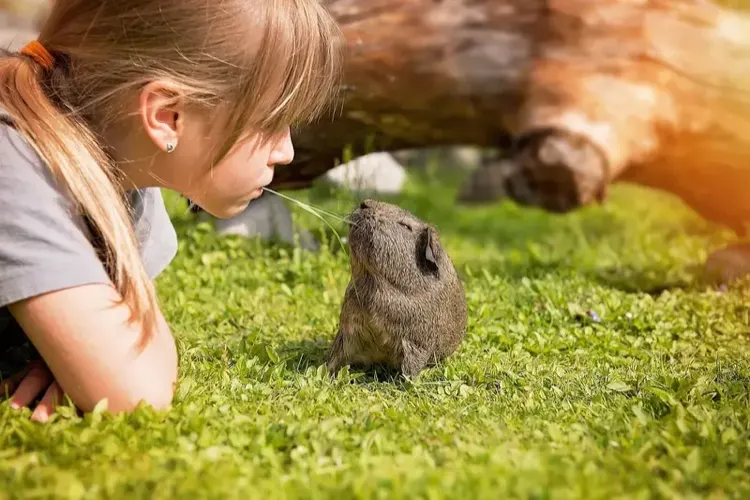
This method requires two hands and an element of surprise. Pretend you’re talking to another guinea pig in the cage while casually positioning your hands.
While you’re chatting with another piggy, slide one hand under your target guinea pig’s belly and gently lift. You’re catching them off guard while they think your attention is elsewhere.
This works great for piggies that bolt the moment they sense you’re coming for them. Chasing causes stress for everyone in the cage, so distraction is your friend.
Don’t snatch from above. Start by stroking from the head, then slide your hand under the belly.
Quickly use your other hand to support the hind legs.
The Advanced Hand-Climbing Method
This method involves teaching your piggy to climb onto your hand and up your arm. It takes time and patience.
Baby guinea pigs are easiest to train, but adult piggies can learn too. How successful you’ll be depends on your guinea pig’s personality.
Take a treat, like a piece of lettuce, cucumber, or pear. Hold it just above your hand with one hand.
If your guinea pig is small enough, they’ll climb into your palm and start moving up your arm.
Wait until your guinea pig is firmly on your hand with part of the paws and belly supported. Then use your other hand to secure them, hold them close to your body, and gently set them down.
The Carrier Method
This is the simplest approach, and it works especially well when you need to transport your guinea pigs. Place the carrier inside the habitat with the door open.
Scatter a few healthy treats around the carrier entrance. Cucumbers, bell peppers, or whatever your piggies love will do the trick.
You won’t wait long before they rush inside. If more than one guinea pig climbs in, separate them into different carriers.
Most carriers aren’t big enough for two.
Picking Up A Pregnant Guinea Pig
Although guinea pigs enjoy being held, a pregnant piggy needs special care. Only pick her up when it’s truly necessary.
This is especially important during the last month before the babies are due. Don’t try to pick up newborns too soon after birth either, as their fragile bodies can’t handle much contact yet.
Putting Your Guinea Pig Back Safely
Because jumping from your hands could injure your guinea pig, always lower them back into the cage bottom-first. Going backwards prevents them from leaping out of your hands too early.
Can Children Pick Up Guinea Pigs?
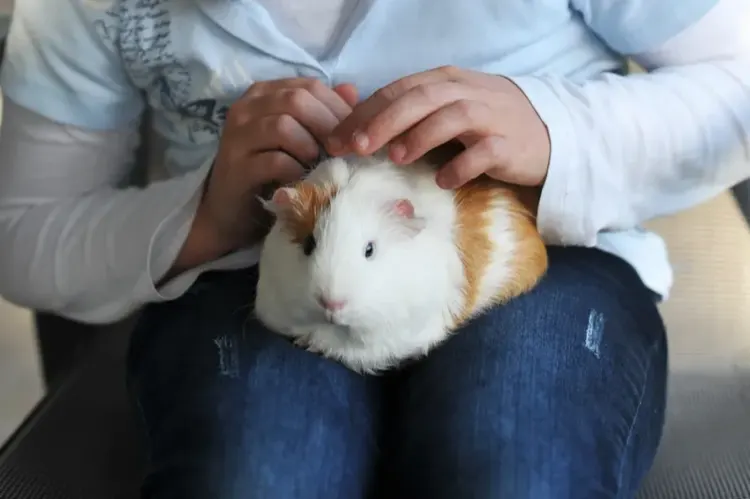
It’s better to let younger children stroke and feed their guinea pigs rather than pick them up. Have your child sit somewhere safe where the piggy can roam freely.
Guinea pigs will usually approach for treats. Once they’re comfortable with each other, your child can start gently stroking them.
That’s the best way to kick off the bonding process.
Over time, your children can learn how to pick up their pets safely. Just supervise every session until they’ve got the technique down.
Handling Nervous Guinea Pigs
Some guinea pigs stay skittish no matter how long you’ve had them. This doesn’t mean they dislike you.
It just means they need a slower approach.
Start by sitting next to the cage with the door open and your hand resting inside. Don’t reach for your piggy.
Let them come to you on their own terms, even if it takes 20 minutes.
Place a small piece of lettuce or bell pepper on your open palm. When your guinea pig takes the treat, resist the urge to grab them.
Repeat this daily until they eat from your hand without flinching.
Building Trust Through Daily Practice
Once your piggy eats comfortably from your hand, try brief pickups lasting 30 seconds or less. Lift them gently, hold them against your chest, then set them right back down.
Short sessions teach your guinea pig that being picked up isn’t a threat. It always ends safely, and often includes a treat reward.
Gradually extend the time you hold them. Go from 30 seconds to a minute, then two minutes, then five.
Don’t rush through these steps.
Always end the session before your guinea pig gets restless. Putting them down while they’re still calm creates a positive association with being held.
Talk softly throughout every interaction. Guinea pigs respond strongly to voice tone, and a calm, quiet voice signals safety.
Avoid picking up your piggy right after a loud noise, a cage cleaning, or any other stressful event. Timing matters more than technique when you’re working with a nervous animal.
Within a few weeks of daily practice, most guinea pigs settle into a pickup routine. The ones that don’t will still tolerate it better than they did before you started.
Final Thoughts
Guinea pigs are flighty animals that sometimes flee from you, even when they’re used to being picked up. Don’t try to grab them with one hand, and never chase them around the cage.
Each guinea pig has its own personality. You might need to try different methods for different piggies.
Stay patient, keep sessions short, and your piggy will warm up to the routine before you know it.
Frequently Asked Questions
Biting usually signals fear, not aggression. Try the tunnel method to avoid direct hand contact at first. Offer treats from your palm daily to build positive associations. Most guinea pigs stop biting once they realize your hands bring food and gentle handling rather than danger.
Running is a natural prey instinct, not a sign they dislike you. Even tame guinea pigs will sometimes dart away when approached from above. Try approaching at their eye level, move slowly, and use treats to lure them closer before attempting a gentle pickup.
Never pick up a guinea pig by the scruff, legs, or tail area. Their bodies aren't built for that kind of handling and it can cause serious spinal injuries. Always use two hands, one supporting the belly and the other cradling the hind legs securely.
Give your new guinea pig at least two to three days to settle into their cage before attempting to pick them up. During that time, talk softly near the cage and offer hand-fed treats so they start associating you with safety and positive experiences.