
Your guinea pig has passed away and you don’t know what to do next. The grief is real, and so are the practical decisions you need to make.
Here’s how to handle the next steps and take care of yourself through the grieving process.
What To Do First
Take a step back and remember that your guinea pig was a part of your life. You shared many wonderful moments, and they’ll always be remembered.
The pain of losing a pet is very real. It’s okay to feel sad, lonely, and even scared.
There are some things you can do to help cope.
Make sure to eat healthy foods, get plenty of sleep, and exercise regularly. This will help you feel better physically and emotionally.
Find someone to talk to. It can be really helpful to talk to someone who understands what you’re going through and can offer support.
Find ways to memorialize your pet. You might want to create a photo album or write down your favorite memories.
This will help keep them close to your heart.
How to Know If Your Guinea Pig Is Dying
Watch your guinea pig’s behavior closely. As the end of your guinea pig’s life draws near, you may notice some signs.
There are no behavioral indicators that are 100% guaranteed, though.
Some guinea pigs show no signs, while others may appear to be dying and continue for a long time. Possible signs include:
- Anorexia
- Slow movement or low activity
- Incontinence
- Less desire to play
- Difficulty breathing
If you notice these symptoms, visit your vet right away. Knowing your guinea pig’s normal behavior helps you spot changes early.
How Old Is Your Guinea Pig?
Unless you saw when your guinea pig was born or got it from someone who knows its date of birth, you probably don’t know its age. Relatively predictable signs of aging can estimate lifespan, though it’s best to have a vet perform this assessment.
Signs of aging include:
- Thick, twisted toes
- Cataracts (cloudy eyes)
- Bumps or lumps on the body or head
- Joint stiffness
Your guinea pig may become less agile and move more slowly with age. If the animal can no longer climb slopes or walk much, its body will likely become more fragile.
Always pay attention to your guinea pig’s energy level compared to when it was younger. The constant fatigue of a guinea pig can also result from being overweight, so proper diet management matters throughout their life.
Your veterinarian can keep you informed about your guinea pig’s health and let you know if anything can be done. A guinea pig can experience a lot of pain when it’s old or terminally ill.
If your vet tells you the animal is in this condition, consider euthanasia. In some cases, this is the most humane option.
How To Make the End of Your Guinea Pig’s Life Easier
Keep your guinea pig with its companions. Guinea pigs are social creatures and shouldn’t be separated, especially if one is dying.
Parting with a guinea pig companion can make them sad or anxious. It may be necessary to isolate a sick guinea pig if it’s in pain or if other guinea pigs play with it aggressively.
You’ll have to judge based on its condition.
Place a small, light blanket or soft cloth on or around the animal to protect it from the cold. Your guinea pig may start to experience incontinence, so change blankets regularly to keep your pet clean and comfortable.
The sensitivity to cold increases as they age or near end of life. Keep your guinea pig’s environment warmer than usual to increase their comfort.
Your guinea pig will become weaker and won’t be able to feed or drink on its own. You can help by serving water with a spoon, syringe, or bottle.
Prepare a vitamin mix by blending hay, water, and ground food. Don’t force the guinea pig to eat or drink if it doesn’t want to.
The goal is to make water and food more accessible.
Always blend food well before offering it so your guinea pig doesn’t have to spend precious energy chewing.
Show Affection
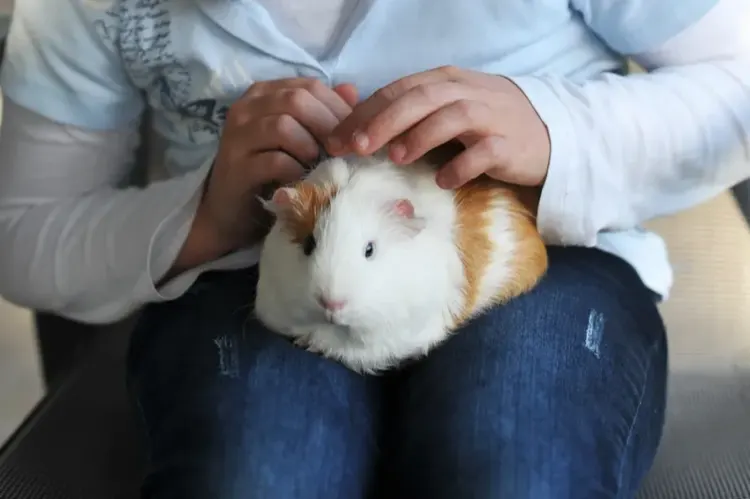
Gently stroke your guinea pig to calm it down and express your affection. This helps your guinea pig feel less alone and can reduce fear and anxiety.
If you want to hold your piggy, do it gently and don’t cause unnecessary pain or discomfort. Many guinea pigs like to be lightly stroked on the forehead.
Observe your guinea pig’s body language and sounds. Always adjust your physical contact appropriately.
Avoid touching it in a way that could be painful.
Create a Calm Environment
Your guinea pig will feel more comfortable in a warm, calm environment without harsh or dim lighting. Calming sounds of nature, such as birdsong or running water, can be soothing for them too.
Leave some space for your guinea pig during the last moments of its life so that it passes peacefully. Remember to visit often to provide water and food.
If your guinea pig likes a particular toy, leave it close by. Just having familiar items nearby can help keep it calm.
Treat your guinea pig like a child trying to sleep. Anything that disrupts a baby’s nap is also likely to bother the animal.
How to Cope with the Loss of Your Guinea Pig
Decide what to do with the guinea pig’s remains. The loss of a guinea pig is a very painful moment, and the first question will be what becomes of its body.
If the law is strict on animals in your area, the final decision is still yours among the options available. Cremation, burial, or another option, it’s up to you based on your convictions, sensitivity, and means.
You’re not alone with this choice. Your vet is there to answer your questions.
What to Do with Guinea Pig Remains
You can’t throw your dead guinea pig in the trash. Instead, you have several options.
Bury Your Guinea Pig at Home
If you own your home, you can bury the guinea pig in your backyard. The remains must be wrapped in a box, cardboard, or cloth (not plastic bags).
Any animal weighing less than 40 kg can be buried in a garden. However, you must follow certain rules:
- The grave must be at least 35 meters from houses and water points (wells, springs) and at least four feet deep so no other animal can dig it up
- Cover the body with a biodegradable object such as cloth, a wooden box, or cardboard, not a plastic container
- You can also place it on the ground and cover with quicklime.)
Some people mark the site with a tree or flowers in tribute.
Bury Your Guinea Pig in an Animal Cemetery
If the law doesn’t allow you to bury your guinea pig at home, you can use an animal cemetery. Find the one closest to you.
Animal cemeteries are usually run by private companies that offer different services. You may be free to mark your guinea pig’s burial place with a gravestone, a small sign, or a photo.
Cremation
Cremation at a pet crematorium is a dignified option if you have the finances. Individual cremations let you collect the ashes in an urn.
With collective cremation, the ashes can’t be returned to you.
How Does Cremating Your Guinea Pig Work?
There are companies, often founded by veterinarians, that help bereaved families cope with the death of their animals. These companies offer private or collective incineration and provide support for mourners.
Either your veterinarian contacts the nearest incineration center, or you contact one yourself to make an appointment.
On the day of the cremation, you’ll be fully taken care of with all due respect. The ashes will be given to you in an urn to bring home.
Having the remains can help you cope with the loss. Don’t use the remains in a way that violates health and safety laws.
Show Your Dead Guinea Pig to Other Pets
If your guinea pig has other companions, such as a rabbit or another guinea pig, show them the body. Many animals know how to recognize death.
This gesture can help them understand and overcome the situation. When they notice a guinea pig has been removed from the cage and never returned, other animals may become sad or anxious, thinking they’ve been abandoned.
You don’t need to leave the body in the cage. Just show it to the companions and let them smell it for a while.
Hold a Ceremony
The purpose is to recognize the pet’s death while celebrating its life. You can share funny stories with friends and family, look at old photos, or plant a flower or tree in honor of the animal.
Choose something that gives you peace of mind.
Know that It’s Okay To Be Sad
It’s completely healthy to feel sad about the loss of your guinea pig. Accept the feelings, as this will help you cope more easily.
This process is similar to grieving the loss of a relative or friend. Seek support from friends, relatives, or groups of people in a similar situation.
Accept your grief and don’t think your feelings are insignificant or groundless.
How to Mourn Your Pet
After many years spent in your guinea pig’s company, the loss is a real test. For grief to be overcome, you must first accept it and then keep only the good memories.
Loyal, affectionate, and independent, guinea pigs are kind and warm-hearted pets. When they disappear, grieving their presence is a complex and painful stage.
Find Emotional Compensation
The discreet presence of a guinea pig quickly becomes part of daily life. When a pet disappears, many owners suddenly realize how much their pets calmed them and brought joy.
After the loss, look around for a comforting, but different, source of affection. If you own more than one guinea pig, your grieving guinea pig friends will need you.
Remember that guinea pigs are social, herd animals. They feel pain from the loss of their pack member.
If you had two guinea pigs and now you have one in deep mourning, it would be a good idea to introduce a new roommate.
Take Care of Yourself
In the weeks and months following the loss, everyday life often unwillingly brings you back to grief. The basket, the bowl, and even a few hairs lying around can prevent you from moving forward.
Tidying up your guinea pig’s things doesn’t mean wiping your pet out of your life. Getting back on track and moving forward is the best way to keep memories happy and less painful.
Accept the Stages of Mourning
While some see their guinea pig as a real member of the family, its loss is an emotional upheaval. To live it naturally, you have to accept your grief and let go through each stage.
This includes denial, anger, sadness, and finally acceptance. The duration of these stages depends on the individuals, their emotionality, and the importance of their relationship with the animal.
Confront the Incomprehension of Others
When faced with the loss of a guinea pig, some people show little understanding, especially if they’ve never owned pets. Sharing 5, 10, or 15 years of your daily life with an animal is something that’s considered normal.
There’s no shame in suffering the loss of any pet. If you’re feeling overwhelmed following the death of your pet guinea pig, know that you’re not alone.
Many people feel the same way and there are things you can do to help cope.
Should I Adopt Another Animal After the Loss?
Before getting another pet, it’s best to let the grieving pass naturally. Immediately adopting a new animal would only serve to make up for the loss.
All animals are different. Their character and personality make them true companions.
The new guinea pig should be treated as a new member of the family, not as a replacement for the previous one.
For some, the pain is so bad that they don’t see themselves getting another pet. Others can’t imagine living without an animal to brighten up their daily life.
It’s important to ask the right questions and weigh your motivation. The new bond will necessarily be different.
You have to be careful not to expect your new companion to be like the one you lost.
Although the suffering still seems overwhelming, the arrival of a new animal who needs all your love can ease the pain.
Final Thoughts
Losing your guinea pig is heartbreaking, and it’s completely okay to grieve. Take care of yourself during this time and don’t rush the process.
Whether you choose burial or cremation, make the choice that feels right for you. If you have surviving guinea pigs, give them extra attention, as they’re grieving too.
The memories of your pet will always bring a smile to your face. Give yourself the time you need.
Frequently Asked Questions
Be honest and use clear, simple language. Avoid phrases like "went to sleep" since children may fear bedtime. Explain that the guinea pig's body stopped working and won't come back. Let your children express feelings openly and consider holding a small memorial ceremony together.
If you rent, you'll need your landlord's written permission before burying a pet on the property. Many won't allow it. Cremation is usually better for renters. Your vet can recommend local services, and some offer affordable collective cremation if individual options feel too costly.
Grief has no set timeline. Some owners feel better within weeks, while others take months to process the loss. Don't rush yourself or feel pressured by people who minimize your feelings. Everyone grieves differently, and the bond you shared with your guinea pig was real.
Guinea pigs grieve deeply when they lose a cage mate. Signs include appetite loss, lethargy, and excessive hiding. Let your surviving piggy see and smell the deceased to help it understand. Consider introducing a new companion after a few weeks, since piggies shouldn't live alone.