 guide
guide Are Guinea Pigs Nocturnal? Why Crepuscular Is the Right Word
Your guinea pig rustles hay at midnight and runs at sunrise, so you're wondering whether guinea pigs are nocturnal. The label is close, but it's wrong.

Why guinea pigs popcorn, bite, purr, and everything else they do. Body language, sounds, habits, and training tips.

We may earn a small commission through links on this page, at no extra cost to you. As an Amazon Associate, we earn from qualifying purchases. Ratings reflect our own editorial evaluation.
Guinea pigs are constantly telling you things. Through sounds, body language, and the way they move around their cage. The problem is that most new owners do not know what any of it means. A guinea pig that freezes is not relaxing. Teeth chattering is not shivering. And that explosive jump your pig just did is actually a good sign.
Once you learn to read these signals, your guinea pig stops being a mystery and starts being an animal you can actually understand and respond to.
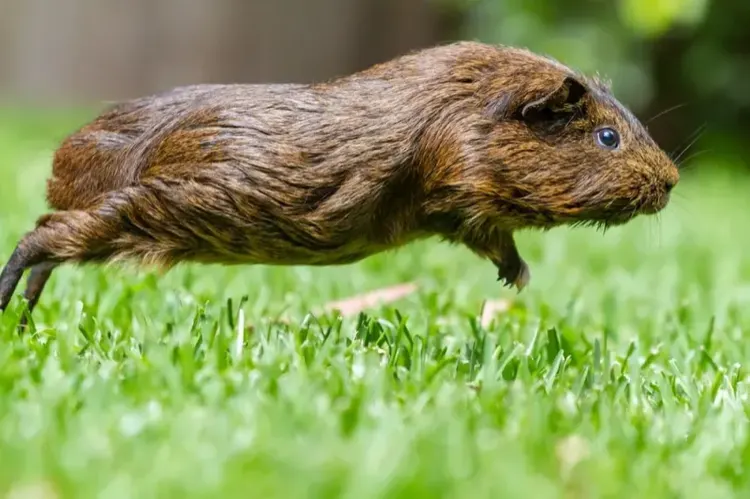
A sudden jump into the air with legs kicking in different directions, sometimes mid-run. This is happiness. Young guinea pigs do it constantly. When they get fresh hay, during floor time, or for no apparent reason at all. Older pigs still popcorn but less dramatically. If your guinea pig is popcorning, you are doing something right.
Your guinea pig stops moving entirely and stares with wide eyes. This is fear, not relaxation. Guinea pigs are prey animals, and going still is their first defense. If I do not move, maybe the predator will not see me. Loud noises, sudden movements, unfamiliar smells, and overhead shadows (which mimic birds of prey) all trigger freezing.
If your pig freezes often, the cage is probably in a spot that is too noisy or too exposed. Move it somewhere calmer and approach slowly when you reach in.
Rapid clicking of the teeth, usually with a raised head and puffed-out fur. This is a warning. The guinea pig is agitated and telling you (or another pig) to back off. You will see it during cage mate introductions, when a guinea pig does not want to be picked up, or sometimes when a pig is in pain.
Do not push through teeth chattering. If two pigs are chattering at each other, watch for escalation. If your pig chatters at you, give it space and try again later.
A slow, swaying walk paired with a low vibrating purr. Both males and females do it. It is a dominance display. "I am in charge here". And also shows up during mating behavior. During introductions between cage mates, rumblestrutting is normal and expected. It only becomes a problem if it turns into aggressive chasing or biting.
A guinea pig licking your hand is showing affection, or tasting the salt on your skin, or both. Not every guinea pig does this. It is more common in pigs that have bonded closely with their owner over time.
Not always sexual. Mounting is also a dominance behavior, and females do it to each other too. During introductions, mounting followed by the other pig moving away is a normal way of establishing rank. It becomes a concern only when it is constant and the mounted pig is showing signs of stress.
Guinea pigs are one of the most vocal rodent species. Here is what the main sounds mean:
Wheeking. The loud, high-pitched whistle when they hear the fridge open or a bag crinkle. It means food is coming and they are excited about it. This is not distress. Your pig has learned the sound of dinner.
Purring (low). A soft, continuous hum while being petted or lying down. Contentment. Keep doing what you are doing.
Purring (high or short). A tense, brief vibration. This is annoyance or discomfort, not happiness. It sounds similar to the contented purr but the pitch is higher and the body is tense rather than relaxed.
Chutting. A quiet "chut-chut-chut" while exploring. Happy, relaxed, and feeling safe. You will hear this during floor time or when a pig is wandering around its cage after a cage clean.
Whining. A high-pitched, drawn-out complaint. The pig is annoyed. Being held wrong, bothered by a cage mate, or stuck somewhere it does not want to be.
Shrieking. A loud, sharp scream. Pain or extreme fear. This needs immediate attention. Check for injuries, separate fighting pigs, and if you find nothing obvious, see a vet. Guinea pigs sometimes shriek from internal pain that you cannot see.
| Sound | What It Sounds Like | Meaning | What to Do |
|---|---|---|---|
| Wheeking | Loud whistle | Excitement (food) | Feed them |
| Low purr | Soft hum | Content | Nothing. They are happy |
| High purr | Tense vibration | Annoyed | Change what you are doing |
| Chutting | Quiet chut-chut | Relaxed, exploring | Nothing. They are happy |
| Teeth chattering | Rapid clicking | Warning, anger | Give space |
| Whining | Drawn-out complaint | Annoyed | Fix the issue |
| Shrieking | Sharp scream | Pain or fear | Check immediately |
Guinea pigs are crepuscular. Most active at dawn and dusk, with naps scattered throughout the day and night. They sleep in short bursts of 10 to 30 minutes, totaling about four to six hours per day. They rarely close their eyes fully, which throws off a lot of new owners who think their pig never sleeps.
A guinea pig that closes its eyes while resting near you is showing serious trust. Most keep their eyes open or half-open as a reflex. In the wild, a sleeping guinea pig is a dead guinea pig.
They will adjust somewhat to your routine, especially around feeding times, but do not expect them to be quiet all night. You will hear hay munching at 3 AM.
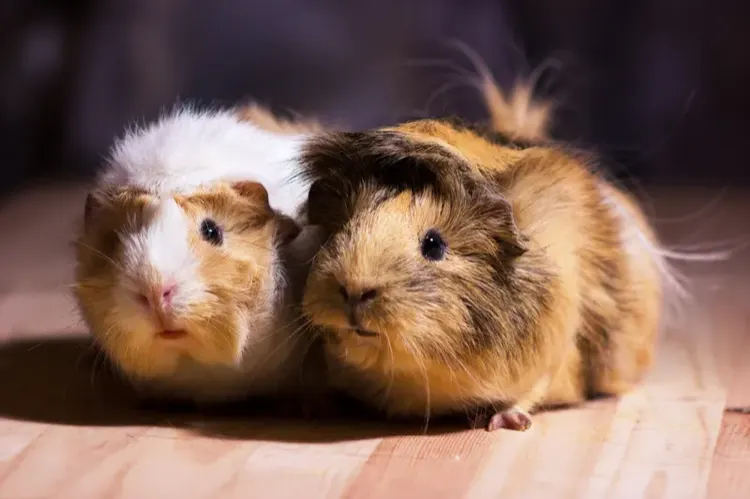
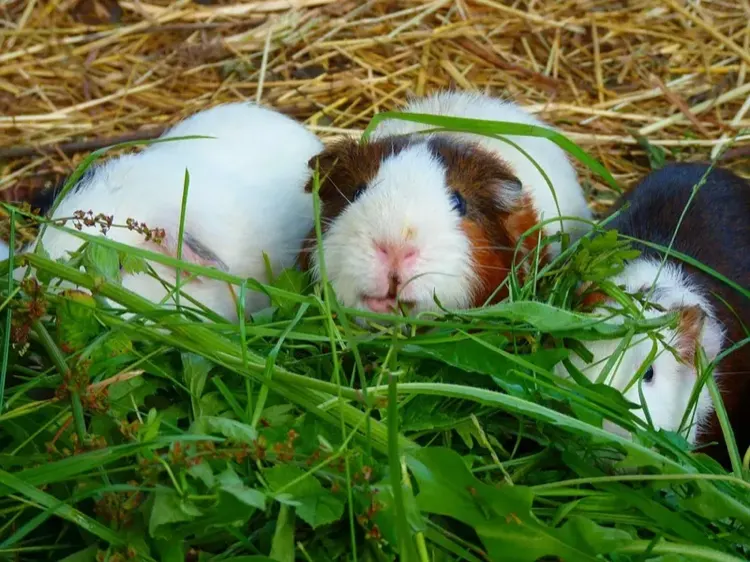
Guinea pigs are herd animals. A single pig living alone will survive, but it is not ideal. They need the kind of social interaction that humans cannot fully replace. Grooming each other, sleeping side by side, establishing a pecking order. Switzerland actually made it illegal to keep just one.
A pair is not much more work than a single pig. Bigger cage, more hay and vegetables, but the improvement in quality of life is hard to overstate.
Do it on neutral ground. A bathroom floor or a playpen in a room neither pig has claimed. Expect rumblestrutting, chasing, mounting, and teeth chattering in the first 20 minutes. That is normal dominance sorting, not fighting. It becomes a problem only when there is blood, sustained aggression with no breaks, or one pig being cornered with no escape.
Give it at least an hour. Many introductions look awful at first and settle down completely. Once they are coexisting in the neutral space, move both into a freshly cleaned cage so nobody has home-field advantage.
Every group of guinea pigs establishes a pecking order. One pig leads, the others defer. This plays out through chin-raising, rumblestrutting, and the occasional chase. It is healthy and normal. Make sure there are enough hiding spots and food stations so the bottom-ranked pig does not get bullied away from resources.
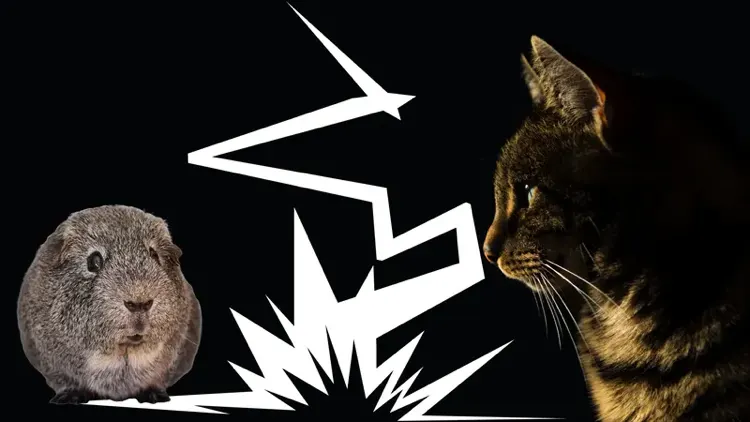
Cats: Natural predators. Even a lazy indoor cat still has the instinct to stalk and swat. Secure cage tops are non-negotiable, and never leave them unsupervised in the same room.
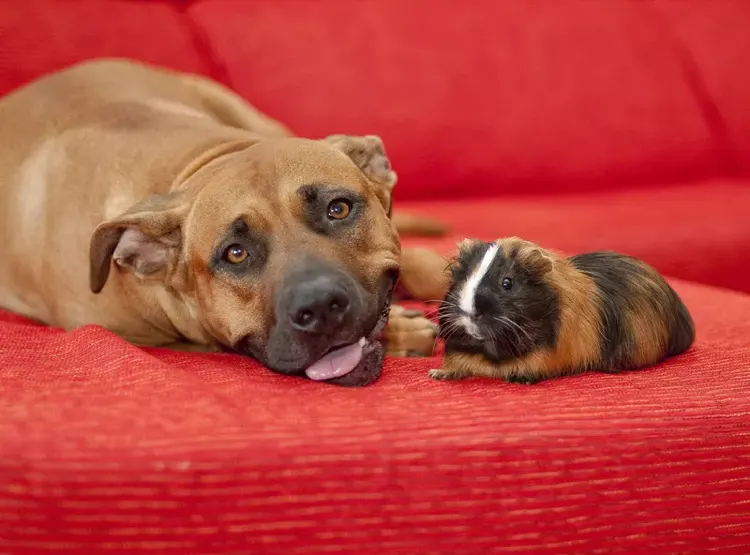
Dogs: Depends entirely on the breed and the individual dog. Terriers and breeds with high prey drives are risky. Even gentle dogs can hurt a guinea pig by accident. Keep the cage in a dog-free zone when you are not there to supervise.
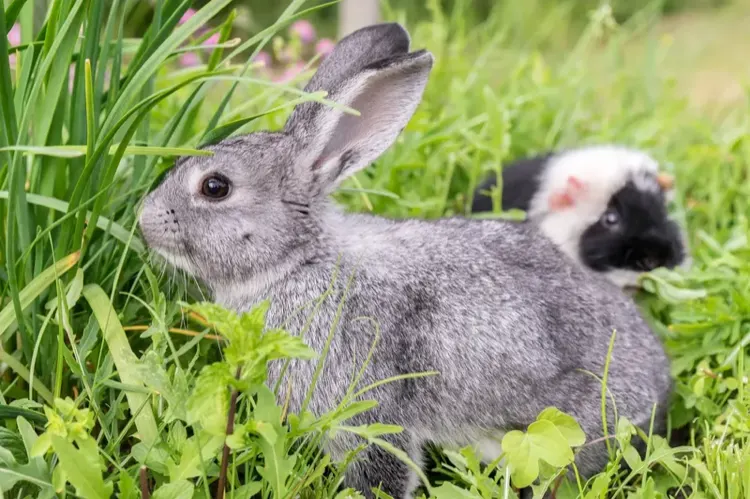
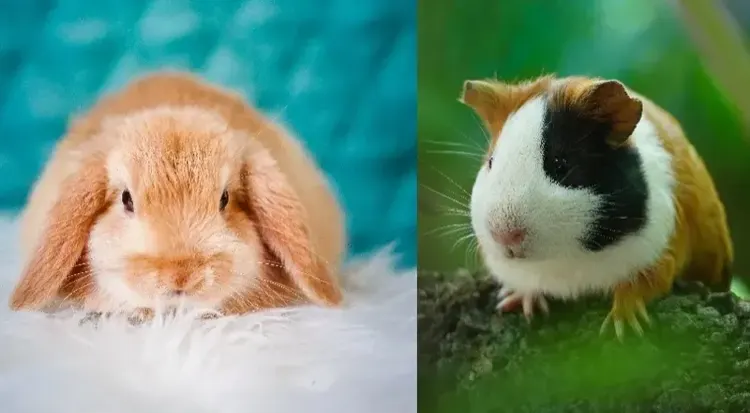
Rabbits: Do not house them together. Rabbits carry bacteria that can give guinea pigs fatal respiratory infections, and a rabbit kick can break a guinea pig's spine. It looks cute in photos. It is dangerous in practice.
Other small pets: Hamsters, gerbils, rats, chinchillas. None of them should share a cage with guinea pigs. Different diets, different social structures, different activity schedules.
Guinea pigs are smarter than most people give them credit for. They learn routines quickly, recognize their names, and can be trained to come when called, stand on their hind legs, and run simple obstacle courses. The key is food motivation and patience.
Start with hand-feeding vegetables so your pig associates your hand with good things. Once it is comfortable eating from your hand, you can begin luring it through simple behaviors with a piece of pepper or a bit of cilantro.
For handling, always support the hindquarters when picking up a guinea pig. Scoop with one hand under the belly and the other supporting the back end. Never grab from above. That mimics a predator attack and will make your pig terrified of being picked up.
Changes in behavior are often the first sign that something is wrong. Guinea pigs hide illness, so by the time they look sick, they have usually been sick for a while. Watch for:
If you notice any of these, do not wait to see if it gets better. Guinea pigs decline fast. Find an exotic vet. Not all vets treat guinea pigs. And get them checked.
Because being grabbed from above is what a hawk does. It is instinct, not a reflection of your relationship. Lure your pig into a hiding tube or a cuddle cup instead of chasing it around the cage. That only makes the fear worse.
Gentle nibbles usually mean "put me down, I need to pee" or "your finger smells like carrots." Actual biting is rare and usually means pain, fear, or extreme stress. If biting starts suddenly, check for health issues first.
Yes. By voice, footsteps, and smell. Most guinea pigs wheek when they hear their specific owner approaching and show clear preferences for certain family members.
Short chases followed by both pigs going back to normal activities is dominance sorting. It is healthy. Long, aggressive chases where one pig cannot escape, especially with biting, means the pairing is not working and you may need to separate them.
Sort of. Guinea pigs tend to pick a corner of the cage for most of their droppings. You can put a litter tray in that spot and most pigs will use it consistently. But they will still leave stray poops everywhere. That is just how guinea pigs work. Full potty training like a cat or dog is not realistic.
 guide
guide Your guinea pig rustles hay at midnight and runs at sunrise, so you're wondering whether guinea pigs are nocturnal. The label is close, but it's wrong.
 guide
guide Since guinea pigs' areas are active during the night as much as they are during the day, do they need light at night, or can guinea pigs see in the dark?
 guide
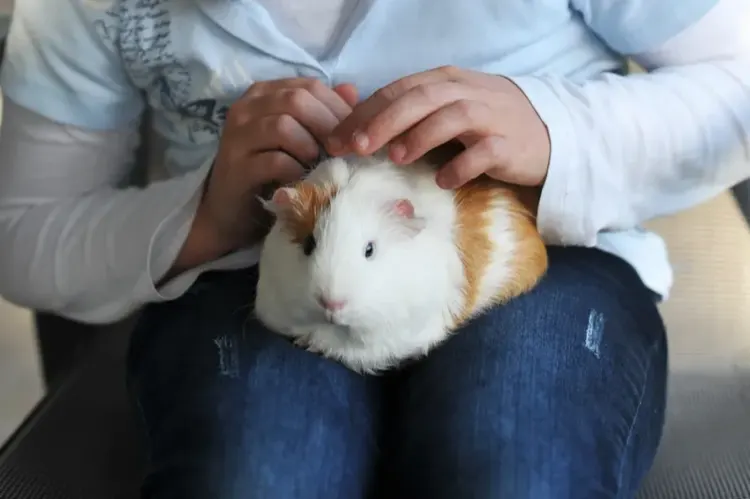
guide Emotional support animals (ESAs) are pet companions that provide emotional support to people who need help reducing anxiety and stress.
 guide
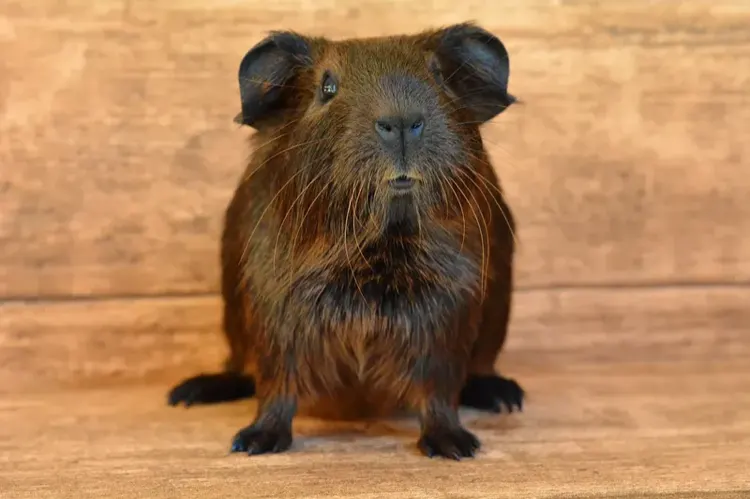
guide Guinea pigs are small mammals and very social animals. They love to have company and so they bond easily with their owners.
 guide
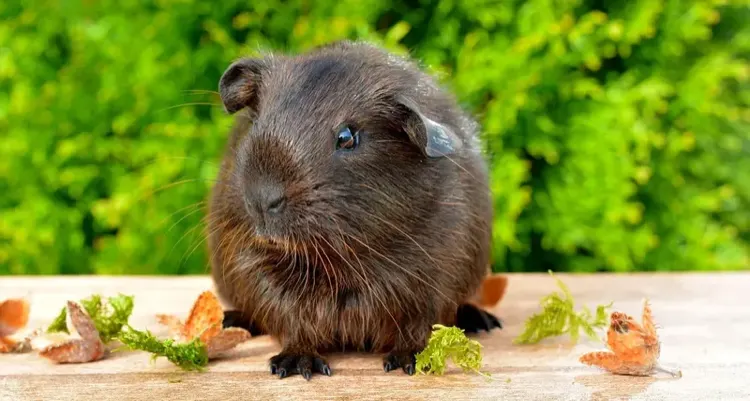
guide Looking for simple ways to train your guinea pig? There are several ways to help your guinea pig learn to come to you when you call them or use a litter box.
 guide
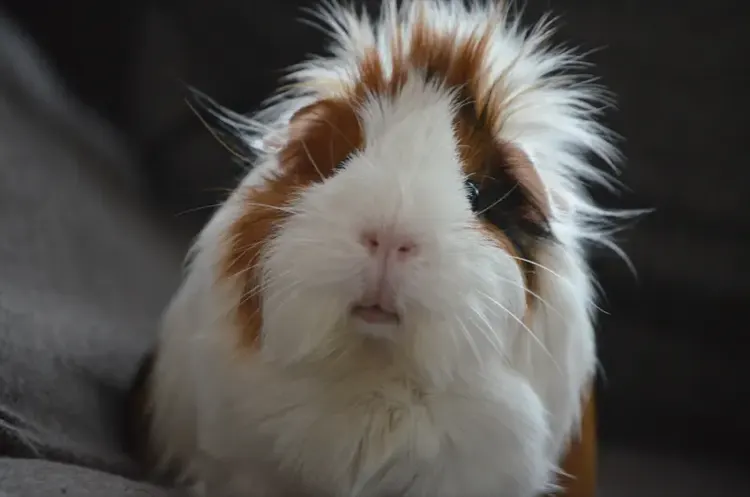
guide All animals have emotions they express in different ways, so how do you know if a guinea pig is happy? Understanding the feelings of your pet is important.
 guide
guide Do guinea pigs eat their poop? Although eating own poop sounds yuck, this behavior is normal for many species. Indeed, guinea pigs eat their own poop.
 guide
guide Nothing causes more pain than the death of loved ones, even in cases of guinea pig babies born dead.
 guide
guide Like all living beings, guinea pigs also face their end and it is helpful for the pet parents to be aware of the guinea pig dying process.
 guide
guide Guinea pigs are known for their adorable antics, and one of the cutest things they do is popcorning.
 guide
guide Guinea pigs are popular pets all over the world, and their playful and friendly nature makes them great companions.
 guide
guide Exercising your guinea pigs is vital for their mental and physical well-being. You need to know how to exercise a guinea pig.