

Can guinea pigs actually learn tricks? The answer might surprise you.
These little animals are smarter than most people think, capable of memorizing maze paths and recalling them months later.
Guinea pigs recognize their owner’s voice, respond to their own names, and can even tell the difference between colors. Here’s what science tells us about guinea pig intelligence.
Origin of Guinea Pigs
Before diving into intelligence, let’s see where these rodents came from and how they ended up in households worldwide.
Quick History Facts
In Peru, guinea pigs were primarily kept as a food source. They also appear on folk art from between 500 BCE and 500 CE.
Despite the name, they’re not pigs (they’re rodents) and they’re not from Guinea (they’re from South America). The scientific name is “cavia porcellus.”
Andes tribes domesticated them around 5000 BCE. Spanish conquistadors brought them to Europe in the 16th century as exotic pets, and owning one became a symbol of wealth.
Queen Elizabeth I of England was among the first royal owners.
Benefits and Role in Religion
Peruvians also used guinea pigs in traditional medicine, believing they could help diagnose illnesses. The animals became sacred figures in local religion.
Between 100 CE and 800 CE, statues of guinea pigs were worshipped in Moche (northern Peru) and woven into artwork. The Incas sacrificed them as offerings to their gods.
Quick Scientific Facts
Guinea pigs are mammals and herbivores that live 5 to 8 years. Adults weigh 700 to 1,200 grams and measure 20 to 25 cm.
They naturally live in tropical grasslands. Males (boars) are the dominant ones, while females are called sows.
Sociable and vocal, guinea pigs need a companion because isolation causes depression.
Like humans, they can’t produce vitamin C on their own. They rely entirely on food sources for it, and going without leads to serious health issues.
Encephalization Quotient of Animals
The encephalization quotient (EQ) is a standardized measure of animal intelligence based on brain size. It calculates the ratio between observed and predicted brain mass for an animal’s body size.
Mammals and EQ
Mammals are intelligent creatures that possess large brains, self-awareness, and complex behaviors. They’re very vocal and communicative.
Because of their self-awareness, mammals know when they’re held captive and can become restless. Some are more adaptable than others.
Mammals communicate using tools and vocalization to signal their wants, like a domesticated monkey pointing at a banana.
Guinea Pig Intelligence
Guinea pigs display all the characteristics of mammals. They’re born with full-body fur, have grease glands (their version of sweat glands), and possess two mammary glands.
The EQ of Guinea Pigs
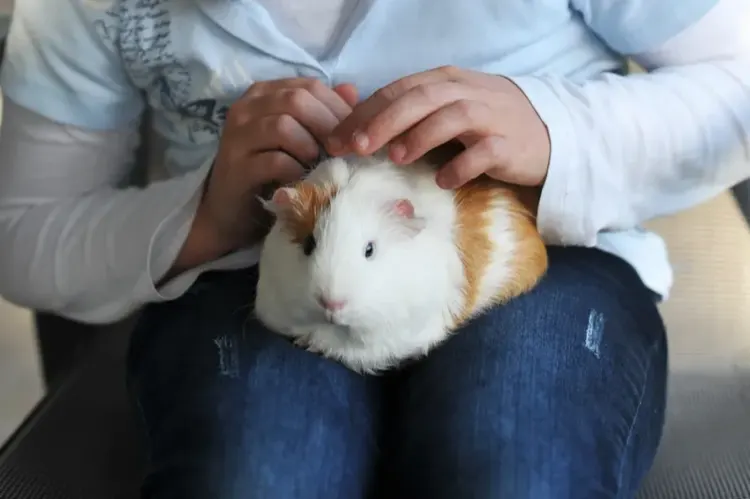
Guinea pigs are inquisitive and social, just like dogs or cats. Since they’re sociable, they enjoy making friends with humans.
They can sense danger and will hide when scared.
Give them a cage with plenty of hiding places since they know they’re prey animals. Their behavior sets them apart from other mammals in several ways:
- They learn complex maze paths and remember them for months
- They excel at spatial orientation
- They learn most effectively after 9 to 10 months old
- They love solving problems through obstacle courses
- They distinguish voices, colors, and smells quickly
- They communicate stress through purring and chirping
- They understand symbols and signs
- They adapt their sleeping habits to match their owner’s schedule
The guinea pig’s brain weighs just 5.5 grams in a body of 1.04 kg. Despite the small size, brain capability stays consistent regardless of body changes.
The Smartest Breed
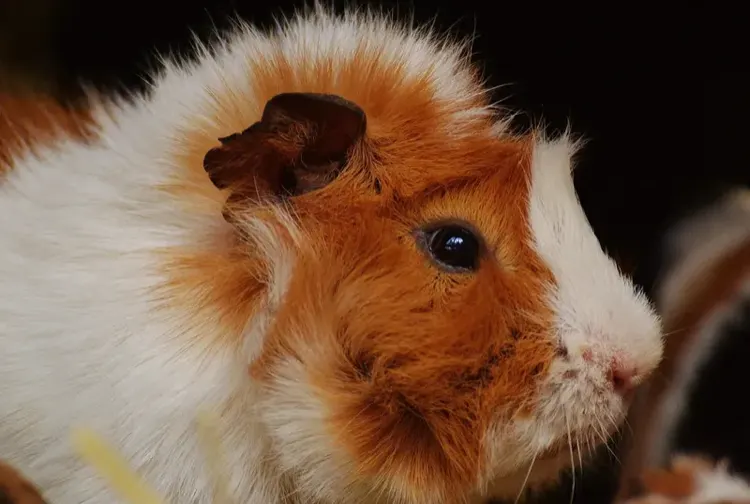
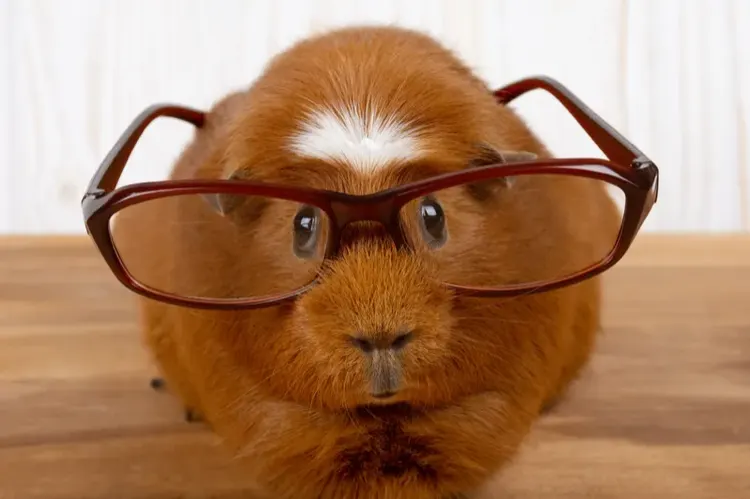
The crested guinea pig is the rarest and smartest breed. It’s shyer and quieter than other breeds, with a tendency to hide more.
Despite being quiet, it’s the best choice for training tricks and learning fun behaviors because crested guinea pigs pick things up faster than any other variety.
Guinea Pigs Are Smart and Affectionate
These rodents become smarter when they feel affection from their owners. They recognize their owner’s voice right away when their name is called.
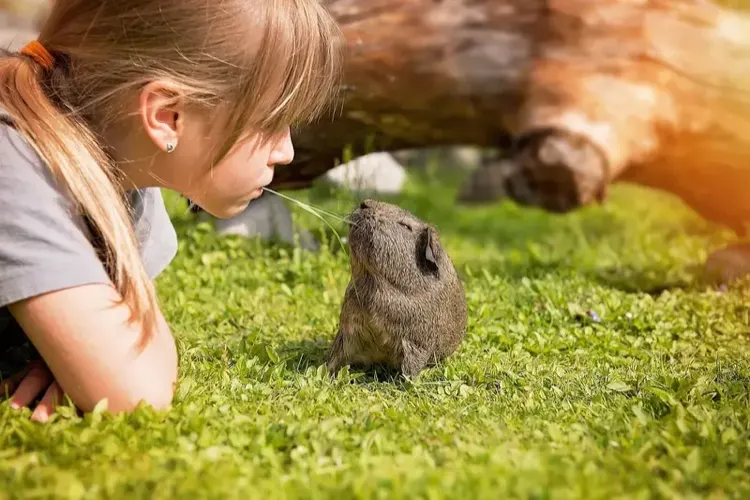
They reciprocate love by licking your hands, and you can even train them to give kisses.
When guinea pigs bond closely with you, they mirror your emotions. If you’re agitated, they’ll show it through their behavior.
If you’re sad, they’ll feel it too and express it through vocalization. Guinea pigs aren’t just technically smart; they’re emotionally intelligent.
Adaptability
Guinea pigs have been adapting for centuries. They once lived in rocky areas, grasslands, and mountain edges, surviving through natural instincts.
They lived in groups inside dug holes under land or trees.
When domesticated, they adjust easily to new surroundings. This adaptability is their way of life and what makes them so skillful.
Through adapting, they’ve learned to solve complex problems and navigate mazes, and that quality of adjusting to different changes is what makes them genuinely smart.
Is a Guinea Pig Right for You?
With their intelligence, special features, and affectionate nature, guinea pigs make excellent pets. They’re cute, cuddly, and smart.
They’ll teach you patience and gentleness, since caring for them requires a calm approach.
Guinea pigs tackle obstacle courses without hesitation to reach food at the finish line. That determination is something you can learn from.
With all the evidence presented, it’s clear this rodent family has remarkable intelligence compared to many other mammals.
Final Thoughts
Guinea pig intelligence goes well beyond what most people expect. They can be trained at a young age, adapt easily to changes, and solve problems that would stump other small pets.
From ancient food source to sacred animal to beloved household companion, the guinea pig has proven itself remarkably capable. If you’re looking for a smart, affectionate pet, a guinea pig is hard to beat.
Frequently Asked Questions
They sure can. Guinea pigs learn and respond to their names when called consistently. They recognize their owner's voice quickly and associate specific sounds with food, attention, or playtime. Start by using their name every time you feed them, and within a few weeks most piggies will respond reliably.
Guinea pigs can learn to come when called, stand on their hind legs, spin in circles, push a ball, and navigate obstacle courses. The crested guinea pig breed picks up tricks fastest. Use small vegetable treats as rewards and keep training sessions short because guinea pigs have limited attention spans.
Guinea pigs are generally considered smarter than hamsters based on their social intelligence and problem-solving abilities. They form deeper bonds with owners, recognize individual voices, and remember complex maze paths for months. Hamsters are more solitary and show less social awareness, though they're clever at escaping enclosures.
Provide puzzle feeders, obstacle courses, mazes built from cardboard, and regular floor time for exploration outside the cage. Rotate toys frequently so your piggy doesn't get bored with the same setup. Social interaction with you or a cage mate is also crucial because guinea pigs are herd animals that thrive on companionship.