
Is your guinea pig getting enough exercise? A bored, inactive piggy can become overweight and depressed fast.
Exercise wheels are dangerous for guinea pigs because of their curved spines, so you’ll need better alternatives.
Floor time, cage activities, and outdoor play are the three main options. Here are ten proven ways to get your guinea pig moving.
10 Ways to Exercise Your Guinea Pig
1. Put Toys and Household Items Inside the Cage
Putting household items inside the cage encourages your guinea pig to explore and move around. Items like cardboard tubes, cereal boxes, or a dustpan give them something new to investigate.
You can also add guinea pig toys like chewing toys and balls made specifically for them. The toys encourage movement, and you’ll quickly learn what your piggy prefers.
Avoid toys with dyes, small parts, or added sugars.
2. Rearrange the Cage Setup
Rearranging the cage layout motivates guinea pigs to explore again. You don’t need new toys.
Just move the existing items around.
The same arrangement gets boring and monotonous, so a simple rearrangement gives a fresh feel. New toys can help too if you want to mix things up even more.
3. Teach Guinea Pigs to Run Upstairs
Guinea pigs shouldn’t be limited to their cage. Teaching them to run up stairs is a great workout.
Climbing doesn’t come naturally to them, so use their favorite treats to guide them. Place your guinea pig on a step, lure them up with a treat, and eventually you’ll have a piggy that runs upstairs with confidence.
4. Build Obstacle Courses
Obstacle courses are a fun way to train your guinea pig. Build one using cardboard tubes elevated above the ground, small balance beams, and other safe obstacles.
Since you can arrange objects any way you want, the options are endless. Reward your guinea pigs with treats after each obstacle to keep them motivated, but switch up where the rewards go.
5. Make a Maze
Guinea pigs walking through a maze exercises both their brain and body. Making one is easier than you’d think.
Plan a path with a couple of dead ends and a way out, but don’t make it too hard since guinea pigs have short attention spans. Build a base with cardboard and glue the walls down.
Place treats at the exit to encourage them.
6. Create a Tunnel Playground
A tunnel playground is great floor time exercise. Guinea pigs love tunnels, and any tunnel spacious enough to fit them works as long as it doesn’t have sharp edges.
PVC pipes make excellent tunnels. Add treats inside to encourage exploration, but don’t overcrowd the play area.
Watching your piggy pop their little head out of a tunnel is genuinely adorable.
7. Organize a Veggie Hunt
Guinea pigs love fresh vegetables, so hiding veggies around the house turns snack time into exercise. Scatter different vegetables in various spots for them to find and hunt.
You can make it seasonal too. Cucumber Christmas trees in December, Thanksgiving veggie feasts in November, or carved vegetable faces for Halloween all keep things interesting while encouraging movement.
8. Give Two Guinea Pigs One Tomato
This is a fun trick with two guinea pigs. Show one tomato to just one of them.
The other piggy will try to steal it, and the first will fight to keep it. This back-and-forth creates playful exercise for both.
If your guinea pigs don’t like tomatoes, try cucumbers, carrots, or lettuce instead. Watching two piggies wrestle over a veggie is entertaining for everyone.
9. Stuff a Cardboard Tube With Hay or Vegetables
Stuffing cardboard tubes with food your guinea pig loves gets them playing and running around. When you put one tube for every two guinea pigs, they’ll start stealing tubes from each other, which is great exercise.
Toilet paper rolls work perfectly for this. Fill them with hay or veggies and place them in the cage.
10. Place Ramps Inside the Cage
Ramps are easy to build and fun for guinea pigs. Use a flat piece of wood without sharp edges.
Your piggies will love running up and down.
If they aren’t afraid of heights, try longer ramps. But if a ramp is too short, too steep, or not to their liking, they’ll ignore it completely.
Experiment with different types and keep them safely secured so nobody falls.
Things to Consider During Exercise
Select the Right Cage
Before starting any exercise routine, pick a cage with enough space. The recommended size for one guinea pig is 7.5 square feet.
For two, the minimum is 7.5 feet, but 10.5 feet is better. A good exercise pen can supplement limited cage space.
Don’t Overcrowd the Cage
While toys and items encourage movement, too many create clutter. The goal is to make guinea pigs run and explore, so keep enough open space.
If the cage feels crowded, remove some items.
Create a Safe Area
Safety during exercise matters. Clear the space of electric cords and block tight areas like under dressers, couches, or beds where guinea pigs could get stuck.
Make sure other pets in the house aren’t a threat.
Check the Weather for Outdoor Play
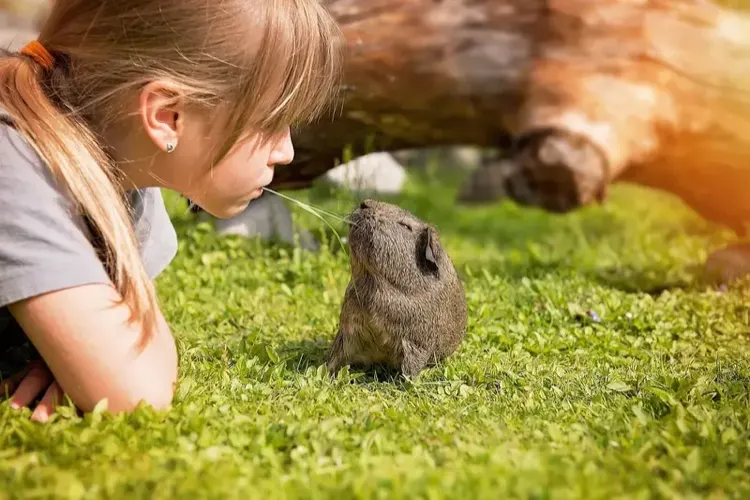
Before outdoor exercise, make sure conditions are safe. The temperature should be between 60 and 80 degrees.
The weather should be dry but not too sunny, since a little sunlight is great but too much isn’t good for them.
Protect Their Delicate Feet
Guinea pigs have soft skin on their feet that damages easily. Make sure they exercise on soft surfaces like grass or carpet.
Don’t sacrifice your piggy’s comfort for the sake of exercise.
Watch for Chemicals Outdoors
Grass and fields can contain fertilizers and chemicals. Stick to your own lawn if it’s chemical-free.
If you can’t find a safe spot, lay down a blanket or tarp for your guinea pigs to play on.
Use a Playpen
For outdoor time, use a playpen to keep your guinea pigs safe and contained. They love running around and soaking up sunshine, but they need a secure boundary.
Buy one from a pet store or build your own.
Use Guinea Pig-Safe Toys
Never use exercise wheels made for hamsters. Unlike hamsters, guinea pigs don’t have flexible spines, and wheels can cause major back injuries.
Exercise balls designed for hamsters are also dangerous for guinea pigs.
Don’t Over-Exercise
At minimum, guinea pigs need about one hour of activity per day, including free-roaming time in a playpen. On busy days, one hour is enough, but the ideal is three to four hours for guinea pigs in small habitats.
Not all that time needs your direct involvement. Roaming in a playpen or exploring the cage counts.
Just don’t push past the ideal daily amount because overdoing it can wear them out.
Why Exercise Matters
Like all animals, guinea pigs need movement for their physical and mental wellbeing. Lack of exercise makes them docile and timid.
Since they’re very prone to boredom, staying active keeps them engaged.
Popcorning is a great sign your piggy is getting enough stimulation. Guinea pigs are energetic and social, so letting them burn off energy and explore prevents depression and frustration.
Final Thoughts
These ten methods give you plenty of options for keeping your guinea pig active. You don’t need to use all ten at once, but switching between them keeps exercise from getting stale.
Stairs and obstacle courses tend to be the most engaging, but experiment to find what your guinea pig enjoys most. Keep exercise safe, stay within the recommended daily time, and your piggy will be healthier and happier for it.
Frequently Asked Questions
Guinea pigs need at least one hour of exercise daily, though three to four hours is ideal for piggies living in smaller cages. This can include supervised floor time, playpen roaming, obstacle courses, or exploring the house. Not all exercise requires your direct participation since cage exploration and ramp climbing count toward their daily activity too.
Guinea pigs should never use exercise wheels or balls designed for hamsters. Their spines aren't flexible enough and wheels can cause serious back injuries. Stick to floor-based activities like tunnels, ramps, mazes, and open play areas instead. These give your piggy the same workout without any risk of spinal damage.
Letting guinea pigs roam the house unsupervised isn't safe because of hidden hazards everywhere. Electrical cords, tight spaces under furniture, toxic houseplants, and other pets all pose serious risks. Always supervise floor time or use a secure playpen. Guinea pig-proof any room they'll explore by blocking gaps and removing dangerous items first.
Guinea pigs lacking exercise often become overweight, lethargic, and withdrawn from their cage mates. They may stop popcorning and show less interest in food or play. Overgrown nails and muscle weakness are physical signs too. If your piggy seems bored or depressed, increase daily floor time and add new enrichment activities.