
Thinking about getting a black and white guinea pig? There are more varieties of this color combo than most people realize.
Roans have black and white hairs mixed evenly throughout their coat. Dalmatians show large spots on a contrasting background.
Himalayans have white fur with dark points on the face, ears, legs, and feet. Each pattern looks completely different.
Black and white guinea pigs aren’t a single breed. They’re a color combination that shows up across many breeds.
Here are 10 facts about these striking piggies, plus tips on breeding and care.
What is a black and white guinea pig?
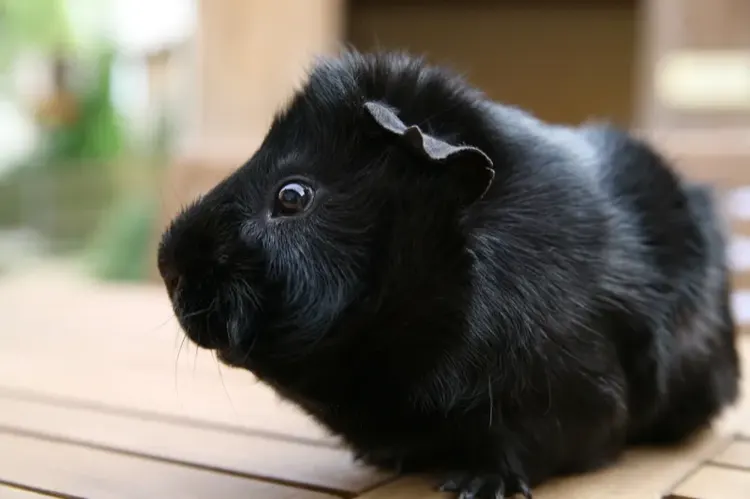
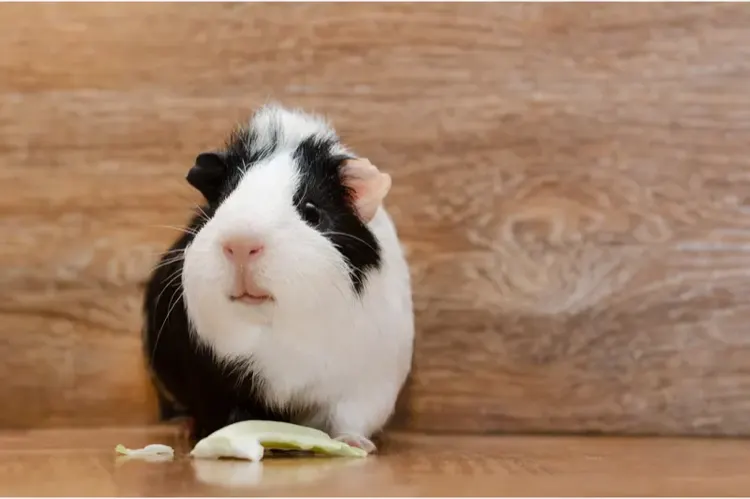
Black and white guinea pigs are one of the most popular guinea pig color combos. As the name suggests, they’re black and white in color.
There are many variations of this combo, but the most common is called the Roan guinea pig. Roan guinea pigs have patches of black and white fur mixed together evenly throughout their coats. That mixing happens between whole hairs, unlike agouti’s banded hairs, where two shades alternate along a single strand.
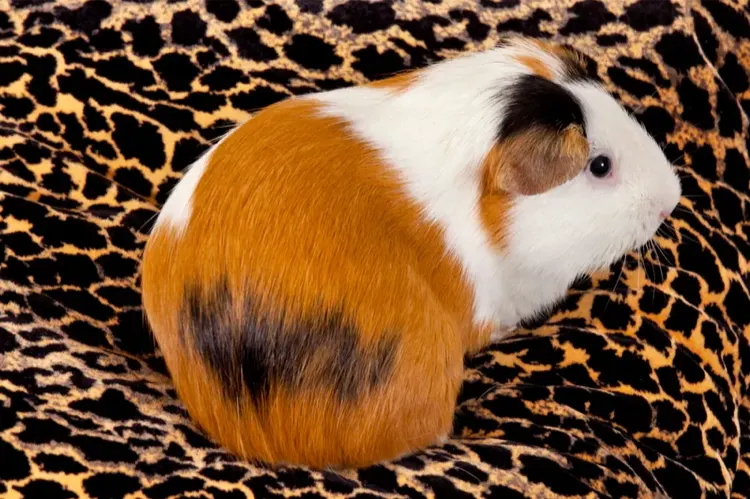
Other variations include the Dalmatian guinea pig, which has large spots of black or white fur on a background of the opposite color, and the Himalayan guinea pig, which has white fur with dark points on the face, ears, legs, and feet.
Two roans or two dalmatians should never be paired, because that cross produces lethal white pups with severe defects. The white coat there comes from the patterning gene, not from a pigment failure.
Regardless of the exact patterning, black and white guinea pigs are always a striking combination. Most of these pigs carry the flat, short coat of the American breed, since the pattern describes color rather than coat type.
This guinea pig makes a great pet for families with children of all ages. They’re friendly, social animals that enjoy spending time with their humans.
Black and white guinea pigs are also relatively easy to take care of. As long as they have a clean cage and plenty of food and water, they will be happy.
If you are looking for a lovely pet that’s sure to bring a smile to your face, consider adopting a black and white guinea pig.
Top 10 facts about the black and white guinea pig
Some of these facts about black and white piggies might surprise you:
- Black and white guinea pig originated in South America and was domesticated by the indigenous people there.
- The scientific name for the black and white guinea pig is Cavia porcellus.
- Adult black and white guinea pigs typically weigh between 2 and 4 pounds.
- Black and white guinea pig has a lifespan of 5 to 7 years, though some may live up to 10 years with proper care.
- Like every guinea pig, they’re herbivores, so they should eat fresh vegetables, hay, and a small number of pellets.
- Black and white guinea pigs are social creatures and do best when they have another guinea pig to cuddle with.
- These furry animals are active and playful and love to explore their surroundings.
- Black and white guinea pig is relatively easy to care for, but it does require daily attention and regular vet check-ups.
- Black and white guinea pig is a very affectionate animal and loves to be petted and cuddled.
- Black and white guinea pig is easy to find in pet stores and through breeders. It usually costs between $20 and $40.
Good information to have before deciding. These piggies make loyal companions with plenty of personality.
Black and white guinea pig breeding info
Breeding these color combos isn’t complicated, but planning matters.
Start with healthy animals from good stock. Genetic quality in the parents directly affects the health of the offspring.
To breed black and white guinea pigs, you’ll need to have two of each fur color.
Start by placing the two black guinea pigs together in a small enclosure. After a few days, you can then introduce the two white guinea pigs to the enclosure.
When all four guinea pigs are living together peacefully, you can begin the breeding process.
The easiest way to breed black and white guinea pigs is to let them mate naturally. This simply involves giving them access to each other and letting them do their thing.
However, it’s also possible to artificially inseminate one of the females if you wish to be more selective about the offspring’s coloration. If you choose this route, you’ll need to take her to a vet who can perform the procedure.
Once mating has occurred, it will take around 63 days for the baby guinea pigs, or “pups,” to be born.
The pups will inherit the coloration from their parents, so there’s a 50/50 chance that their fur will be either black or white. Nevertheless, it’s also possible for them to be a mix of both colors.
Regardless of what color they are, raising a healthy and happy guinea pig takes time, patience, and lots of love.
Caring for your black and white guinea pig
Daily attention and regular vet check-ups are non-negotiable, but the care routine itself is straightforward.
A few tips to keep your black and white piggy thriving:
Create a spacious home - a guinea pig needs room to roam and play. When setting a home for your guinea pig, be sure to provide them with plenty of space.
A good rule of thumb is to provide at least 10 square feet of space per guinea pig.
Give your guinea pig plenty of hay - hay should make up the majority of your black and white guinea pigs’ diet. It’s a good source of fiber, which helps keep their digestive system healthy.
Provide fresh vegetables - in addition to hay, your guinea pig needs a daily supply of fresh vegetables. They love things such as carrots, broccoli, and dark leafy greens.
Avoid feeding your guinea pig too many starchy vegetables, such as potatoes and corn.
Make sure they have access to water - every guinea pig needs to drink plenty of water to stay hydrated. Be sure to offer your guinea pig a water bottle or other source of fresh water at all times.
Provide a hiding spot - they’re timid creatures by nature and appreciate having a hiding spot where they can go to feel safe and secure. A cardboard box or tunnel toy makes a great place for your guinea pig to hide.
Handle them gently - due to their delicate nature, it’s necessary to handle your guinea pig with care. Always support their body when picking them up and be sure to set them down gently.
Never pick your guinea pig up by its ears or tail.
Get them annual check-ups - just like any other pet, they need to see a veterinarian on a regular basis for check-ups and vaccinations. Be sure to take them in for an annual visit to make sure your guinea pig friends are healthy and happy.
Frequently asked questions (FAQs)
Prospective owners tend to ask the same questions. Here are the most common ones:
What do black and white guinea pigs eat?
Black and white guinea pigs are herbivores and their diet consists mainly of hay, fresh vegetables, and water.
How much space do black and white guinea pigs need?
A black and white guinea pig requires at least 10 square feet of space.
How often does a black and white guinea pig need to see a vet?
A black and white guinea pig should see a vet at least once a year for a check-up and vaccinations.
What is the lifespan of a black and white guinea pig?
A black and white guinea pig has an average lifespan of 5 to 7 years, although some have been known to live up to 8 years.
Do black and white guinea pigs require any special care?
Black and white guinea pigs don’t require any special care. However, you need to handle them gently due to their delicate nature.
Proper care is all it takes. If you want a guinea pig that stands out visually, the black and white combo delivers.
Final thoughts
Black and white guinea pigs are a popular choice for pet owners who appreciate their unique coloration.
They’re relatively easy to care for but do require daily attention and regular vet check-ups.
If you’re looking for a guinea pig that’s a little bit different, a black and white guinea pig might be the perfect pet for you.
References
- https://iovs.arvojournals.org/article.aspx?articleid=2125989
- https://www.nature.com/articles/159115a0
- https://jamanetwork.com/journals/jamadermatology/article-abstract/552236
- https://www.sciencedirect.com/science/article/pii/S0022202X87901321?ref=pdf_download&fr=RR-2&rr=75b2091c2cfcb018
- https://www.sciencedirect.com/topics/biochemistry-genetics-and-molecular-biology/cavia-porcellus