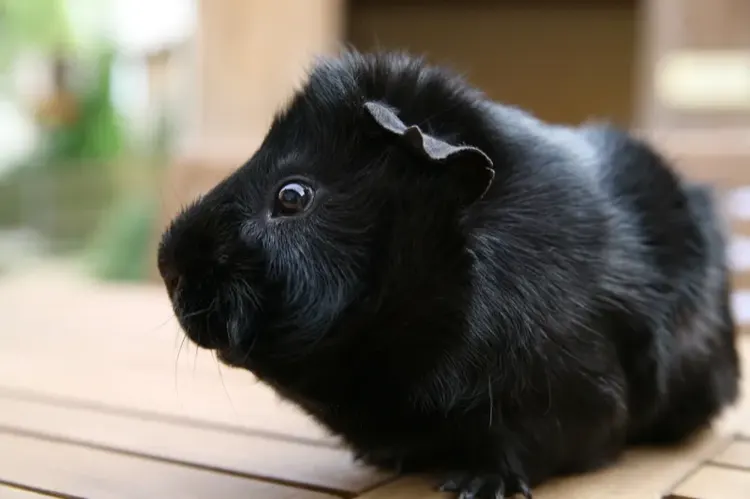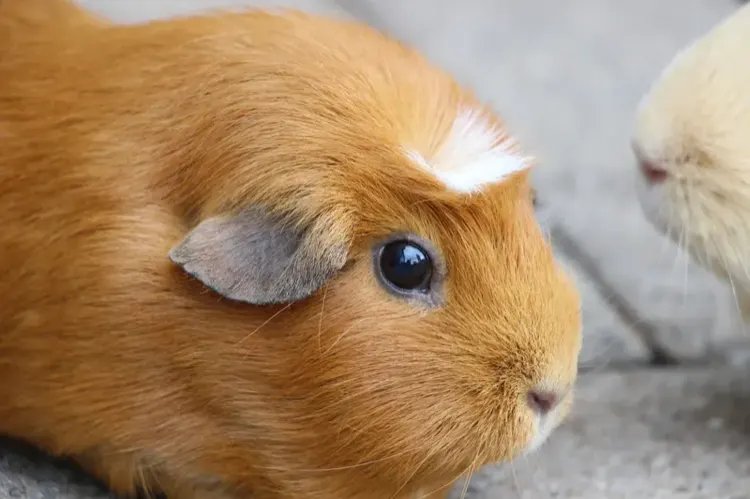

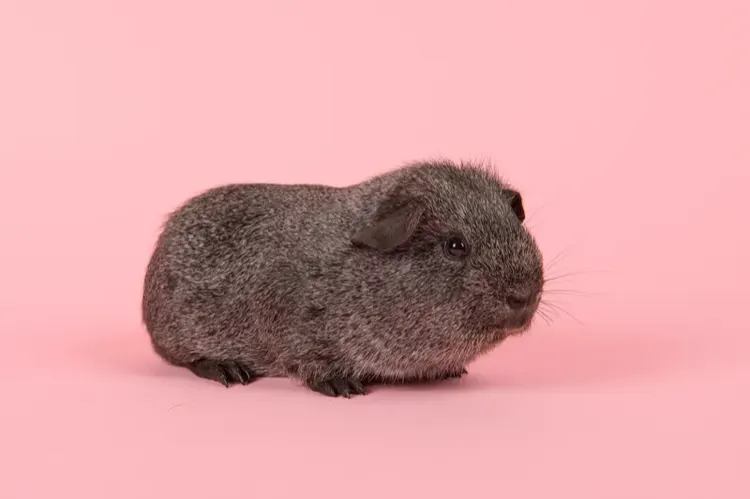
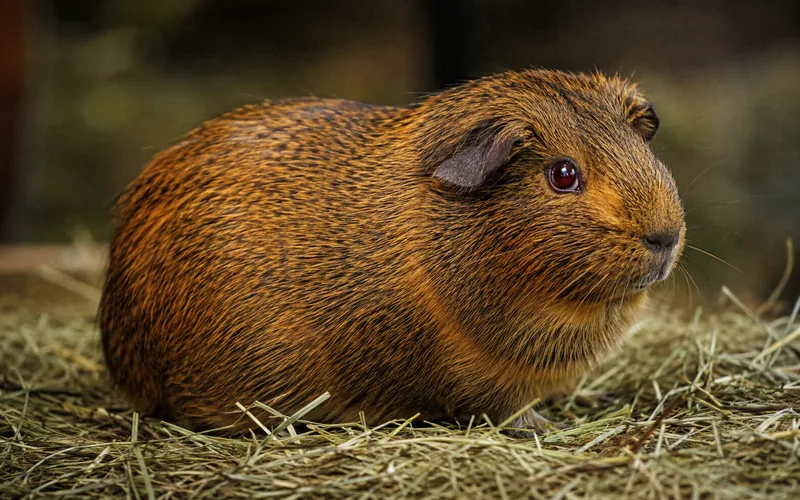
Agouti is the ticked coat that makes a guinea pig look flecked instead of one flat color. An agouti guinea pig carries the oldest coloring in the species, and every other color came after it.
Most owners meet the word on a pet shop label, and it confuses them straight away. Agouti belongs in the color column rather than the breed column, so it tells you nothing about coat length.
Below you’ll find the gene behind the banding, all six colors, the two with dark eyes, look-alike patterns, and everyday care.
What Makes a Coat Agouti
A coat counts as agouti when each hair carries two or more bands of color instead of one solid shade.
Pull one hair from an agouti guinea pig and hold it to the light. You’ll see stripes along its length: dark at the base, pale through the middle, dark again at the tip.
Step back and your eye blends those bands together. The result is the fine speckle breeders call ticking.
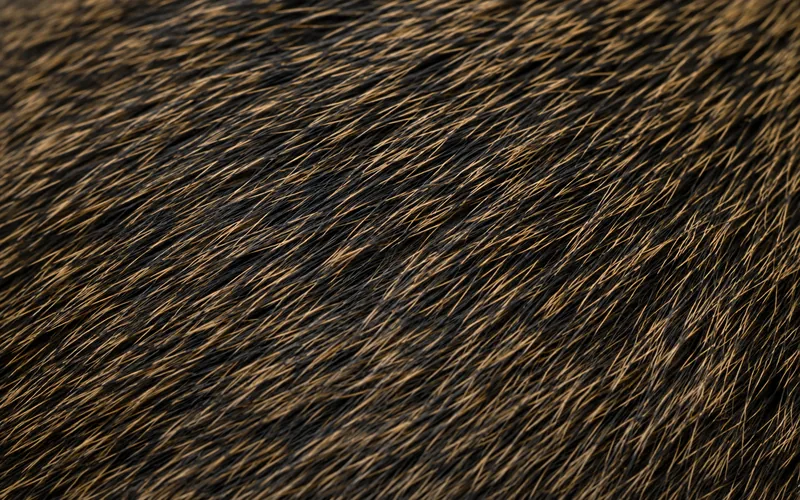
Wikipedia’s entry on agouti coloration defines the pattern as fur where each hair displays two or more bands of pigmentation. The same effect shows up in wild rabbits, mice, and plenty of other mammals.
Here’s why: agouti is the wild-type coat. It’s what the ancestors of the domestic guinea pig wore in South America, where speckled fur hides well in dry grass.
The ticking covers the back, head, and legs. The belly stays one solid color on most agoutis.
The name itself is borrowed. Breeders took it from the wild agouti, a long-legged South American rodent with the same banded fur.
The Gene Behind the Banding
Those bands come from a single gene, known to breeders as the A locus. It switches pigment production on and off while one hair is still growing.
Guinea pigs make two pigments: a dark brown-black and a reddish yellow. The A locus decides which one a follicle produces from moment to moment.
Switch to yellow partway up the shaft and a pale band appears. Switch back to dark and that band closes.
Here’s the thing. A guinea pig needs at least one copy of the agouti gene to show the pattern.
Two recessive copies turn the switching off. The animal then grows solid hairs from root to tip, which is how you get a self.
That one gene sits inside a much larger set. The University of Michigan’s Animal Diversity Web records 20 different phenotypes for hair color in guinea pigs.
Another 13 cover coat texture and length. Agouti genes work the same way in other pets, and a wild-colored rabbit carries the identical banding system.
The Six Agouti Colors
Agouti is recognized in six colors. The name always describes the pale band, because the dark base changes far less between varieties.
Golden Agouti
The most common of the six. A rich red-gold band over a black base puts golden closest to the original wild coat.
Golden agoutis have ruby eyes.
Silver Agouti
Silver keeps the same black base but tips each hair white or pale grey. That sharp contrast makes new owners assume it’s scarce.
Lemon Agouti
A soft pale yellow band instead of gold. Lemon is harder to breed evenly, since low contrast makes patchy ticking obvious.
Chocolate Agouti
Chocolate swaps the black base for warm brown and carries an orange-gold band. The result looks like a softer golden agouti.
Cinnamon Agouti
A greyish-brown base under a pale silver-fawn band, lighter overall than chocolate agouti. Cinnamon and silver look alike in weak indoor light.
Cream Agouti
The palest variety. A cream band over a diluted base leaves so little contrast that a cream agouti can look almost solid until you part the fur.
Why Two Agouti Colors Have Dark Eyes
Silver and lemon agoutis have dark eyes. The other four carry ruby eyes, which look near-black indoors and flash red under bright light.
Omlet’s breed guide lists that same split, naming which agouti colors have dark eyes and which show ruby.
The split follows the pigment system that colors the coat. Ruby eyes appear when a dilution gene thins the dark pigment in the iris, and the four warmer colors all carry it.
Thinning pigment is not the same as removing it. A coat that makes no pigment at all produces true pink eyes rather than ruby ones.
Silver and lemon keep a full-strength black base, so their eyes stay dark.
But there’s a catch. Bulb light hides ruby completely, so check eye color at a window instead.
Patterns People Mistake for Agouti
Two patterns get mistaken for agouti most often: Argente and brindle. Neither one bands the individual hair the way agouti does.
Argente
Argente coats are ticked too, which is why the mix-up is common. The difference is the base color.
An Argente has a light base with a red or fawn band, and pink or red eyes rather than ruby.
Brindle
A brindle guinea pig is not ticked at all. Brindle mixes whole black hairs and whole red hairs across the body, so the speckle comes from separate hairs sitting side by side.
The short version: agouti banding happens inside each hair, brindle mixing happens between hairs. Pull a few hairs and look at them one at a time.
The Solid Agouti and Show Standards
Most agoutis have a plain belly. The Solid Agouti carries ticking on the stomach too, which makes it a newer and uncommon variety.
Judges score agouti guinea pigs mainly on how evenly the ticking runs across the body. That includes the Abyssinian, whose swirled coat makes even ticking harder.
You might be wondering: how picky do judges get? Solid black guard hairs grow scattered through every agouti coat, and exhibitors pluck them out one at a time before a show.
In the United States the American Cavy Breeders Association sets those standards. Coat type counts as a separate breed question, which is why one animal can be both an agouti and an American guinea pig.
Caring for an Agouti Guinea Pig
Agouti guinea pigs need the same care as every other breed. The coat pattern changes nothing about food, housing, or handling.
Hay and fresh grass should make up most of the daily diet. The RSPCA warns that guinea pigs need hay or grass for their digestive systems to function properly.
Steady chewing also wears down teeth that never stop growing.
Miss that and dental disease follows. A fresh daily portion of guinea-pig pellets supplies vitamin C, which these rodents cannot produce themselves.
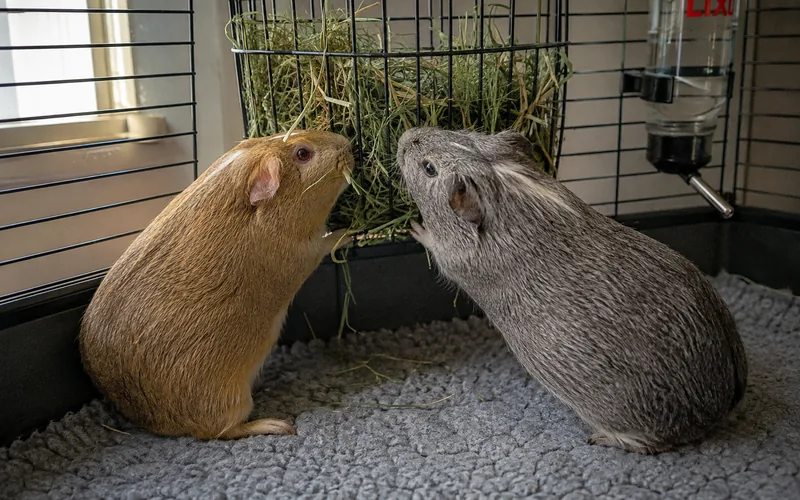
Companionship matters as much as food. The RSPCA advises keeping every guinea pig with at least one other friendly guinea pig, because a herd animal kept alone suffers for it.
Two females work well, and so does a neutered boar with a companion. A herd of three or four is fine if the cage grows with the group.
Grooming stays light. A short-coated agouti needs weekly nail trims and little else, while a long-coated Silkie takes daily brushing.
Agouti guinea pigs make calm, sturdy pets, and none of the six colors should cost extra.
Final Thoughts
Agouti is a pattern rather than a breed. Every hair carries bands, which separates an agouti from a solid brown coat or a black self.
Six colors, two of them dark-eyed, and not one genuinely rare. Choose the animal whose temperament suits your home.
Frequently Asked Questions
Yes. Agouti names a coat pattern rather than a species or breed, so an agouti is an ordinary domestic guinea pig with banded hairs. Show clubs judge color and coat type separately, so the same pig can be an agouti and a smooth-coated breed at once.
Agouti is recognized in six colors: golden, silver, lemon, chocolate, cinnamon, and cream. The color name always describes the pale band on each hair, since the dark base changes far less between varieties. Golden is the most common and sits closest to the original wild coat.
Silver agoutis are common rather than rare. The sharp contrast between pale grey tips and a black base makes the coat look unusual, so new owners often assume it is scarce. Silver is also one of only two agouti colors with dark eyes instead of ruby ones.
Within the agouti group, cream and lemon are hardest to find, because their low contrast makes even ticking difficult to breed to standard. Across all guinea pig colors, true lilac and beige selfs are usually named the scarcest.