
The American guinea pig is the short-haired breed of the domestic guinea pig, Cavia porcellus. A healthy adult weighs about two pounds and lives five to eight years.
This is the breed most people meet first. It fills pet store cages and it is the pig most often handed to a child as a first animal.
Its care is simpler than a Peruvian or a Texel, because there is no long coat to mat.
There is one rule with American guinea pigs that catches new owners out, and it has nothing to do with grooming.
What Makes a Guinea Pig an American
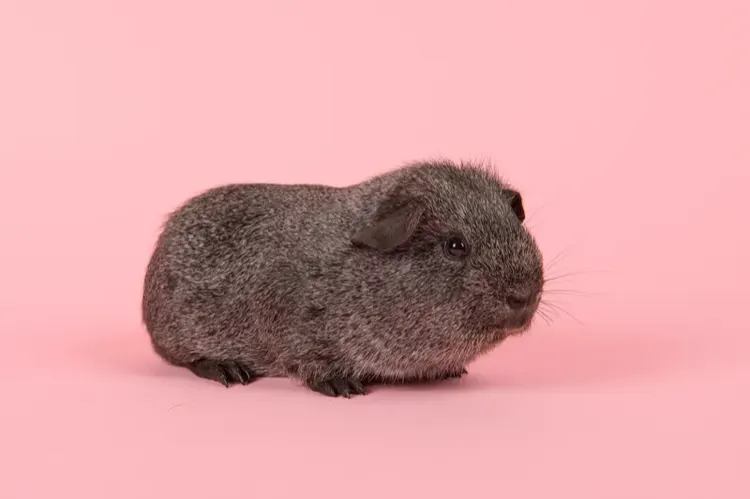
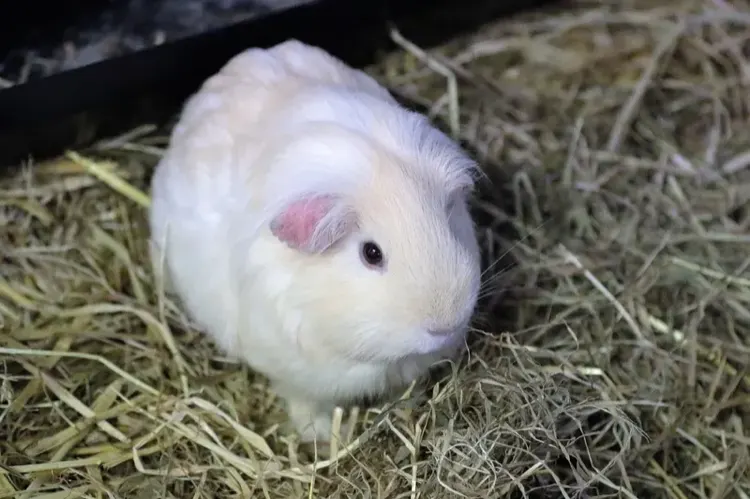
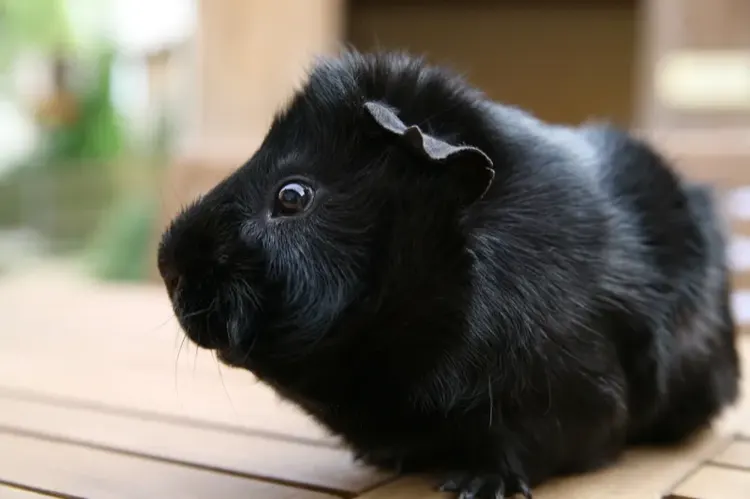
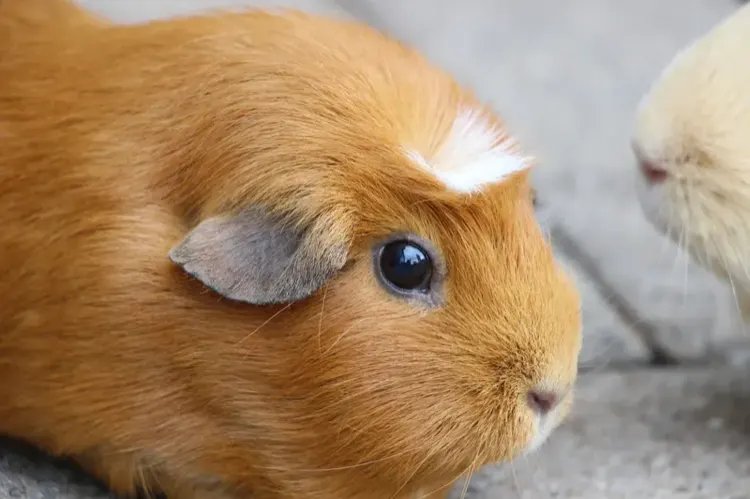
The American guinea pig is defined by its coat. The hair is short, straight, and lies flat against the body in one direction, with no rosettes, no swirls, and no curl.
That one trait separates it from the rest. An Abyssinian has rosettes and a Peruvian has hair that sweeps past its feet, while a Rex carries a woolly coat that stands upright.
The body is compact and short-legged. Judges look for a broad, sturdy build with a rounded rump and a head that carries a gentle downward curve called a Roman nose.
Ears sit low on the head and droop slightly, shaped like petals rather than points. A tuft of hair on the crown would make it a crested guinea pig instead.
An American guinea pig must have a clean, flat head. The eyes are large and set wide, which gives the animal a broad field of view for spotting predators.
Coat length on an American guinea pig runs about one inch at full growth. The American Cavy Breeders Association writes the standard the breed is judged against, and smoothness is the trait it weighs most.
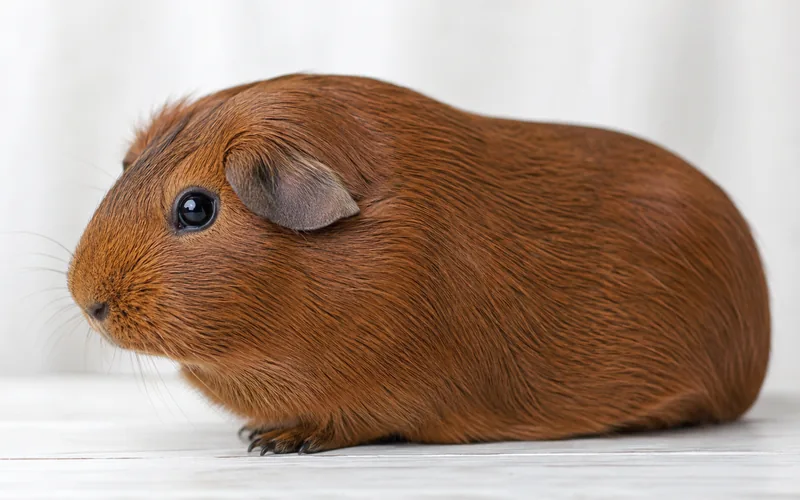
Adult weight lands between 1.8 and 2.2 pounds, according to the Merck Veterinary Manual, and body length runs eight to nineteen inches. Boars sit at the heavier end, sows at the lighter.
Where the Breed Came From
Guinea pigs are rodents from South America, and their wild relatives still live across the Andes in Peru, Bolivia, and Ecuador. Indigenous peoples began the domestication of these animals more than three thousand years ago.
The Inca kept them in household pens for meat. Spanish and Dutch traders then carried them to Europe in the sixteenth century, where selective breeding for coat and color began.
Here’s the deal: Cavia porcellus, the domestic species, doesn’t exist in the wild at all. The Merck Veterinary Manual states this plainly.
Every pet guinea pig alive today descends from that domesticated line. The American guinea pig is the oldest breed within it, and many later breeds trace their smooth-coat genetics back to it.
One naming point confuses a lot of buyers. Guinea pigs are also called cavies, and this breed is called the American only in the United States.
British and Australian keepers call the identical animal the English guinea pig. Neither name says where the pig came from, so a listing for an English guinea pig is selling you an American.
American Guinea Pig Colors and Patterns
Put simply, American guinea pigs come in every color the breed standard recognizes, from solid selfs to agouti, roan, and marked patterns.
American guinea pigs are not a color. The name describes a coat type, and it comes in nearly every pattern guinea pigs carry.
Solid colors are called selfs. A self American guinea pig is one uniform shade from nose to rump, in black, white, cream, buff, red, chocolate, beige, or lilac.
Agouti pigs have banded hairs, where each strand carries two colors along its length. That banding creates a ticked, speckled look in golden, silver, cinnamon, and lemon varieties.
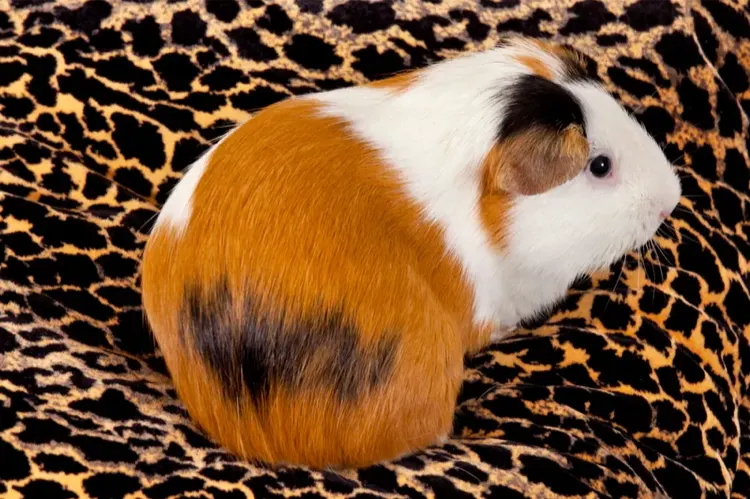
Roans mix white hairs evenly through a colored coat. Dalmatians carry dark spots on white, and brindles blend red and black hairs together across the whole body.
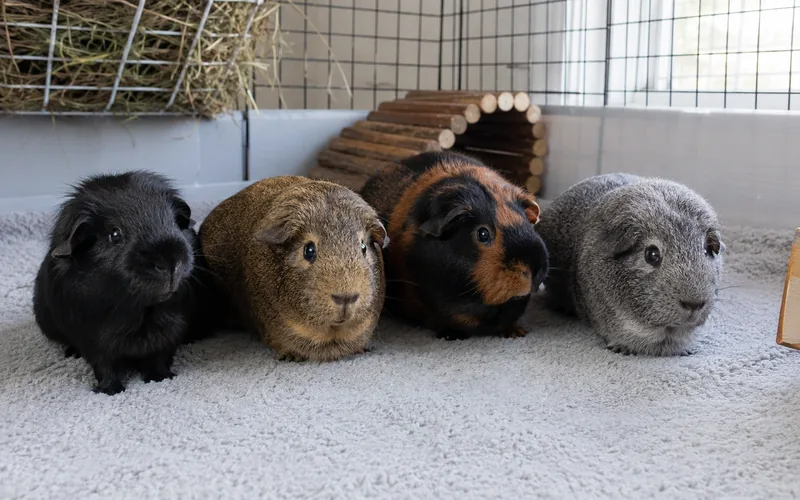
Then there are the marked patterns. Himalayan pigs are white with dark points on the nose, ears, and feet, and the color develops with temperature rather than age.
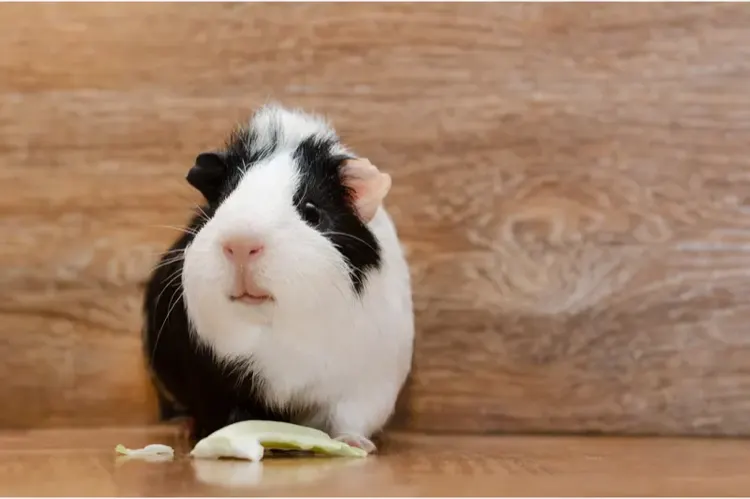
Tortoiseshell shows red and black in defined blocks. Dutch carries a white blaze down the face with a colored saddle, and bi-color pigs split two shades across the body.
But there’s a catch: two of these patterns carry a genetic risk. A pet store won’t mention it.
Breeding two roans together, or two Dalmatians, can produce lethal white offspring. Those pups are often born blind, deaf, and with malformed teeth, so good breeders never pair them.
Temperament and Personality
American guinea pigs are among the calmer breeds. They tolerate handling well, they settle quickly on a lap, and they are less prone to bolting than the flightier long-haired breeds.
That calm shows up in how they explore. Put an American guinea pig into a new playpen and it will start sniffing corners within a minute or two.
Expect a lot of noise from American guinea pigs. A high wheek means food is coming, and a low rumble is a courting or dominance sound.
Rapid teeth chattering is different. That sound is a warning that the pig wants space.
Popcorning is the one every owner waits for. The pig launches straight up, twists mid-air, and lands facing a new direction, which means it feels happy and safe.
Young pigs popcorn far more than older ones. An adult that never does it isn’t unhappy.
Guinea pigs rarely bite when they are handled calmly, per the Merck Veterinary Manual. A pig that nips is almost always frightened, hungry, or reacting to a nail being caught.
Handling and Holding
Most American guinea pigs enjoy being held once they trust you. Build trust by sitting near the cage, talking, and offering food by hand before you reach in.
How you pick one up matters more than anything else. Support the chest with one hand and the hindquarters with the other, which is the method the Merck Veterinary Manual sets out.
Never lift a guinea pig by its middle alone. Their spines are fragile, and a dangling back end makes them panic and kick.
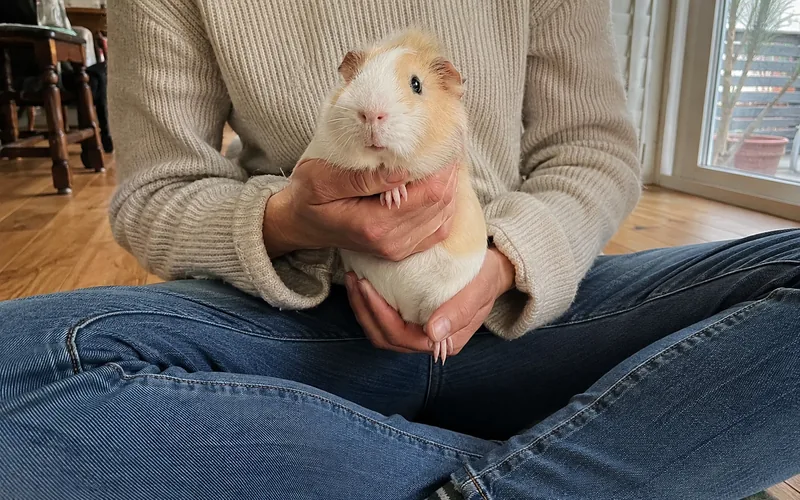
Start at five minutes and build up. Sit on the floor with a towel on your lap, since a fall from chair height can break a leg.
Kids under eight should always hold pigs sitting down. A startled two-pound animal can twist out of small hands in a second.
Expect the first week to be all hiding. A new American guinea pig will spend most of it under a hideout, and that’s normal.
Why One American Guinea Pig Is Never Enough
Guinea pigs are social animals that naturally prefer living in groups, and the Merck Veterinary Manual describes this as a basic feature of the species. A single pig isn’t a content pig.
Isolated American guinea pigs eat less, move less, and vocalize less. Owners often read that stillness as calm, when it is closer to withdrawal.
Switzerland made this a legal matter in 2008. Keeping a guinea pig alone is banned there under animal welfare law and treated as neglect.
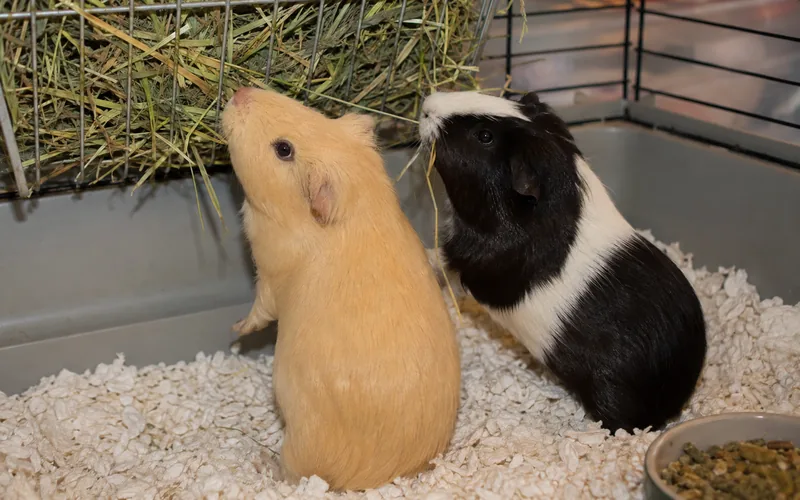
What this means for you: buy two American guinea pigs, and get them at the same time from the same source if you can.
Two sows is the easiest pairing for a beginner. Two boars can work if raised together with enough floor space, though territorial squabbles are more common.
A neutered boar with one or more sows also works. Never house an intact boar with a sow unless you want pups, since she can conceive within hours of giving birth.
What American Guinea Pigs Eat
Hay is the foundation of the American guinea pig diet, and it should never run out. Unlimited timothy or orchard grass should sit in front of the animal all day, every day.
The reason is mechanical, not just nutritional. Guinea pigs have twenty open-rooted teeth that grow continuously through life, and chewing coarse strands is what wears the incisors, premolars, and molars back down.
Skip it and the molars overgrow into spurs. Those spurs cut the tongue and cheek, and correcting them takes a vet with a dental burr and anesthesia.
Alfalfa is for pups under six months and for pregnant or nursing sows. It carries too much calcium for a healthy adult and feeds bladder stones.
American guinea pigs need one thing almost no other pet does.
Here’s why: they can’t make their own vitamin C, and without it they develop scurvy exactly the way people do.
VCA Animal Hospitals puts the requirement at 10 to 50 mg of vitamin C per day. The higher end covers young, old, pregnant, or sick animals.
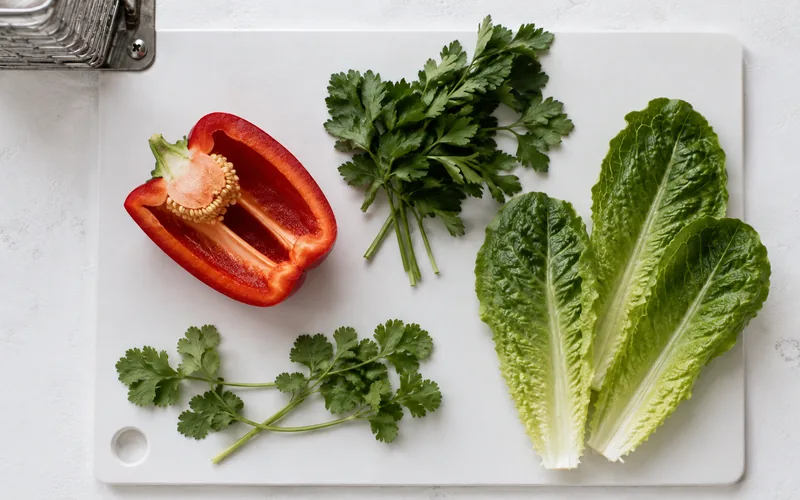
Timothy-based guinea pig pellets supply part of that. Fresh vegetables cover the rest.
Best daily vitamin C foods:
- Red bell pepper: a quarter covers a full day
- Parsley and cilantro: strong sources, small amounts
- Romaine lettuce: safe as a daily base green
- Kale: occasional only, for its calcium load
Skip vitamin C drops in the water bottle. The vitamin breaks down within hours, and pigs often drink less when the taste changes.
About a cup of fresh vegetables a day suits one adult American guinea pig. Iceberg lettuce, potato, onion, and lots of cabbage all cause digestive trouble.
Common Health Problems
Most American guinea pig illness falls into four groups: respiratory infections, bladder and urinary problems, scurvy, and dental disease.
For their size, American guinea pigs are hardy animals. Still, a few problems account for most vet visits, and knowing the early signs keeps a small issue from becoming an expensive one.
Respiratory Infections
Chest infections are the most common serious illness in American guinea pigs. Watch for crusted eyes, a wet nose, clicking breath sounds, and a pig sitting hunched in a corner.
Bedding is often the cause. Cedar and pine shavings release oils that irritate the airway, so use paper bedding, aspen, or fleece liners instead.
Bladder and Urinary Problems
The urinary tract is a known weak point in this species. Bladder stones form when calcium settles out, and they can lodge in the bladder itself or move into a ureter.
Blood in the urine and squeaking while urinating are the signs to act on. Both need a vet the same week, since a stone stuck in the ureter is an emergency.
High-calcium foods drive the risk, so cut alfalfa from adult diets and limit kale and spinach.
Scurvy
Vitamin C deficiency shows up as a rough coat, a limp, and reluctance to move. Joints swell first, so the pig walks stiffly before anything else looks wrong.
Dental Disease and Bumblefoot
Overgrown molars cause drooling and dropped food. Bumblefoot, or pododermatitis, shows as red swollen footpads and comes from wire cage floors or damp bedding.
What’s the bottom line? A pig that stops eating for twelve hours needs a vet, whatever the cause turns out to be.
Their digestive system shuts down fast when food stops moving through it. Waiting a weekend is how guinea pigs die of problems a vet could’ve treated.
Grooming an American Guinea Pig
Grooming an American guinea pig means a weekly brush and nail clippers every three to four weeks.
The coat is the easy part. Brush an American guinea pig once a week with a soft bristle brush to lift loose hair, and that is the whole job.
They shed lightly year-round with a heavier drop in spring. No mats form, so nothing needs combing out.
Baths should be rare. Three or four times a year at most with a guinea pig shampoo, and only when the pig is dirty.
Nails are where the real work is. American guinea pig nails grow continuously and need trimming every three to four weeks.
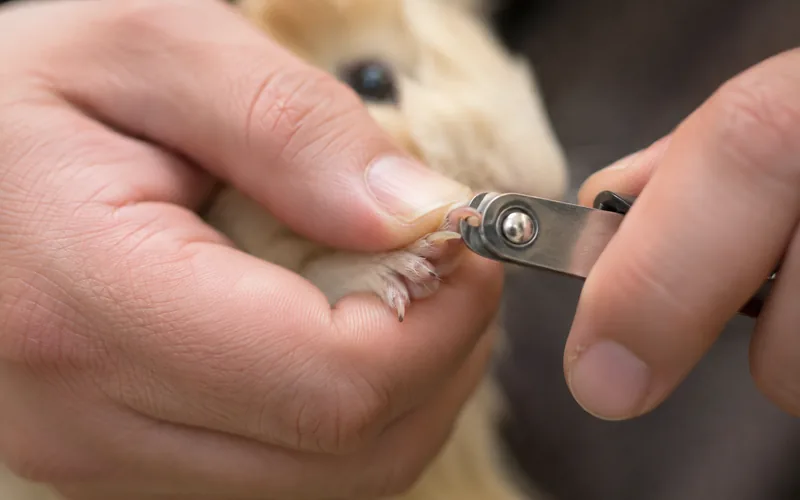
Use small animal nail clippers or human nail clippers, not scissors. Front feet carry four toes and back feet carry three, and each toe has a nail that curls if left alone.
Light nails show the pink quick, so cut a couple of millimeters past it. Dark nails hide it, so take small slices and stop when the cut looks chalky white.
Keep styptic powder within reach, because nicking the quick bleeds more than you expect. A pinch on the nail stops it in about thirty seconds.
Boars need one more check. The grease gland above the tail builds up a waxy secretion, which a warm cloth with coconut oil clears every few weeks.
Cage Size and Housing
What matters most: floor space, a solid floor, and a room that stays cool.
Most cages sold for guinea pigs are too small. Rescues and cavy clubs put the minimum for a pair of American guinea pigs at 7.5 square feet of floor space.
Aim for 10.5 square feet if you can. Experienced owners report that most territorial squabbling stops at that size.
Floor space matters far more than height. Guinea pigs don’t climb, so a second level adds less than a wider base for the same money.
C&C cages built from wire grids and coroplast panels give the most room per dollar, and they come apart for cleaning.
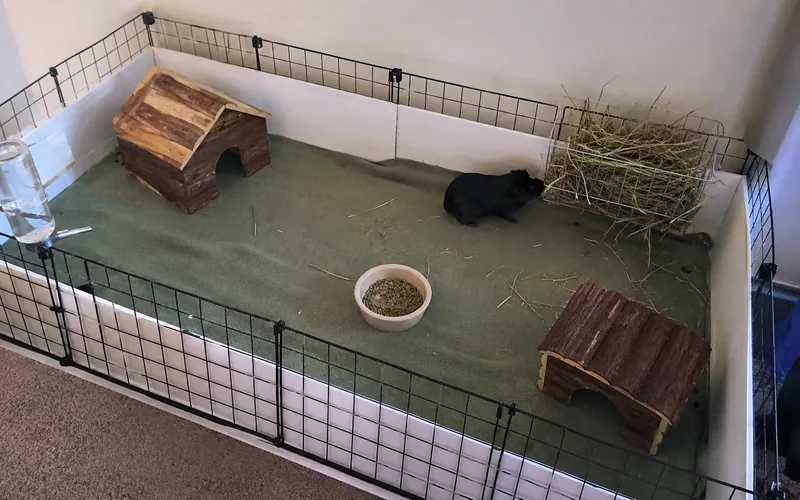
The floor must be solid. Wire cage floors cause bumblefoot, so cover any wire base with fleece liners, paper bedding, or aspen.
Temperature is the setting most owners never check. The Merck Veterinary Manual gives an ideal housing range of 65 to 75 degrees Fahrenheit.
Above 80 degrees a guinea pig can go into heatstroke, and they can’t pant well enough to cool themselves. Keep the cage out of direct sun and away from heating vents and drafty doors.
Each American guinea pig needs its own hideout. Two pigs and one shelter creates a resource to fight over, so add a tunnel or a second hidey.
Price and Where to Find One
American guinea pigs are among the cheapest breeds to buy and the most widely available. A pet store pig runs about $25 to $45, and a show-quality pig from an ACBA breeder runs $40 to $75.
Rescues are the better option. Adoption fees run $15 to $40, often for a bonded pair, and those American guinea pigs come health-checked.
The animal itself is the cheap part. A proper cage, hideouts, a hay rack, a water bottle, and bedding run $150 to $300 to set up.
Budget $40 to $60 a month after that for hay, pellets, fresh vegetables, and bedding. An exotic vet visit runs $60 to $120 before any treatment.
Check the coat before you commit. Run a hand against the growth direction and look for bald patches, scabs, or crusting at the ears.
Mites and ringworm spread fast in crowded pet store bins. Both are treatable, but both cost a vet visit you didn’t plan for.
A healthy pig has clear eyes, a dry nose, and clean fur around the rear. It should react when you approach, since a pig that ignores you is often unwell.
Final Thoughts
American guinea pigs earn their reputation as a starter breed honestly. The coat needs a weekly brush and the temperament is forgiving.
The rest is diet. Unlimited hay plus 10 to 50 mg of vitamin C daily covers most of it.
Get the cage size right the first time and buy two American guinea pigs, not one. Those two decisions do more for the animals’ health than anything else on this page.
Frequently Asked Questions
Most do, once they trust you. Support the chest with one hand and the hindquarters with the other, which is how the Merck Veterinary Manual recommends picking one up. Start with five-minute sessions on your lap. A pig handled gently from a young age will often settle for twenty minutes without struggling.
Yes, and they are among the calmer breeds. Americans are curious, they explore a new space quickly, and they settle faster than most long-haired breeds when picked up. They are still social animals that need another guinea pig for company, so a friendly pig is not a substitute for a cage mate.
No. The American is the most common guinea pig breed kept as a pet, and it is the oldest breed the American Cavy Breeders Association recognizes. Pet stores and rescues stock it far more often than Peruvian, Texel, or hairless breeds. Certain color patterns within the breed are uncommon, but the breed itself is not.
Guinea pigs are also called cavies, taken from the scientific name Cavia porcellus. In the United States the smooth short-haired breed is called the American. The identical animal is called the English guinea pig in the United Kingdom and Australia, so the two names describe one breed.