
Guinea pigs need a steady supply of vitamin C from their food because their bodies can’t produce it on their own. Dandelions (Taraxacum officinale) rank among the most nutrient-dense plants you can offer your cavy, delivering more iron than spinach and more beta-carotene than carrots gram for gram.
That said, not every dandelion is safe to toss into the cage. Where you pick them, how you prepare them, and how much you serve all make a difference. Below, we’ll walk through each part of the dandelion plant, the nutritional benefits and risks, and a practical feeding schedule based on what veterinary sources actually recommend.
Why Dandelions Are Good for Guinea Pigs
Dandelions are good for guinea pigs because they supply essential vitamins and minerals that cavies can’t get from hay alone. They’re especially valuable as a natural source of vitamin C, which guinea pigs cannot synthesize on their own.
The RSPCA includes dandelions among the safe wild plants guinea pigs naturally eat alongside grass and herbs like groundsel. Here’s what a serving of fresh dandelion greens provides your guinea pig.
| Nutrient | Amount per 100g | Why It Matters for Guinea Pigs |
|---|---|---|
| Vitamin C | 35 mg | Prevents scurvy and supports immune function |
| Vitamin A | 508 µg (RAE) | Maintains healthy skin, coat, and eyesight |
| Vitamin K | 778 µg | Supports blood clotting and bone density |
| Calcium | 187 mg | Builds strong bones and teeth |
| Phosphorus | 66 mg | Works with calcium for skeletal health |
| Potassium | 397 mg | Regulates fluid balance and muscle function |
| Iron | 3.1 mg | Carries oxygen through the bloodstream |
| Fiber | 3.5 g | Keeps the digestive tract moving properly |
One thing worth paying attention to is the calcium-to-phosphorus ratio. In dandelions, it sits at roughly 2.8:1, while guinea pigs do best between 1.5:1 and 2:1 for urinary health. That’s the main reason moderation matters, and we’ll cover the feeding schedule further down.
Dandelions also contain antioxidants like luteolin and chicoric acid. These help reduce oxidative stress at the cellular level, which can slow the kind of damage tied to aging and chronic inflammation.
Which Parts of the Dandelion Plant Are Safe
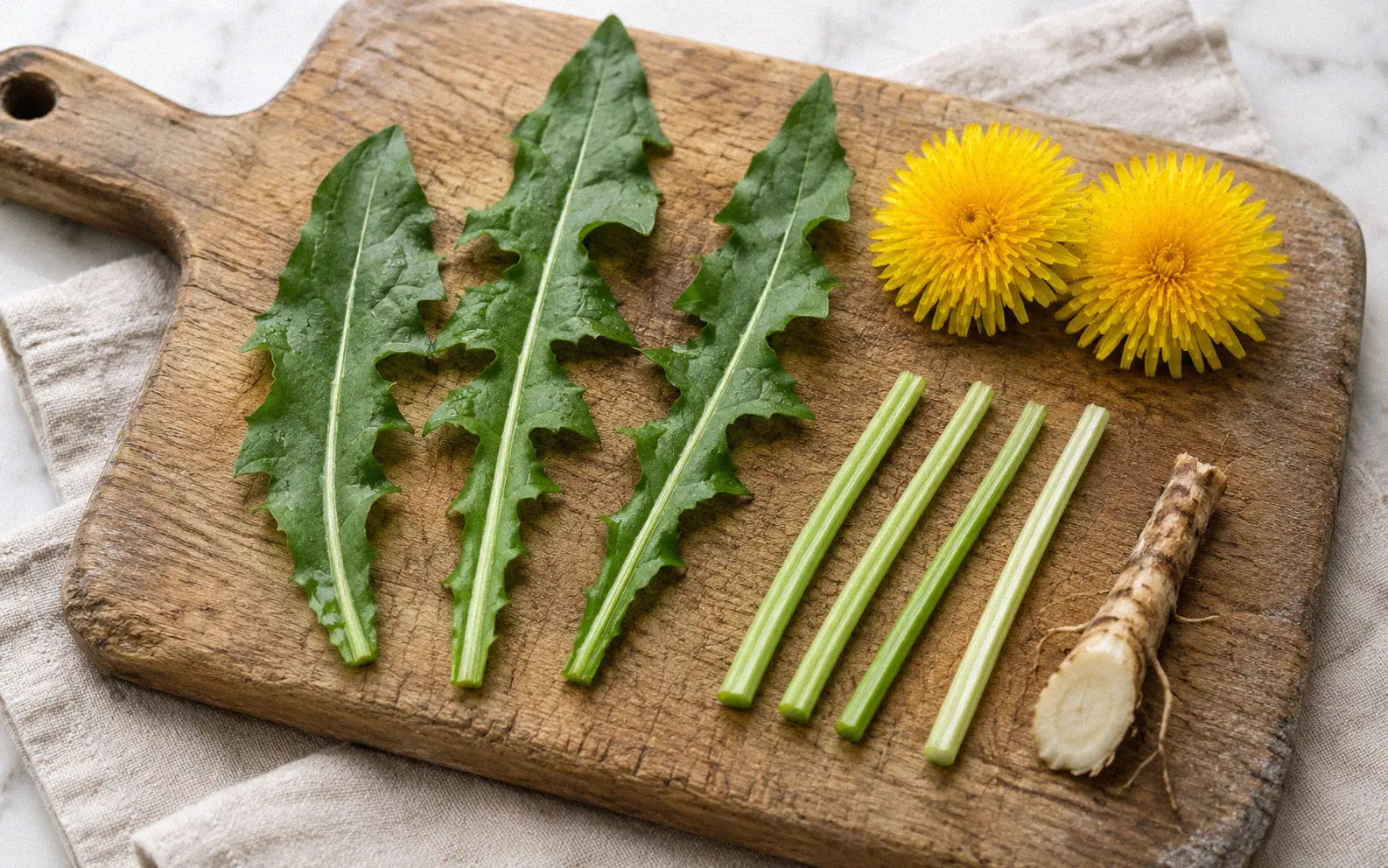
Every part of the dandelion is safe for guinea pigs to eat. Leaves, flowers, stems, roots, and even the seed heads are all fair game. Each part differs slightly in nutrition and texture.
Leaves (Greens): The most nutrient-dense part by far. Dandelion leaves pack the highest concentration of vitamin C, vitamin A, and iron. They’ve got a slightly bitter taste that most guinea pigs actually enjoy. Younger leaves near the center of the rosette tend to be less bitter and softer.
Flowers: The bright yellow petals are safe and many cavies find them appealing. Flowers contain beta-carotene and polyphenols. Pick them when they’re fully open and yellow, not after they’ve turned into white seed heads.
Stems: The hollow stems carry a milky white sap that’s completely harmless. They provide extra fiber and hydration. Some guinea pigs chew through them eagerly, while others leave them behind.
Roots: Dandelion roots are safe but tougher to chew. They contain inulin, a prebiotic fiber that feeds beneficial gut bacteria and supports digestive health. Wash and slice them thinly if you decide to offer them.
Seeds: The fluffy white seed heads (pappus) aren’t toxic, but they offer almost no nutritional value. Most guinea pigs ignore them entirely, and there’s really no reason to include them in your feeding routine.
How Often to Feed Dandelions to Guinea Pigs
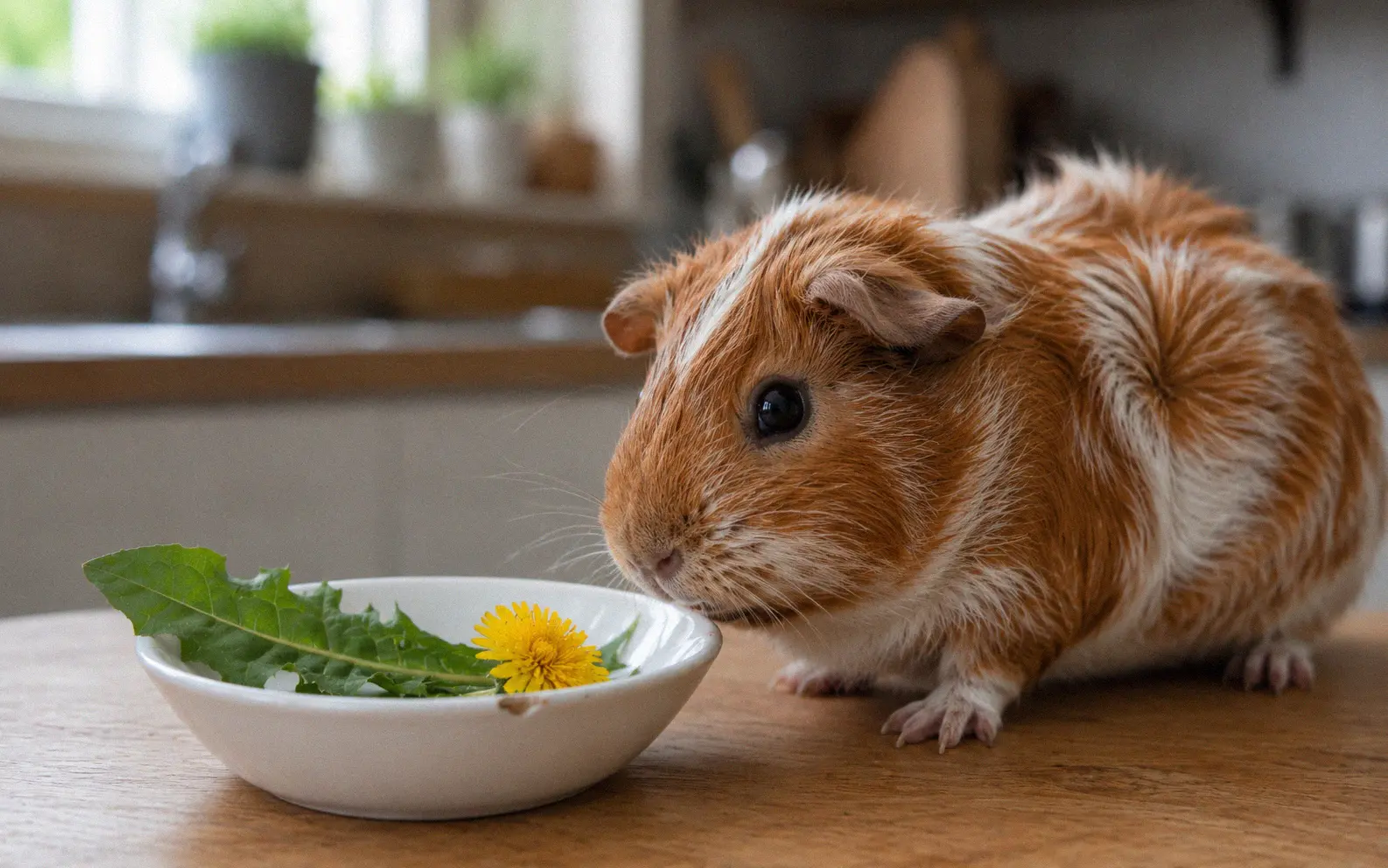
The ideal frequency is two to three times per week, with two to three leaves and one flower per serving. Feeding daily is not recommended because of the calcium content.
Recommended serving: Two to three dandelion leaves plus one flower with its stem per guinea pig.
Frequency: Two to three times per week on non-consecutive days.
Why not daily: Dandelions contain relatively high calcium at 187 mg per 100 g. Feeding them every day raises the risk of calcium buildup in the urinary tract, which can lead to bladder sludge or bladder stones over time. Spacing servings across the week gives your guinea pig time to process and flush out the excess calcium.
Rotate dandelions with other vitamin-C-rich vegetables like bell peppers, romaine lettuce, and cilantro throughout the week. This keeps the nutrient balance in check and makes mealtime more interesting for your cavy.
How to Pick and Prepare Dandelions Safely
The most important rule is to only pick dandelions from areas free of pesticides, herbicides, and animal waste. Contamination is the single biggest safety risk.
Burgess Pet Care’s guinea pig feeding guide stresses that foraged plants must come from clean, untreated areas to be safe. Follow these steps every time you head out to pick them.
Step 1: Choose a clean area. Only pick dandelions from lawns and fields that haven’t been treated with herbicides, pesticides, or chemical fertilizers. Avoid roadsides where exhaust fumes settle on plants. Stay away from spots where dogs or other animals frequently relieve themselves.
Step 2: Identify correctly. True dandelions have a single hollow stem per flower, a basal rosette of jagged-toothed leaves, and no branching. Plants like cat’s ear (Hypochaeris radicata) and hawkbit (Leontodon) look similar but have branching stems or hairy leaves. While these look-alikes aren’t highly toxic, feeding unidentified plants carries unnecessary risk.
Step 3: Wash thoroughly. Rinse every part of the plant under cool running water for at least 30 seconds. Rub the leaves gently between your fingers to remove soil, insect residue, and any surface contaminants.
Step 4: Serve fresh and raw. Never cook, steam, or boil dandelions for guinea pigs. Heat destroys the vitamin C content and changes the texture in ways that can upset digestion. Always offer them raw.
Step 5: Remove uneaten portions. Take out any dandelion pieces your guinea pig hasn’t eaten within two to three hours. Fresh greens wilt fast and can harbor bacteria once they start breaking down inside the cage.
Fresh vs. Dried Dandelions
Fresh dandelions are nutritionally superior, but dried dandelions work well as a hay topper for foraging enrichment. The key difference is vitamin C, because drying destroys most of it.
Fresh dandelions retain their full vitamin C content, provide hydration through their water content, and have the texture guinea pigs tend to prefer. When it’s available, fresh is always the stronger nutritional choice.
Dried dandelions last for weeks in an airtight container kept away from moisture. They work well mixed into guinea pig hay for foraging enrichment. The tradeoff is that drying destroys most of the vitamin C, so don’t count them as a vitamin C source. They still deliver fiber, minerals, and some vitamin A.
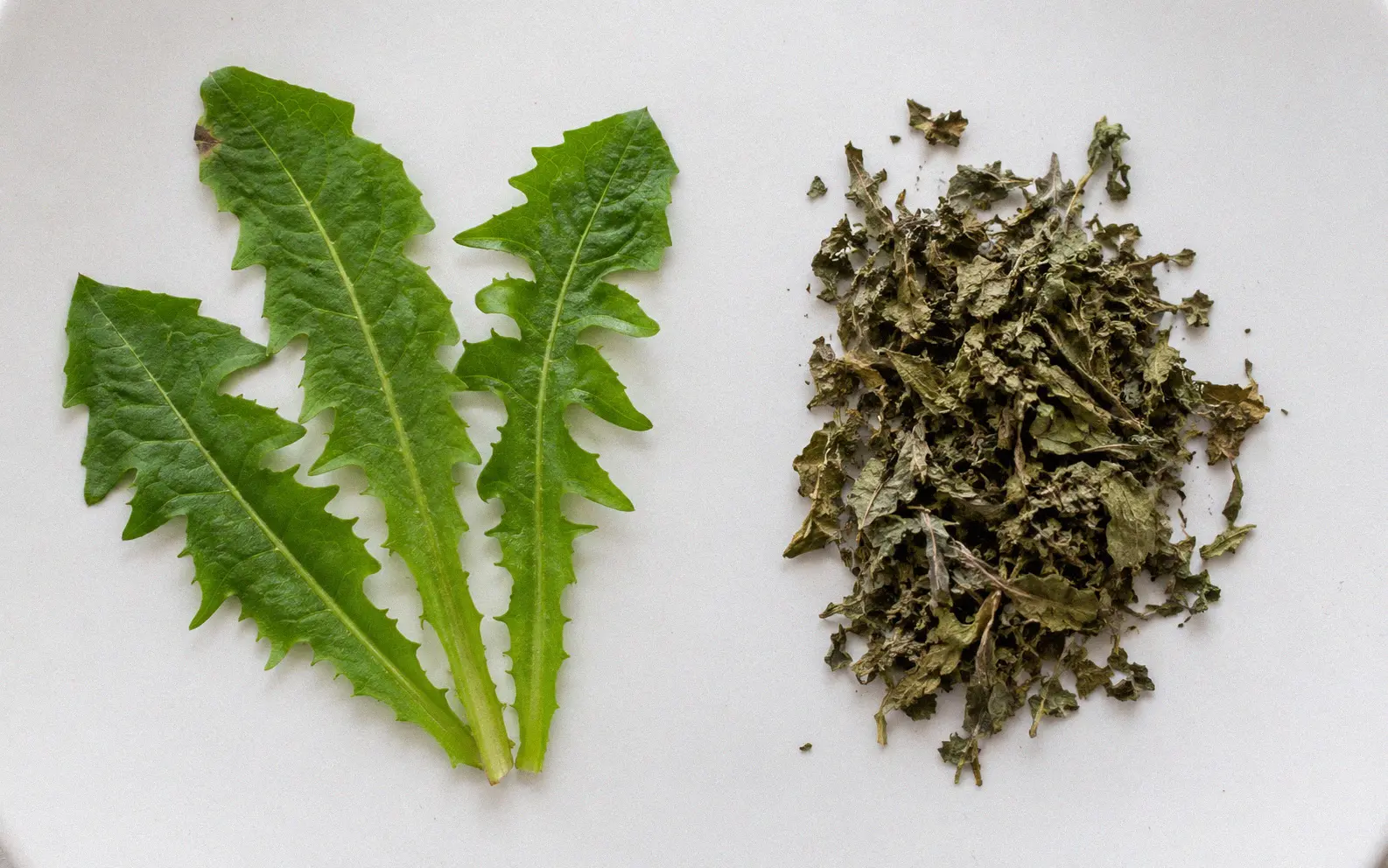
If you’re buying commercially dried dandelion from a pet store, check the label for added ingredients. What you want is pure dried dandelion with nothing else listed.
When Dandelions Are at Their Best
Dandelion nutrition varies by season, with spring offering the highest vitamin C and lowest calcium levels. Here’s how each season affects what your guinea pig gets.
Spring (March–May): Young spring leaves carry the highest vitamin C levels and the lowest calcium concentration. This is the best window for foraging fresh dandelions for your guinea pig.
Summer (June–August): Mature leaves grow larger and more bitter as temperatures climb. Vitamin C dips slightly while calcium content goes up. Still safe to feed, but consider cutting the portion size by about a third.
Fall (September–November): Dandelions produce a second growth flush once temperatures cool off. These late-season leaves are nutritionally close to spring growth, making fall another solid foraging window.
Winter: In most regions, dandelions go dormant. Switch to store-bought dried dandelion or other fresh vegetables to keep vitamin C intake consistent through the colder months.
Side Effects and Risks to Watch For
Most guinea pigs handle dandelions well, but overfeeding can cause calcium-related urinary problems or mild digestive upset. Pesticide contamination is the most serious and entirely avoidable risk.
Excess calcium intake: This is the biggest concern with dandelions. Guinea pigs that get too much dietary calcium can develop white, gritty deposits in their urine (bladder sludge), painful bladder stones, or urinary tract infections. Senior guinea pigs and those with a history of urinary issues should get dandelions no more than once per week.
Digestive upset: Dandelions have mild diuretic and laxative properties. Feeding too many at once can cause soft stools or diarrhea, particularly in guinea pigs trying them for the first time. Start with a single leaf and watch the droppings for 24 hours before increasing the amount.
Pesticide exposure: This is the most dangerous risk, and it’s entirely preventable. Ingesting herbicide or pesticide residue can cause neurological symptoms, organ damage, or death in small animals. If you’re unsure about a foraging spot, skip it.
Orange urine: If your guinea pig’s urine turns bright orange or reddish after eating dandelions, don’t worry. The plant pigments that give flowers their yellow color can temporarily tint urine. It’s harmless and clears up on its own within a day.
Introducing Dandelions to Your Guinea Pig for the First Time
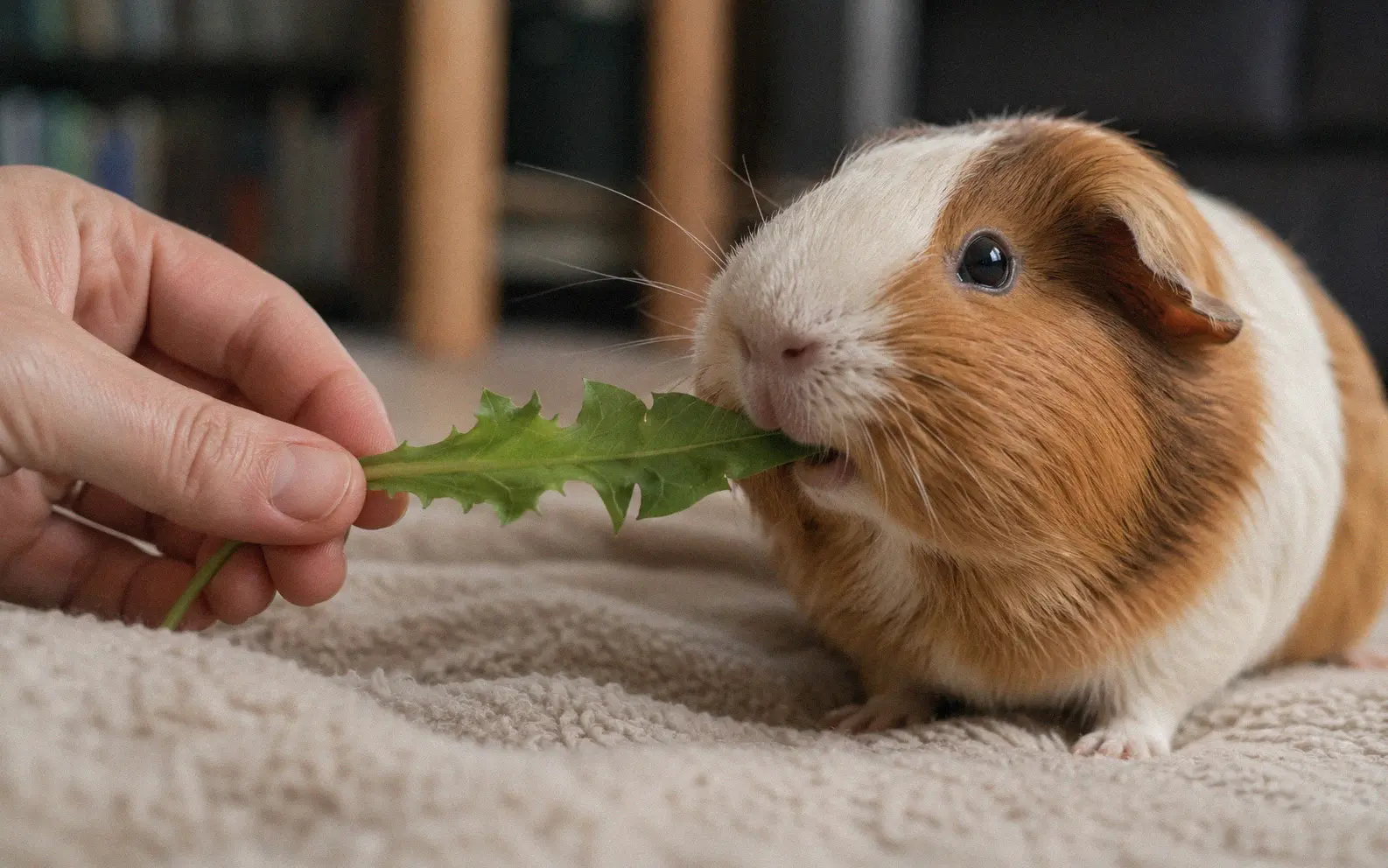
Start slow. Offer just one small leaf on the first day and watch for any digestive changes over 24 hours. A gradual introduction protects your guinea pig’s sensitive gut.
Keep an eye on stool consistency, appetite, and energy level. If everything looks normal, bump it up to two leaves at the next feeding session, two to three days later.
By the second week, you can move to the full serving of two to three leaves with a flower. Jumping straight to larger portions can trigger bloating or loose stools, both easy to avoid with a little patience.
If your guinea pig doesn’t seem interested, try offering a younger, less bitter leaf from the center of the plant. Some cavies also prefer the flower over the greens. There’s no harm in skipping dandelions altogether if your guinea pig simply doesn’t like them.
Can Guinea Pigs Eat Dandelions From the Yard?
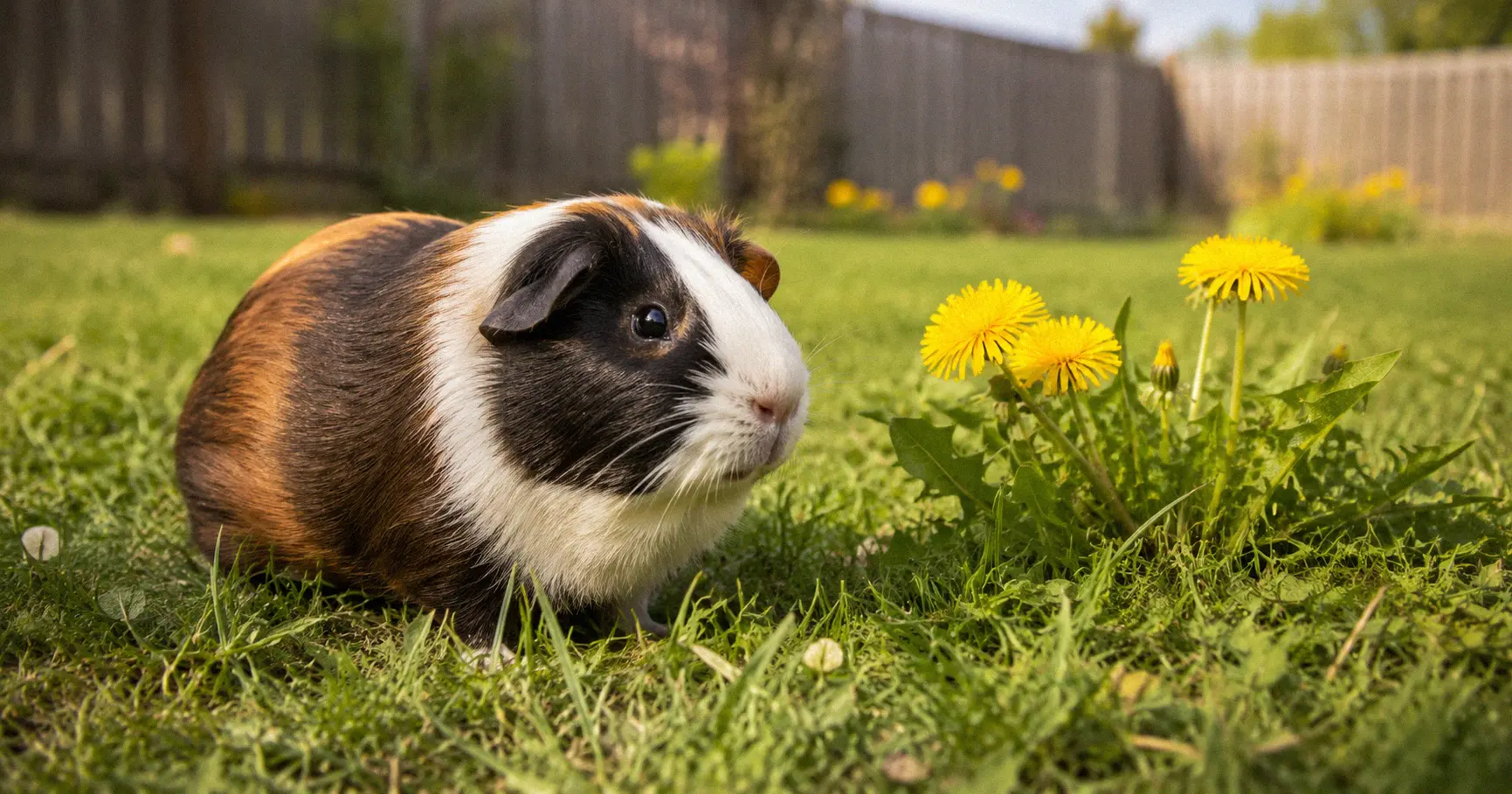
Yes, but only if your yard is completely free of pesticides, herbicides, weed killers, and chemical lawn treatments. Even a single application weeks earlier can leave residue on plants.
Also make sure the area isn’t frequented by dogs, cats, or wild animals whose waste can contaminate the plants. If you use any lawn care products at all, buy organic dandelion greens from a pet store or grocery store instead.
Do Dandelions Replace Pellets or Hay?
No. Dandelions are a supplement, not a replacement for timothy hay or fortified guinea pig pellets. Hay should make up roughly 80 percent of your cavy’s diet for proper dental wear and digestive fiber.
Dandelions fit into the remaining 15 to 20 percent alongside other fresh vegetables and occasional fruit. Think of them as one part of a balanced weekly rotation, not a standalone food source.
Frequently Asked Questions
Feeding dandelions daily is not recommended due to their high calcium content. Daily consumption increases the risk of bladder sludge and urinary stones. Two to three times per week provides the nutritional benefits without the calcium overload.
Baby guinea pigs (pups) over three weeks old can have dandelions in very small amounts. Start with half a leaf once per week and increase gradually as they grow. Pups under three weeks should rely on their mother's milk and alfalfa hay.
Pregnant guinea pigs benefit from the extra vitamin C in dandelions. Offer them on the same schedule as adult guinea pigs, two to three times per week. The added nutrients support both the mother and developing pups. Consult your veterinarian if the pregnancy is high-risk.
Common look-alikes like cat's ear and hawkbit are not considered toxic to guinea pigs, but they haven't been studied as thoroughly as true dandelions. Stick with positively identified Taraxacum officinale to be safe. If a plant has branching stems or hairy leaves, leave it in the ground.
Final Thoughts
Dandelions are one of the most nutrient-dense free foods you can forage for your guinea pig. Source them from clean, untreated areas, wash them well, and introduce them slowly if your cavy hasn't tried them before.
Rotate with other fresh vegetables to balance calcium intake across the week. With a little care in sourcing and portion control, dandelions make a reliable staple in any guinea pig's diet.