

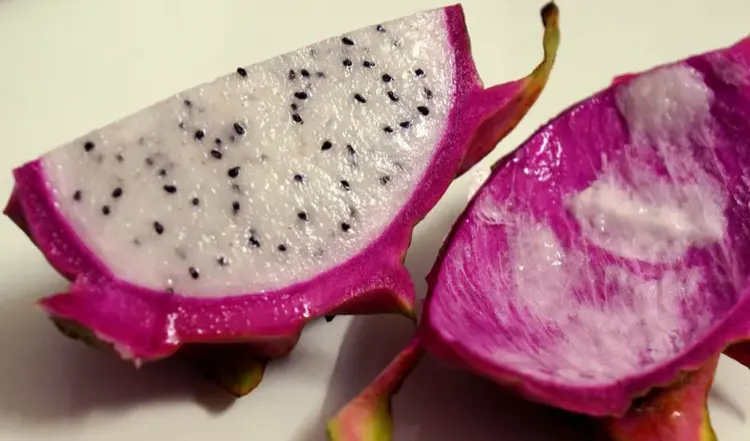
Dragon fruit looks exotic, but is it safe for your guinea pig? It actually is, and it’s one of the lower-risk fruit options you can offer.
Guinea pigs can eat dragon fruit two to three times per week. It’s low in sugar and calcium, and the vitamin C content is especially helpful for piggies.
Below covers serving sizes, which parts are safe, and potential risks.
What Is Dragon Fruit?
Dragon fruit grows on the Hylocereus cactus, also known as the Honolulu queen, which has flowers that only open at night. The plant is native to Mexico’s southern borderlands and Central America, and it’s now grown all over the world.
Dragon fruit goes by several names, including pitaya, pitahaya, and strawberry pear. The two most common types have bright red skin with green scales that look like dragons, which is where the name comes from.
The most common variety has white pulp with black seeds. There’s also a less common type with red pulp and black seeds, and a yellow-skinned variety with white pulp.
Because of the crunchy black seeds, many people compare this fruit to kiwi, although they taste much different. Kiwi fruit contains twice the vitamin C of oranges and is overall much more nutritious than dragon fruit.
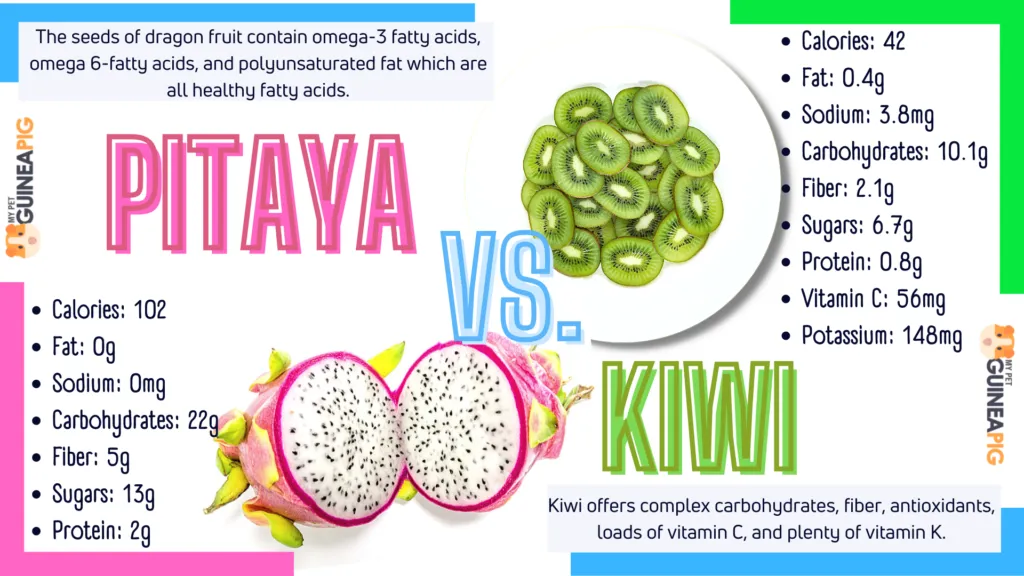
What Is the Nutritional Value of Dragon Fruit?
Here’s the nutritional value of dragon fruit per 100 grams (about the size of one dragon fruit):
Calories: 60 Protein: 1.18 g Fat: 0 g Carbohydrate: 12.94 g Dietary fiber: 2.9 g Sugars (total): 7.65 g Calcium: 18 milligrams (mg) Iron: 0.74 g Sodium: 0 mg Vitamin C: 2.5 mg Cholesterol: 0 mg
Dragon fruit also contains other minerals that are important for guinea pigs:
- magnesium
- phosphorus
- potassium
- vitamin A
- vitamin C
- zinc
The fruit also contains smaller amounts of calcium and copper.
Can Guinea Pigs Eat Dragon Fruit?
Guinea pigs can eat dragon fruit flesh, but they can’t chew its skin. This fruit is beneficial because it’s low in calories, sugar, and calcium.
It’s an excellent fruit for guinea pigs because it provides much-needed vitamin C while avoiding excessive calcium and sugars. The fruit may taste bland to a guinea pig, but most cavies will eat it anyway.
What Are the Health Benefits of Dragon Fruit for Guinea Pigs?
Vitamin C
One of the most important benefits of dragon fruit for guinea pigs is scurvy prevention. Guinea pigs can’t produce vitamin C on their own and can’t store it either.
They need vitamin C-rich foods to stay healthy.
Guinea pigs are susceptible to scurvy from vitamin C deficiency. The symptoms include:
- Rough coat
- Loss of appetite
- Diarrhea
- Fatigue
- Discharge
- Weight loss
- Wounds on the body that don’t heal
The illness is extremely painful, which shows just how important vitamin C is for guinea pigs.
Antioxidants (Vitamin A)
The red flesh dragon fruit contains carotenes and 100 IU of vitamin A, which are powerful antioxidants. Free radicals harm the body and make it more susceptible to chronic illnesses and aging.
Foods rich in antioxidants like vitamin A strengthen the immune system, provide more energy, and help prevent diseases. If you’re looking for another fruit with strong antioxidant benefits, pineapple is worth checking out.
Iron
Iron is essential for a healthy cardiovascular system. With enough iron, guinea pigs experience less weakness, fatigue, and risk of disease.
Without enough iron, anemia occurs, bringing weakness, hair loss, weight loss, and loss of appetite.
Potassium
Dragon fruit also contains potassium. It keeps blood pressure at normal levels and contributes to a healthier cardiovascular system.
Other Benefits (Enhanced Digestion)
Dragon fruit has a prebiotic effect that enhances digestion. Oligosaccharides in it stimulate the growth of beneficial bacteria in the stomach and intestines.
What Are the Dangers of Feeding Dragon Fruit to Guinea Pigs?
Obesity
One of the biggest issues with feeding guinea pigs dragon fruit is weight gain. The sugars in dragon fruit, when consumed in excess, contribute to obesity.
Dragon fruit does contain oligosaccharides that researchers believe support beneficial gut bacteria. It’s also not as rich in sugars as many other fruits considered safe for guinea pigs.
Still, be careful not to exceed the recommended serving amount.
Digestion Issues
Dragon fruit is high in carbohydrates, and guinea pigs can’t digest them well. The good news is that dragon fruit has less sugar compared to other fruits, but you should still be careful.
When a guinea pig consumes too much sugar, they may experience cramps, flatulence, gas, bloating, and loose stool. One way to avoid these issues is to limit the serving size of sugary foods.
Your guinea pig’s diet should rest on leafy greens and other vitamin C-rich veggies.
Urinary Issues (Bladder and Kidney Stones)
Dragon fruit contains calcium and phosphorus. The good news is it’s lower in both compared to many other fruits and vegetables on the safe foods list.
Be careful when planning your guinea pig’s daily menu. Don’t mix fruits and vegetables that are similar in nutrients, especially calcium, phosphorus, and sugar.
Calcium is especially dangerous for guinea pigs because it causes bladder and kidney stones. These stones cause pain and difficulty urinating, and they can damage the urinary tract.
In male guinea pigs, stones can become stuck and cause a urinary blockage, which is life-threatening.
How Much Dragon Fruit Can a Guinea Pig Eat?
The appropriate serving size is a small slice or scoop of dragon fruit two to three times a week. Don’t exceed this because you risk diarrhea and obesity.
Feeding guinea pigs dragon fruit is a good idea only as an occasional treat. Moderation and balance are key to a healthy guinea pig diet.
Your guinea pig’s diet rests on unlimited amounts of hay, leafy greens, and vegetables high in vitamin C. Fruits serve as a tasty treat and a source of vitamins, fiber, and minerals.
Watermelon and strawberries are other fruit treats worth rotating in.
Can Guinea Pigs Eat the Skin of Dragon Fruit?
Guinea pigs can’t eat dragon fruit skin. It’s not edible for humans or guinea pigs because it’s too hard and spikey.
Give your guinea pig only the fleshy part. If this is a new food, introduce it slowly, starting with just once a week.
If your guinea pigs eat dragon fruit willingly, you can start feeding it two to three times a week. Some guinea pigs will like it, while others will prefer kiwi fruit over dragon fruit.
Don’t exceed the recommended amount of any fruit.
How to Prepare Dragon Fruit for Your Guinea Pig
The preparation of dragon fruit is simple:
- Wash the dragon fruit several times in lukewarm water
- Cut it in half or lengthwise and scoop out the fleshy part (no need to peel)
- Cut the flesh into thin slices
Final Thoughts
Most guinea pigs won’t go crazy for dragon fruit because it tastes pretty bland. It’s still a safe option as long as you don’t exceed the recommended serving size of a small slice two to three times a week.
Make sure to wash the fruit thoroughly and scoop out only the fleshy part. Don’t try to feed the skin to your guinea pig because it’s too hard and spikey to chew.
Dragon fruit is just a treat in your piggy’s diet. Their foundation should always be unlimited timothy hay, guinea pig pellets, leafy green vegetables, and vitamin C-rich veggies like bell peppers.
Frequently Asked Questions
Baby guinea pigs can try small amounts of dragon fruit once they're eating solid foods. Start with a tiny piece and watch for digestive upset. Since it's low in calcium and sugar compared to many fruits, it's one of the safer options for young piggies.
The tiny black seeds inside dragon fruit are completely safe for guinea pigs. They're small and soft enough that your piggy won't have trouble chewing or digesting them. Unlike hard seeds from apples, dragon fruit seeds don't present a choking hazard or contain harmful substances.
Dragon fruit has a mild, bland taste that doesn't appeal to every guinea pig. Some piggies prefer sweeter fruits like strawberries or watermelon instead. Don't force it. Try offering a small piece a few times before deciding your piggy truly doesn't enjoy it.
A ripe dragon fruit has bright, evenly colored skin with minimal brown spots. Press gently and it should give slightly, like a ripe avocado. Avoid fruit that feels rock hard or has lots of brown blotches, as those are either unripe or past their prime.