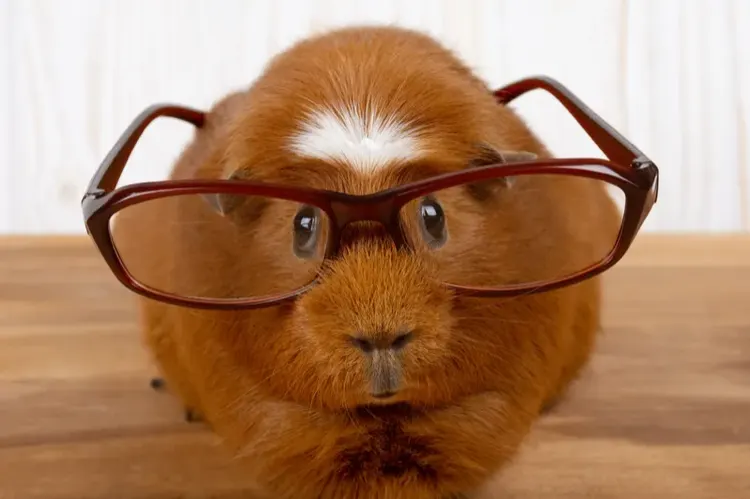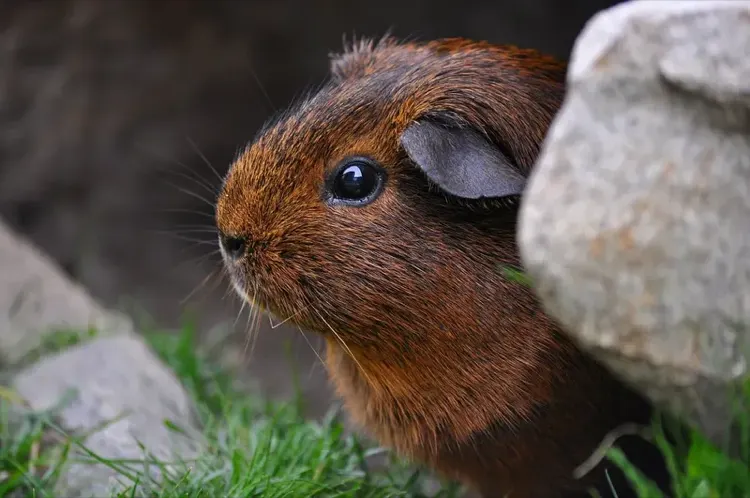

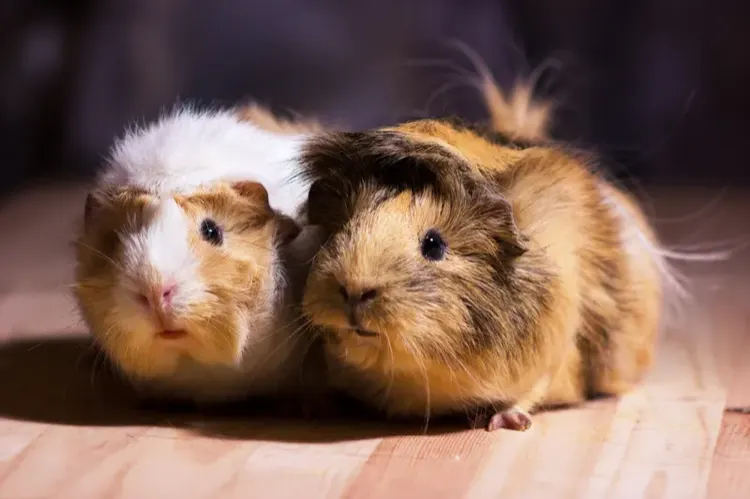
Most guinea pigs reach full size by six to seven months old, landing somewhere between 20 and 30 centimeters long and 450 to 700 grams. Males tend to be bigger than females, and breed matters too.
Here’s a full breakdown of guinea pig growth by age, size, and breed.
When Do Guinea Pigs Stop Growing?
Guinea pigs usually reach full size by around six to seven months old. Some may continue to grow and fill out for another month or two after that.
Once your guinea pig reaches full size, it’ll still continue to mature and develop. For example, its coat will keep filling out and become more lustrous.
It may also develop more personality as it gets older and becomes more used to its surroundings.
So even though it’s not getting any bigger, there’s still plenty of room for it to grow and change in other ways.
How Big Do Guinea Pigs Get?
Most adult guinea pigs stay between 20 and 30 cm long, with anywhere between 450 and 700 g being a healthy weight. Some breeds can grow slightly larger, while others stay smaller.
The smaller breeds like the dwarf cavy will only get to around 20-25 cm. On the other hand, larger breeds can grow up to 35 cm, such as the American blue cavy.
The most common type, the English short-haired cavy, sits somewhere in the middle at around 30 cm once fully grown. The American guinea pig, another popular breed, is slightly larger at around 32 cm.
They’ll fall between 450 g and 700 g when mature. Anything outside this range is considered unhealthy, and you should take your pet to the vet for a checkup.
Female guinea pigs tend to be on the lower end, while males are generally at the higher end. For example, male guinea pigs may weigh up to 800 g while females will rarely exceed 600 g.
Regardless of gender, a sudden jump or drop in weight can be a sign of an underlying health condition. If you notice your guinea pig losing weight unexpectedly, that’s always worth a vet visit.
How Big Can Baby Guinea Pigs Get?
Baby guinea pigs, also known as pups, are usually about 8-10 cm long. Pups grow quickly and can reach their full adult size of 30-35 cm within 6-8 weeks.
Some may continue to grow until they’re 12 weeks old.
Not all pups will grow at the same rate, though. Some may reach their full size sooner while others take longer.
If your baby guinea pig seems to be growing slowly, don’t worry. It’ll probably catch up eventually.
What Is the Growth Rate of Guinea Pigs?
Guinea pigs grow quickly, especially in the first few weeks of life. Pups can gain up to 10 g per day and may even double their weight within a week.
After the first few weeks, the growth rate slows down considerably. By the time they’re 8 weeks old, most guinea pigs will only be gaining around 5-10 g per week.
What Factors Affect the Size of a Guinea Pig?
There are a few things that can affect a guinea pig’s size. One is the breed.
Some breeds are just naturally larger than others.
Another factor is gender. Females are usually smaller than males.
If you have two guinea pigs, they might also be smaller because they have to share food and space.
Diet also matters. A healthy diet of hay, vegetables, and guinea pig pellets will help your guinea pig reach its full potential size.
Check out the best guinea pig foods for solid feeding recommendations.
Guinea Pig Growth Chart by Age
Here’s a handy average guinea pig weight and growth chart. Please note this is a general guide only, as size can vary depending on breed and other factors.
2 months of age:
Length: 10-15 cm. Weight: 80-120 g
4 months of age:
Length: 15-20 cm. Weight: 200-250 g
6 months of age:
Length: 20-25 cm. Weight: 350-450 g
8 months of age:
Length: 25-30 cm. Weight: 450-700 g
12 months of age:
Length: 30-35 cm. Weight: 500-650 g
As you can see, they grow quickly in the first few months. After that, they continue to grow slowly until they reach their full adult size.
How Do I Ensure My Guinea Pigs Reach Their Full-Size Potential?
Start with breed selection. Some breeds are naturally larger than others.
If you want a big guinea pig, look into the Texel or the British Giant.
Diet matters just as much. A diet rich in hay, fresh vegetables, and pellets gives your guinea pig the nutrients to reach its full potential.
Avoid feeding too many sugary treats, as this can lead to obesity and health problems.
Finally, provide your guinea pig with plenty of space to exercise. A large cage or enclosure will give your guinea pig room to run and play.
They also love to play with toys, so consider adding some tunnels, balls, and other toys to their home.
Final Thoughts
Most guinea pigs hit full size by six months, then fill out gradually over the next few months. Breed choice determines a lot of the final numbers.
A high-quality diet and a roomy cage give them the best shot at reaching their full potential. Skimp on either, and growth can stall early.
References
- https://en.wikipedia.org/wiki/Guinea_pig
- https://www.ncbi.nlm.nih.gov/pmc/articles/PMC7151879/
- https://news.okstate.edu/articles/communications/2020/guinea-pigs-as-pets.html
- https://www.sciencedirect.com/topics/biochemistry-genetics-and-molecular-biology/guinea-pig
- https://kids.frontiersin.org/articles/10.3389/frym.2021.561416
Frequently Asked Questions
Most full-grown guinea pigs weigh between 450 and 700 grams, depending on breed and gender. Males tend to weigh more than females. Weigh your guinea pig weekly and track any sudden changes, since a rapid gain or loss could point to health problems needing veterinary attention.
The average lifespan of a guinea pig is four to eight years, though some have been known to live longer with excellent care. Diet, exercise, genetics, and regular vet checkups all play a role in how long your guinea pig will thrive.
The biggest guinea pig on record was a British Giant named George, weighing 7 pounds 8 ounces and measuring 29 inches long. Most pet guinea pigs won't come close to that size, but breed selection does significantly influence how large your cavy will ultimately grow.
Bigger guinea pigs don't necessarily need more food than smaller ones. In fact, they actually eat less per pound of body weight than smaller guinea pigs. Focus on providing unlimited hay, a measured amount of pellets, and about one cup of fresh vegetables daily regardless of size.