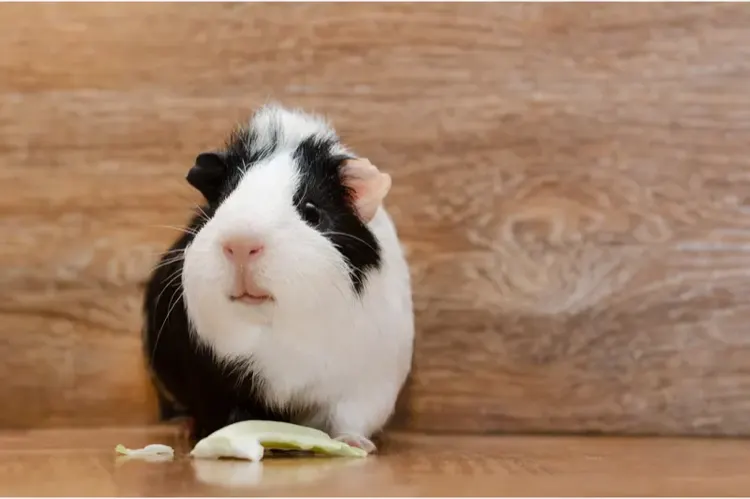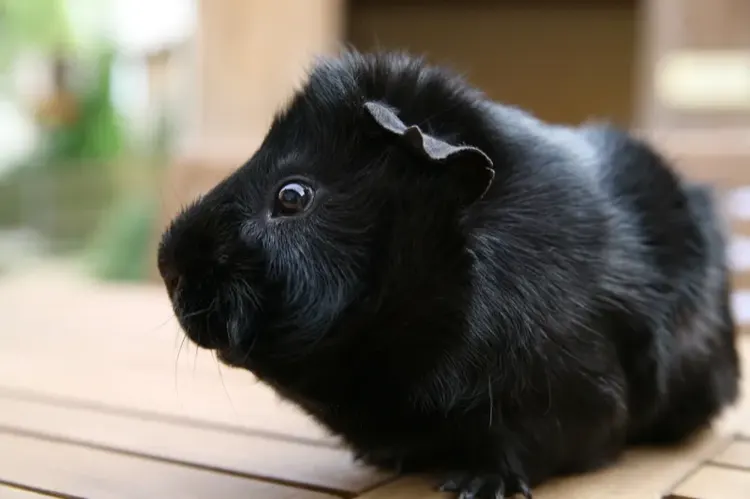

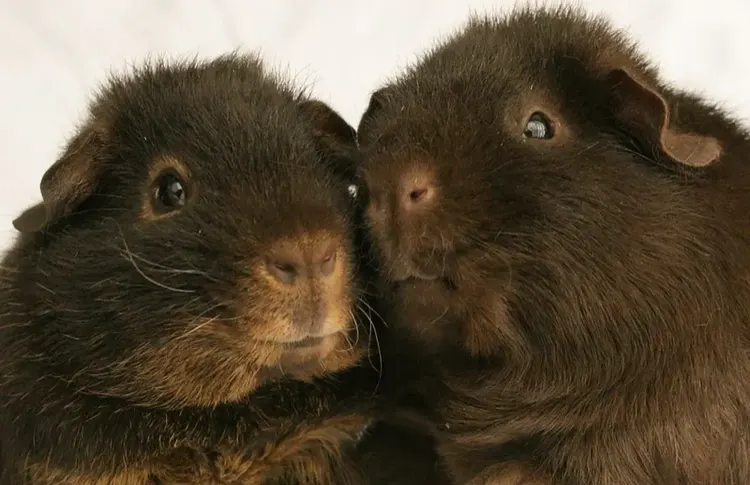
Looking for a guinea pig that actually looks like a stuffed teddy bear? That’s the Teddy breed, with its short, dense, plush coat that feels like you’re petting a toy.
They’re one of the most popular breeds for first-time owners because they rarely bite and don’t need much grooming.
Why Are Teddy Guinea Pigs Popular Pets?
The teddy guinea pig breed is popular because they’re genuinely low-maintenance. They don’t need tons of exercise, and they fit in smaller living spaces.
They rarely bite or scratch, which makes them ideal for children. Their compact size means they work in apartments and suburban homes alike.
They’re also economical to feed and care for. That adorable teddy bear face doesn’t hurt either.
Where Do Guinea Pigs Come From?
Guinea pigs are originally from South America. They were first domesticated by the Incas and used as a food source.
Today, they’re popular pets all over the world.
Some people may be surprised to learn that guinea pigs aren’t pigs, but rather rodents. They belong to the same family as hamsters and gerbils.
While they make great pets, guinea pigs also require a lot of care and attention.
Where Do Teddy Guinea Pigs Come From?
Teddy guinea pigs are a specific breed that was developed in the early 1900s. They get their name because they really look like a living teddy bear.
The dense coat of a teddy guinea pig resembles that of a stuffed animal toy.
Teddy guinea pigs come in a variety of colors, including white, brown, or black. Despite their cuddly appearance, they’re hardy and active little animals that make great pets.
They’re very friendly and love to play, so they’re perfect for people who want an entertaining pet.
Where Did Teddy Guinea Pigs Get Their Name?
The answer to this question isn’t definitively known, but several theories attempt to answer it. One theory is that teddy guinea pigs got their name from President Teddy Roosevelt.
In 1902, Roosevelt was on a hunting trip in Mississippi when he came across a small, furry creature. He was so fascinated by the animal that he refused to shoot it and instead had his aides capture it.
Apparently, among many other animals, Theodore Roosevelt had several guinea pigs named Admiral Dewey, Dr. Johnson, Bishop Doane, Fighting Bob Evans, and Father O’Grady.
A more likely explanation for the teddy guinea pig’s name is that it was inspired by a stuffed animal, a teddy bear. Whatever the true origin, they’re known for their soft, plush fur and sweet, docile personalities.
How Do Teddy Guinea Pigs Look?
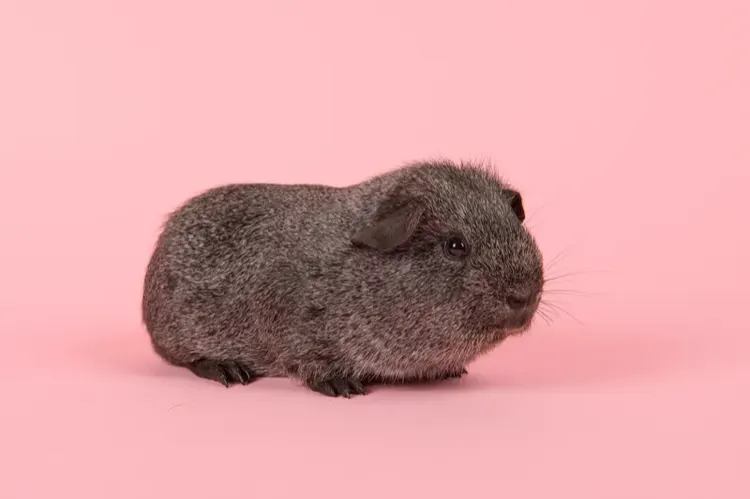
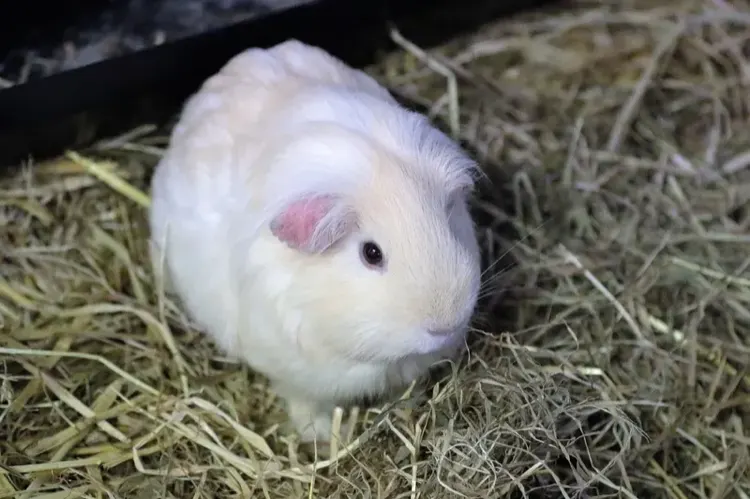
This breed is different from other guinea pig breeds. Teddy guinea pigs have short hair and come in a variety of colors, including black, white, beige, brown, and gray.
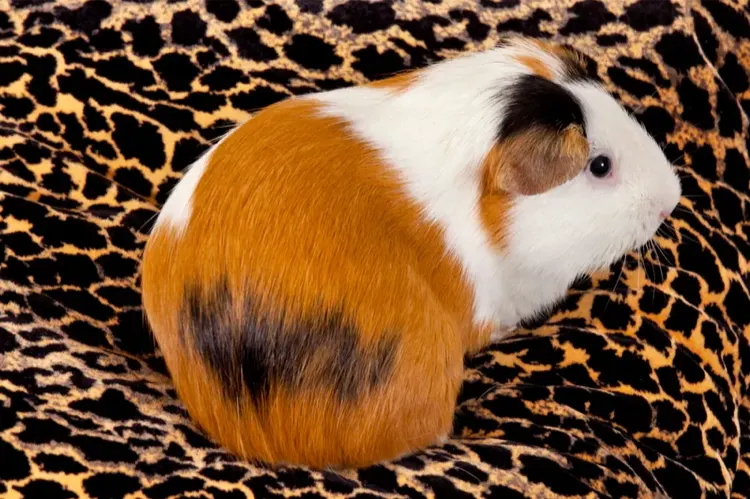
They also come in mixed patterns of two colors. Teddies turn up in agouti coloring too, where every hair is banded from base to tip.
This breed has a very distinct rough dense coat, and if you ever touch them, it feels like you’re touching a real teddy bear. Because of their coat, most people are more likely to choose this breed over others.
Their hair stays short but grows far denser than the flat coat of an American guinea pig. That density is why Teddies need a little more brushing than a smooth-coated breed does.
Physical Features
Adult teddy guinea pigs reach the length of 10 to 12 inches and grow to be around 3 pounds. If you pay attention to their nose, you’ll see it’s slightly wider and curves upwards.
Their dense fur makes them resemble a teddy bear.
Life Span
On average, guinea pigs have a lifespan of 4-11 years. A teddy guinea pig in the right environment with the right diet can live up to 11 years or even longer.
In the last few years, teddy guinea pigs have become even more popular because of their unique personality and ability to warm people. They have a very energetic and cheerful nature.
Born of Genetic Mutations
Here’s the most shocking fact about your teddy guinea pig: it was born by a genetic mutation. So if you’re not sure whether this breed is perfect for you or not, keep reading.
How Big Does a Teddy Guinea Pig Get?
There are a lot of different types and sizes. Teddy guinea pigs are about the size of a regular guinea pig, but they tend to be a little bit bigger.
They’re between 10 to 12 inches large and between 1 to 3.5 pounds. So if you’re looking for a small pet that’s still got some heft to it, a teddy guinea pig might be the right choice.
How Long Do Teddy Guinea Pigs Live?
Teddy guinea pigs have a life expectancy of around 7 to 11 years. An average guinea pig can live for up to five years.
To live a long and healthy life, teddy guinea pigs require the same level of care and attention as other guinea pigs. If you’re interested in owning a teddy guinea pig, be sure to research all the necessary information on proper care and feeding before bringing one home.
What Do Teddy Guinea Pigs Eat and Drink?
A healthy teddy guinea pig diet includes hay, a small amount of fresh vegetables, and water. No processed foods like cereal or crackers.
Guinea pigs can’t digest most of the stuff we eat. And not all fruits and vegetables are safe for them either.
Too much calcium in certain foods causes bladder stones, which can be dangerous. Their digestive system is fragile, and any dietary imbalance can snowball into serious health problems.
You’ll have to be careful when choosing the best, healthy, and balanced diet.
Fresh vegetables that are safe for teddy guinea pigs include:
- Romaine lettuce
- Cucumber
- Broccoli
- Carrots
- Bell peppers
Water is essential and should be provided in a spill-proof bowl or bottle. Hay should make up the majority of their food.
Timothy Hay
Timothy hay contains fiber, and calcium and proteins. This is the single best food resource for your teddy guinea pig.
You can use timothy for your teddy guinea pig’s bedding as well. If you choose timothy hay for their bedding, you have to replace it regularly to eliminate all the wet parts as your teddy guinea pig will pee in it.
Train your guinea pig to eat from the hayrack. This will also allow them to differentiate the bedding hay from the food hay.
Here’s a beautiful trick: when you use a hayrack, you can mix some pellets and other food with their timothy hay.
Fruits and Vegetables
Like humans eat fruits and veggies to fulfill their nutrient requirements, every teddy guinea pig also needs fruits and veggies. Fruits and vegetables are the best sources of vitamin C, which is essential for your pet.
Fruits are also a source of sugars, and for guinea pigs, this sugar is dangerous. It’ll cause diarrhea, so you have to make sure to feed them in moderation.
Special Pellets for Teddy Guinea Pigs
You have to provide your teddy guinea pig with high-quality pellets. Low-quality, cheap pellets can cause serious health problems.
All guinea pigs have a very sensitive digestive system. That’s why they require high-quality foods and lots of fiber, which aids their digestion.
If pellets have at least 16% fiber, 20% protein, and a high vitamin C content, those are high-quality pellets. Never give your pet:
- Chocolate and other “human treats”
- Dairy products
- Meat
- Corn
- Iceberg lettuce
- Tomato leaves
- Potatoes
- Anything that has sugar in it
- Rhubarb
- Raw beans
- Multi-vitamins
These foods are harmful, and some are poisonous.
Schedule the Guinea Pig Diet
Guinea pigs are creatures of habit. They have a specific time to eat, sleep, and play.
If you train your teddy guinea pig to eat at a specific time, your pet will eat at that time. But if you’re busy and don’t have time to give them food, it’ll affect their balanced lifestyle.
So it’s a must that you provide them with food at their specific time.
Why Is a Teddy Guinea Pig the Perfect Pet for You?
When you walk into the guinea pig shop, you’ll find more than 11+ different guinea pig breeds to choose from. Every single breed is different and has its own characteristics.
Guinea pigs are easy to manage. When you’re not at home, you can leave your guinea pigs in your kid’s hands.
Not only are they easy to manage, but they’re very sociable pets. They love to make noises, play with humans, and eat.
These small animals also love to cuddle.
The great thing about teddy guinea pigs is that they’re inexpensive.
How to Care for Your Teddy Guinea Pig
Caring for a teddy cavy is like caring for a baby. When you bring them home, you’ve got to feel like you’ve brought home a baby and become its parent.
Just like any baby, they need your time and attention, but don’t get this wrong. Caring for a teddy guinea pig isn’t hard.
Teddy guinea pigs need plenty of exercise to stay healthy. A good way to provide this is by giving them a large running area where they can play and explore.
If you don’t have enough room, you can set up some toys for them to play with.
If you’re not sure about the size of the cage, it has to be 8 square feet per guinea pig. Keep your pets moving inside the cage with chewing balls, tunnels, and mazes.
If you don’t, they’ll feel bored and get depressed, and it’ll make them sick.
Most guinea pigs love to climb, so you can add some ramps to the cage. Your teddy guinea pigs love to chew things, so give them something to chew.
Make sure what you’re giving them is non-toxic. The best thing you can give them is cardboard.
You can also give your teddy guinea pig a friend. Guinea pigs are social animals and shouldn’t live alone.
How to Understand What Your Teddy Guinea Pig Is Saying
You might want to understand the 8 different sounds that every teddy guinea pig makes. They make these sounds to communicate with one another.
If you know these unusual sounds, you’ll understand what they’re saying.
Wheeking
Just like every dog “woofs” and every cat “meows,” every single teddy cavy “wheeks.” This is the most common sound among the other eight, and you’ll notice they make it more often.
They make this sound when they’re hungry. As you know now, your guinea pig has a specific time to eat, so they make this sound when it’s time for their meals.
Here’s the most exciting thing about this sound: in one experiment, scientists noticed that naturally, guinea pigs can’t wheek. When guinea pigs live in the wild, they don’t depend on anyone, so they don’t make this sound.
They just search for food and eat. But when people started adopting guinea pigs, they developed these sounds to grab their owner’s attention.
These sounds aren’t natural to them; they just adopted them.
Purring
Purring is the second kind of sound that your guinea pig makes. Similar to a cat’s purr, but in a very low pitch compared to cats.
Your teddy guinea pig makes this sound when feeling happy and content. Pay attention to this sound when you spend time with your guinea pig, as that’s a sign your piggy is happy just because you’re around.
Rumble
The rumble is similar to the purr. Guinea pigs make this sound when they want to mate with the opposite sex.
Most owners don’t have the privilege to hear this sound because they don’t have both a male and female teddy guinea pig. Both males and females make this sound to attract a mating partner.
Growling
Growling sounds like “DRRR DRRR.” Most teddies make this sound when they feel threatened or like somebody is going to harm them.
Sometimes they make these sounds when there’s a sudden change in the environment, like a high-pitched sound or loud music. It’s also possible they make this sound if there’s a fight going on in their cage.
Teeth Chattering
As humans, we also make this kind of sound when we’re in a cold environment. But for guinea pigs, it’s different.
They make this sound when they’re feeling angry or anxious.
For example, if you have one guinea pig in the cage and then bring in another one, they both start making these sounds as they’re not comfortable with each other. Both of them produce this sound to warn each other not to interfere.
Cutting
You may hear this sound as “Schutt Schutt” from your guinea pig. Not all breeds of guinea pig make this sound.
What this sound means is they’re happy and in the perfect mood. They make this sound when they’re in good spirits, but don’t confuse it with the purring sound.
They’re similar but not identical. Most guinea pigs make this sound when feeling relaxed.
Shrieking
This is one of the loudest sounds that your guinea pig makes, and it may scare you. A guinea pig might produce this sound when in pain.
It’s also a sound that expresses horror, when a guinea pig gets scared of something.
Hopefully, you won’t hear your teddy guinea pig shriek.
Whining
Whining is a high-pitched moan. A guinea pig produces this sound when disturbed by something or bothered by someone.
For example, suppose your teddy guinea pig is sleeping and another guinea pig starts bothering them. That’s the sound they’ll make to express dissatisfaction.
If you pay attention to these sounds, you’ll understand their feelings.
Do Teddy Guinea Pigs Bite?
That’s a tough question because it depends on the individual teddy guinea pig. Some might never bite, while others might occasionally nip at their humans.
If your teddy guinea pig does nip you, it’s important not to snap back or show any signs of aggression. Instead, remain calm and try to figure out why your guinea pig bit you.
Maybe they were feeling scared or threatened?
Whatever the reason, it’s important to correct the behavior as soon as possible. If your teddy guinea pig feels like they can get away with biting, they’re likely to do it again.
But if you handle the situation correctly and show them that biting isn’t acceptable, they’ll likely stop.
Are Guinea Pig Bites Dangerous?
Guinea pigs are lovely and loving pets with a very calm demeanor. In most cases, guinea pig bites are light and hardly leave any marks.
If your guinea pig bites you regularly, it might be a sign they’re afraid of you. Gaining trust can take time and effort.
Here are more tips that’ll help you build some great relationships with your little guinea pigs:
- Wash your hands before and after you interact with them
- Build trust by becoming familiar with them through consistent, gentle handling
Final Thoughts
Teddy guinea pigs are a fantastic choice for anyone looking for an affectionate, low-maintenance pet. Their plush coat, friendly personality, and manageable grooming needs set them apart from more demanding breeds.
Give them quality food, unlimited timothy hay, a roomy cage with toys, and daily time with you. That’s the recipe for a happy, healthy teddy guinea pig that’ll be your companion for years.
Frequently Asked Questions
Teddy guinea pigs are one of the best breeds for first-time owners. Their short, dense coat requires minimal grooming compared to long-haired breeds like Texels. They're also calm, friendly, and rarely bite, which makes them especially good for families with young children.
Teddy guinea pigs need brushing about once a week to remove loose hair and prevent tangles. Unlike long-haired breeds, they don't need daily grooming sessions. Baths should be rare, only when they're visibly dirty, since frequent washing strips natural oils and causes dry skin.
Teddy guinea pigs are social animals that get along well with other breeds like Americans, Rex, and Ridgebacks. The breed matters less than personality and proper introductions. Always pair them gradually and provide enough space so each pig has room to retreat.
Teddy guinea pigs do shed, but not as much as long-haired breeds. Their short, dense coat drops a moderate amount of fur year-round with slightly heavier shedding during seasonal changes. Weekly brushing keeps shedding manageable and helps you spot any skin issues early on before they become serious.